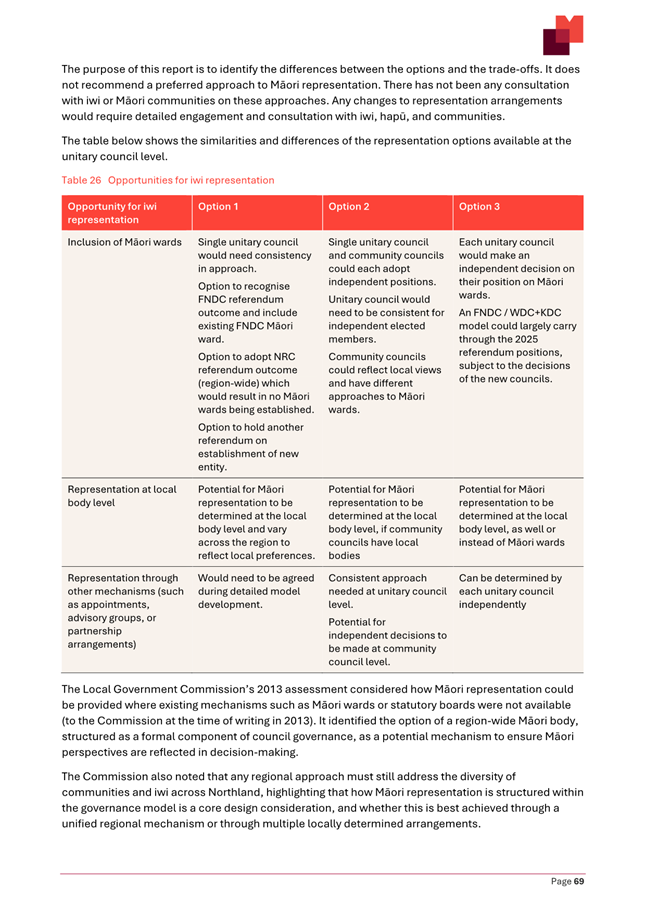
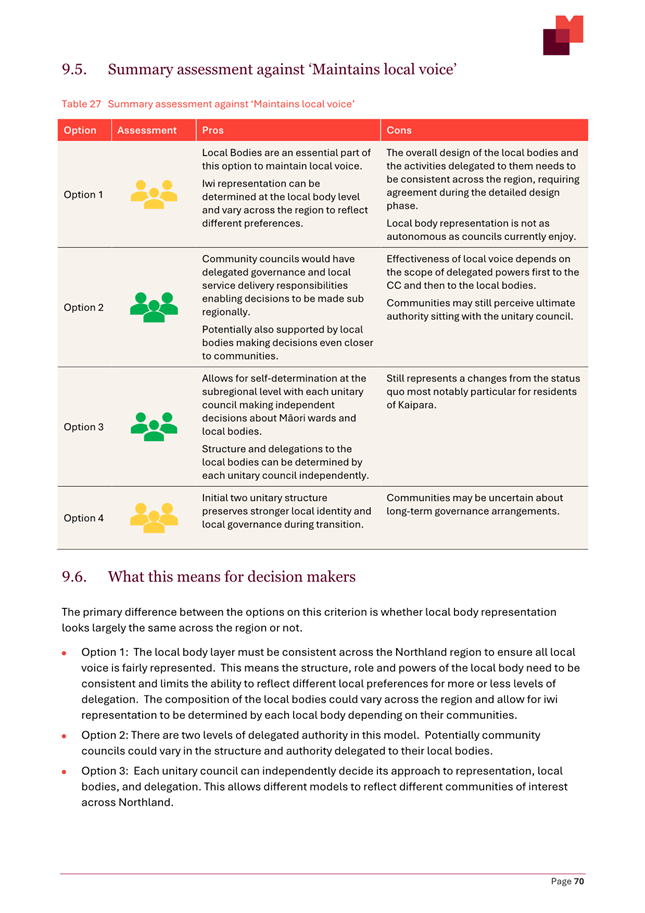
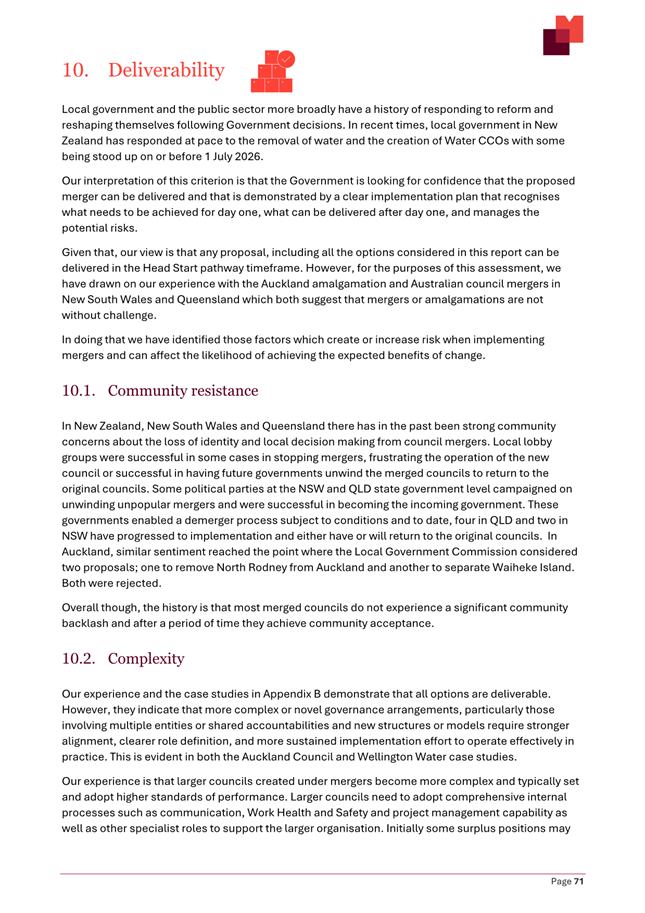
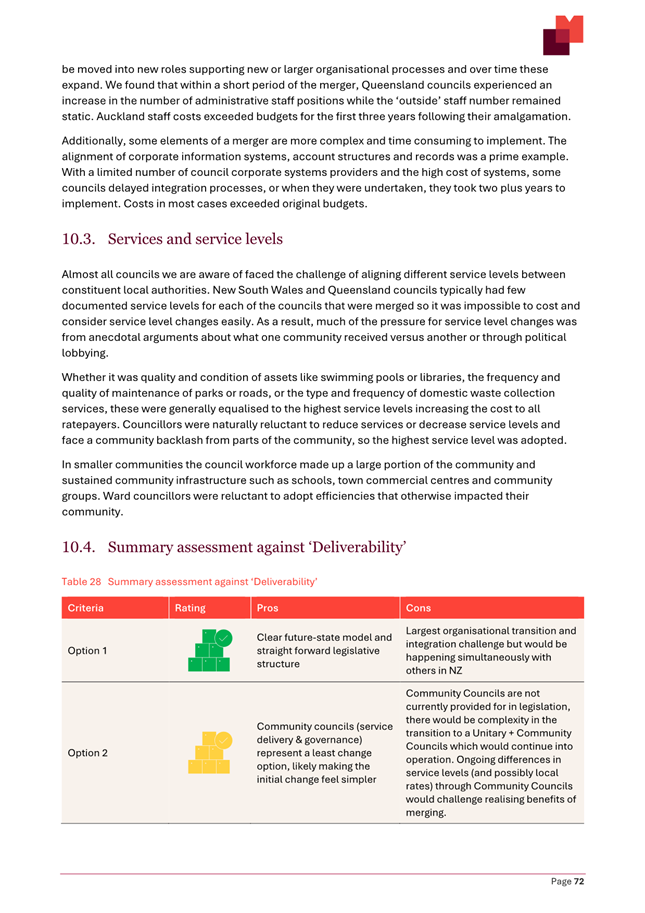
Far
North District Council Values
The Code of Conduct is designed to give effect to the
following values:
1.
Public interest: members will serve the best interests of the
people within their community, district or region and discharge their duties
conscientiously, to the best of their ability.
2.
Public trust: members, in order to foster community
confidence and trust in their Council, will work together constructively and
uphold the values of honesty, integrity, accountability and transparency;
3.
Ethical behaviour: members will not place themselves in
situations where their honesty and integrity may be questioned, will not behave
improperly and will avoid the appearance of any such behaviour;
4.
Objectivity: members will make decisions on merit; including
appointments, awarding contracts, and recommending individuals for rewards or
benefits.
5.
Respect for others: will treat people, including other
members, with respect and courtesy, regardless of their race, age, religion,
gender, sexual orientation, or disability. Members will respect the
impartiality and integrity of officials;
6.
Duty to uphold the law: members will comply with all
legislative requirements concerning their role, abide by this Code of Conduct,
and act in accordance with the trust placed in them by the public;
7.
Equitable contribution: members will take all reasonable
steps to ensure they fulfil the duties and responsibilities of office,
including attendance at meetings and workshops, background reading, attendance
at civic events, and participation in relevant training seminars organised by
the Council.
8. Leadership:
members will actively promote and support these principles and ensure they are
reflected in the way in which the Council operates including regular review and
assessment.
These values complement, and work in conjunction with, the
principles of s.14 of the LGA 2002 and the governance principles of s.39 of the
LGA 2002.
1 Karakia
Tīmatanga / Opening Prayer
Ka tuku mātou kia kaha mai ngā māngai kua
whiriwhirihia mō Te Kaunihera o Te Hiku o te Ika ki te mahi me te
ngākau auaha me te whakamahi i ngā pūkenga me te mātauranga
i roto i ngā wānanga me ngā whakataunga kia whakatūria ai
tētahi Hapori e matatika ana, e tū kotahi ana ka mutu ka whakapiki anō
i te oranga o tō tātou rohe, ka whakatau anō i ngā take o
te rohe i runga i te tika me te pono.
We ask that through Council discussions and decisions the
representatives we have elected may govern the Far North District with
imagination, skill and wisdom to achieve a fairer and more united Community
that enhances the wellbeing of our district and solves the District’s
problems efficiently and effectively.
2 Ngā
Whakapāha Me Ngā Pānga Mema / Apologies and Declarations of
Interest
Members need to
stand aside from decision-making when a conflict arises between their role as a
Member of the Council and any private or other external interest they might
have. This note is provided as a reminder to Members to review the matters on
the agenda and assess and identify where they may have a pecuniary or other
conflict of interest, or where there may be a perception of a conflict of
interest.
If a Member
feels they do have a conflict of interest, they should publicly declare that at
the start of the meeting or of the relevant item of business and refrain from
participating in the discussion or voting on that item. If a Member thinks they
may have a conflict of interest, they can seek advice from the Chief Executive
Officer or the Manager - Democracy Services (preferably before the meeting).
It is noted that while members can seek advice the final
decision as to whether a conflict exists rests with the member.
Elected
Member - Register of Interests
3 Ngā
Tono Kōrero / Deputations
No requests for deputations were received at the time of the
Agenda going to print.
4 Ngā
Kōrero A Te Kahika / Mayoral Announcements
|
Extraordinary Council Meeting Agenda
|
16 July 2026
|
5 Ngā
Pūrongo / Reports
5.1 Local
Government Reform Head Start Proposal – Decision on Preferred Model
File
Number: A5860240
Author: Roger
Ackers, Head of Strategic Reform Initiatives
Authoriser: Guy
Holroyd, Chief Executive Officer
Take Pūrongo / Purpose of the Report
To provide council with the recommendations from the Local
Government Reform Elected Member Steering Group (EMSG) and seek approval on a
preferred model for progressing Northland’s Head Start Proposal.
WhakarĀpopoto matua / Executive Summary
· In June 2026, participating Northland councils directed staff to
further investigate potential local government reform models that could form
the basis of a Northland Head Start Proposal. Morrison Low Advisory was engaged
to undertake an options analysis assessing how the identified models perform
against the Government's reform objectives and criteria. Four options were
ultimately assessed, comprising the two broad structural approaches originally
requested by councils, along with two related sub-options.
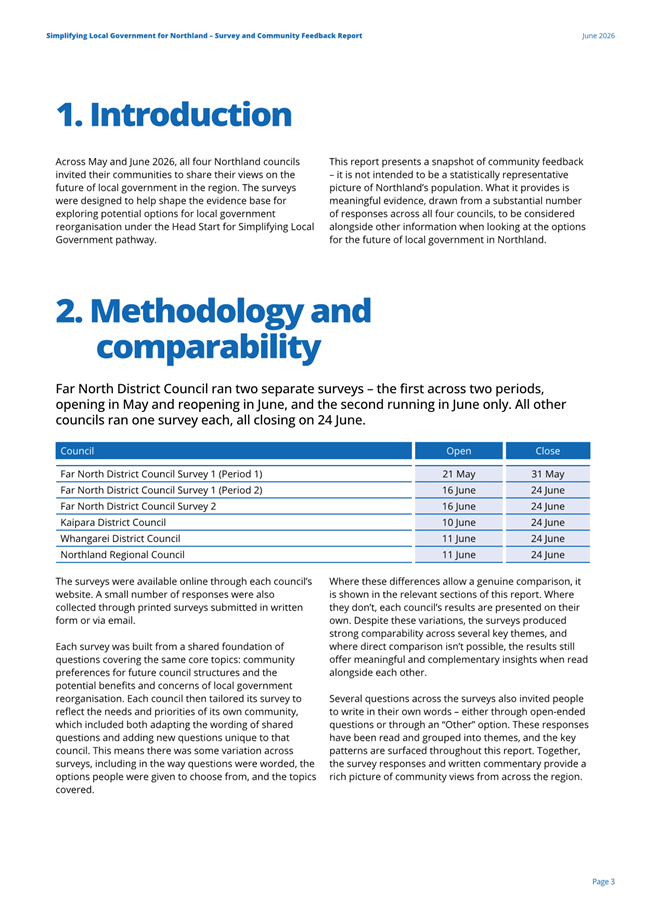
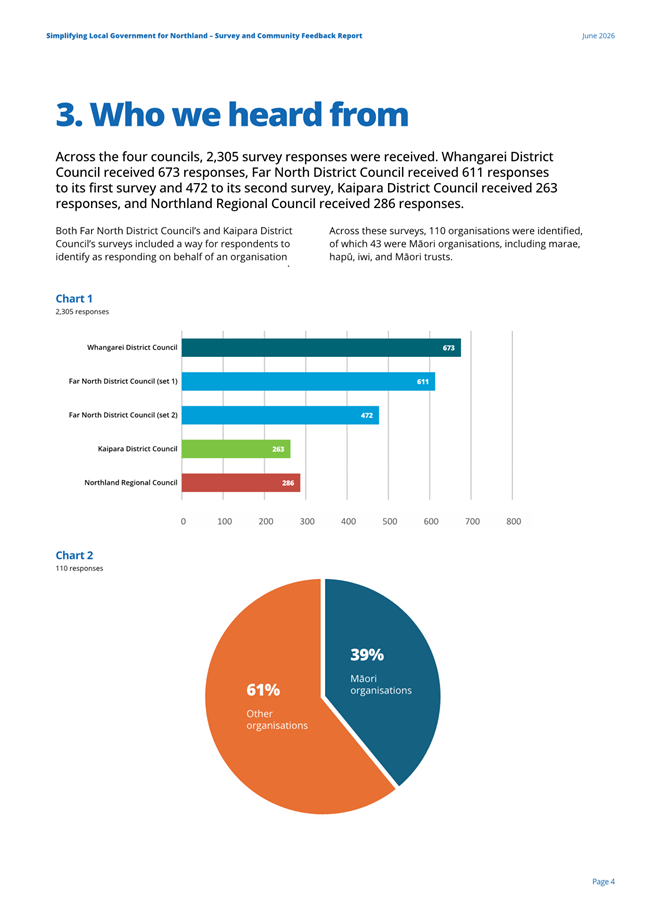
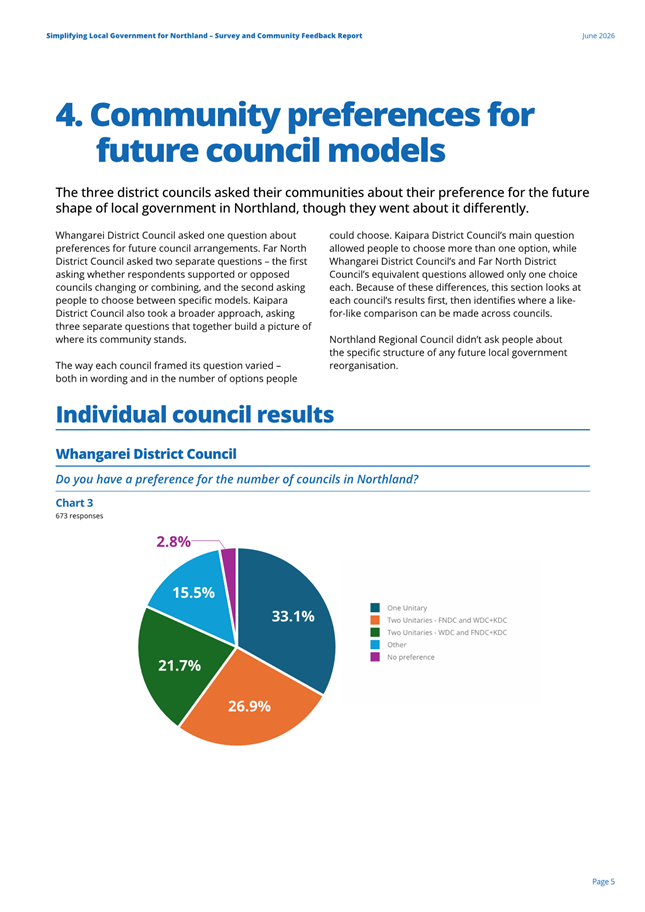
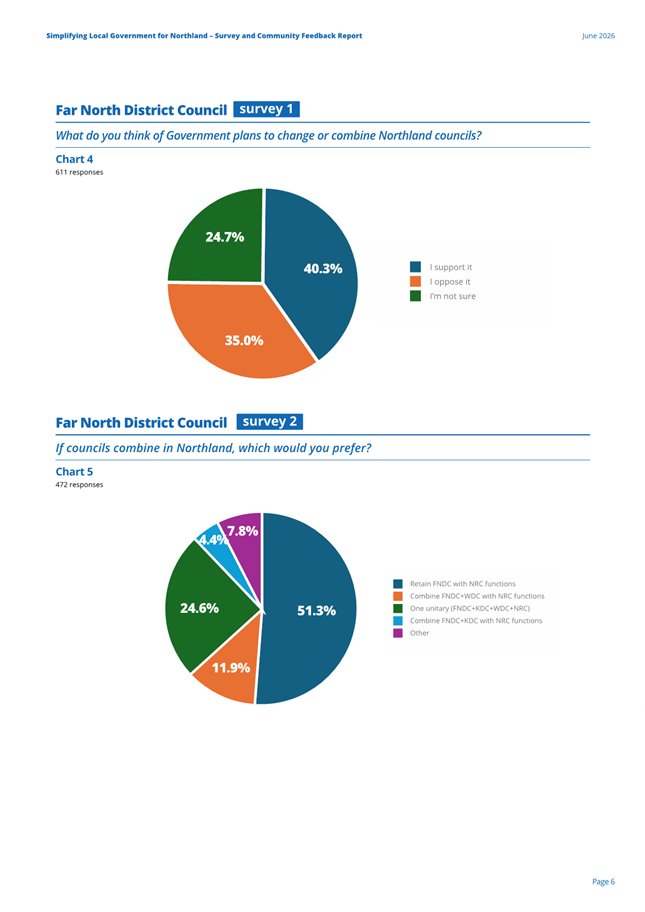
· Alongside the options analysis, early community engagement was
undertaken across Northland, generating more than 2,300 responses. While the
survey results are not statistically representative and do not constitute
formal consultation, they provide useful early insights into community views on
local government reform and the issues communities consider most important.
· On 3 July 2026 Far North District Council Elected Members
workshopped the survey results and Options Analysis. An output from this
workshop was a set of conditions that Far North Elected Members identified as
to protect in any Outline Proposal submitted to the Head Start Process where
the Far North District Council was a co submitter. These conditions can be
found in Attachment 3 to this report.
· On 6 July 2026, the EMSG considered both the options analysis and
the engagement findings. Following discussion, the EMSG resolved to recommend
that the Northland Head Start Proposal be developed based on Option 4 –
the Staged Transition Model. While the EMSG supported the staged transition
approach, no agreement was reached on the length of the transition period,
which would be considered as part of any future proposal development and design
process.
· This report provides Council with the options analysis, engagement
findings and EMSG recommendation, and seeks a decision on the preferred model
to be used as the basis for the continued development of Northland's Head Start
Proposal.
|
tŪtohunga
/ Recommendation
That Council:
a. Note
the options analysis for local government reform in Northland, provided by
Morrison Low Advisory (Attachment 1)
b. Note
the results of the public surveys for local government reform conducted by
each of the Northland Councils (Attachment 2)
c. Note
the recommendations outlined in this report from the local government reform
elected member steering group, following the meeting held 6 July 2026
d. Agree
to progress the development of a Head Start proposal for Northland using the
staged transition model as outlined in Attachment 1 except that the
transition period is to be determined during the detailed design phase of the
programme
e. Note
that the local government reform elected member steering group will progress
the development of a final Headstart Pathway Proposal with staff and make a
recommendation back to councils in early August 2026 for submission prior to
9 August 2026.
|
1) Tāhuhu Kōrero / Background
In November 2025, Government indicated their intention to
reform and simplify Local Government across New Zealand. A Head Start pathway
was announced in May 2026 which provided the opportunity for regions to work
together to design proposals for how reorganisation could look in their area.
In Northland, councils had already been working towards a
“By Northland, For Northland” approach to reform that aligned well
with the Head Start pathway. Whangārei District Council, Far North
District Council, Northland Regional Council and Kaipara District Council all
agreed to participate in an Elected Member Steering Group who have been meeting
to consider the information and provide recommendations back to the
participating councils.
In June 2026, all Councils agreed to participate in the Head
Start approach and directed staff to further investigate and provide options
analysis for two models – 1 Unitary Authority, or 2 Unitary authorities.
2) matapaki me NgĀ KŌwhiringa /
Discussion and Options
Staff engaged Morrison Low Advisory to undertake an options
analysis of potential local government reform models that could form the basis
of a Head Start proposal for Northland.
Councils initially directed staff to investigate two broad
structural approaches: a single Northland-wide unitary authority or a
two-unitary authority model. Through the development of the options analysis,
two additional sub-options were identified through discussions and
consideration of potential governance arrangements that may be relevant in the
Northland context. As a result, four options were assessed and are outlined in
this report. Detailed analysis of each option is provided in Attachment 1.
Morrison Low Advisory’s role in this report was not to
recommend a preferred option, but rather to assess how each model performs
against the Government's reform objectives and criteria. While the analysis
identifies areas where particular models may perform more strongly or face
greater challenges, it does not conclude which option represents the best
outcome for Northland. Determining a preferred approach ultimately requires
consideration of the region's priorities and the trade-offs councils are
willing to make between factors such as efficiency, local representation,
regional coordination and governance complexity.
The analysis also notes that a number of important design
considerations are relevant across all options, including representation
arrangements, service delivery models, funding approaches, transition planning,
and engagement with communities and iwi/hapū. These matters are not
required to be resolved at this stage and would be considered in more detail as
part of any future proposal development process.
Early Engagement and Community Feedback
Early engagement was undertaken across Northland through
council-led surveys, with more than 2,300 responses received across the four
councils. While the surveys provide useful insights into community views, they
were not designed to be statistically representative and varied in methodology,
question wording and survey structure between councils. As a result, the
findings should be interpreted as indicative rather than definitive. A summary
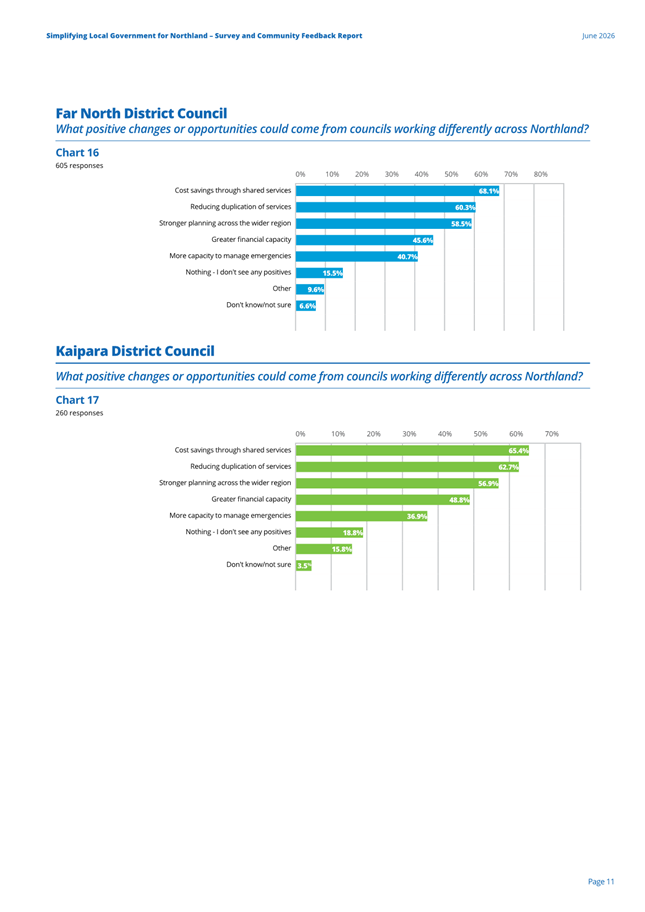
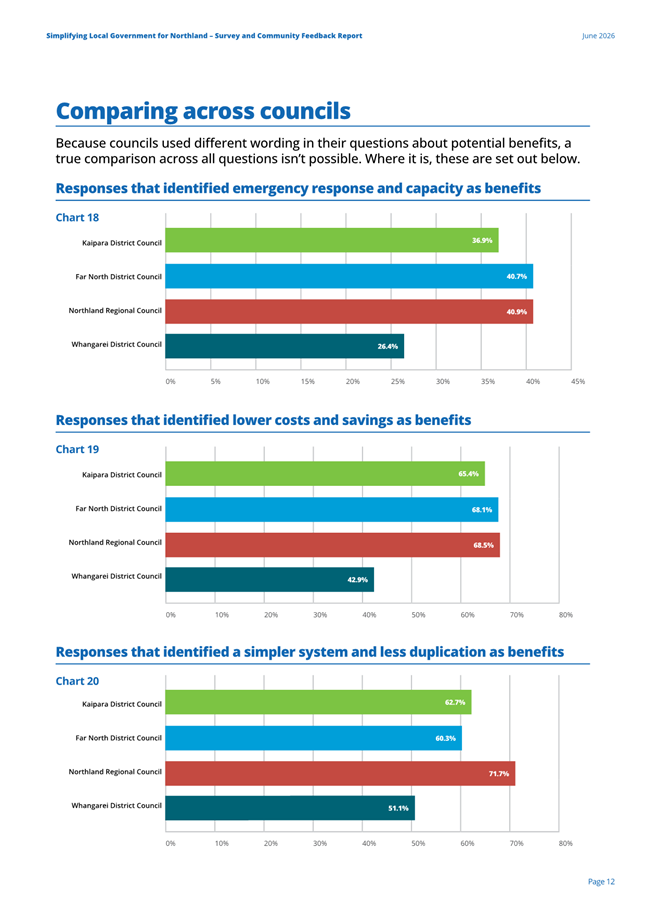
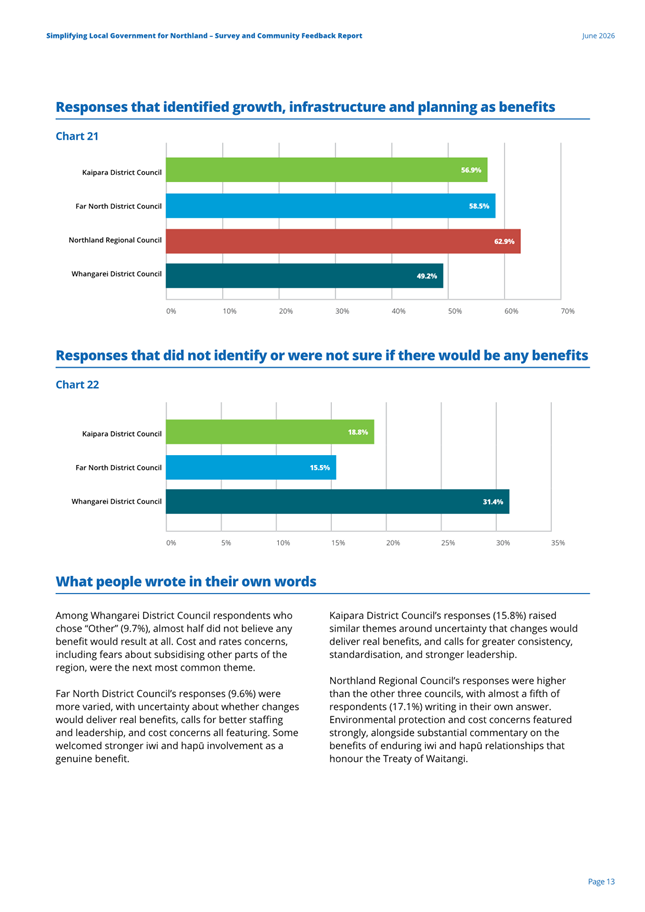
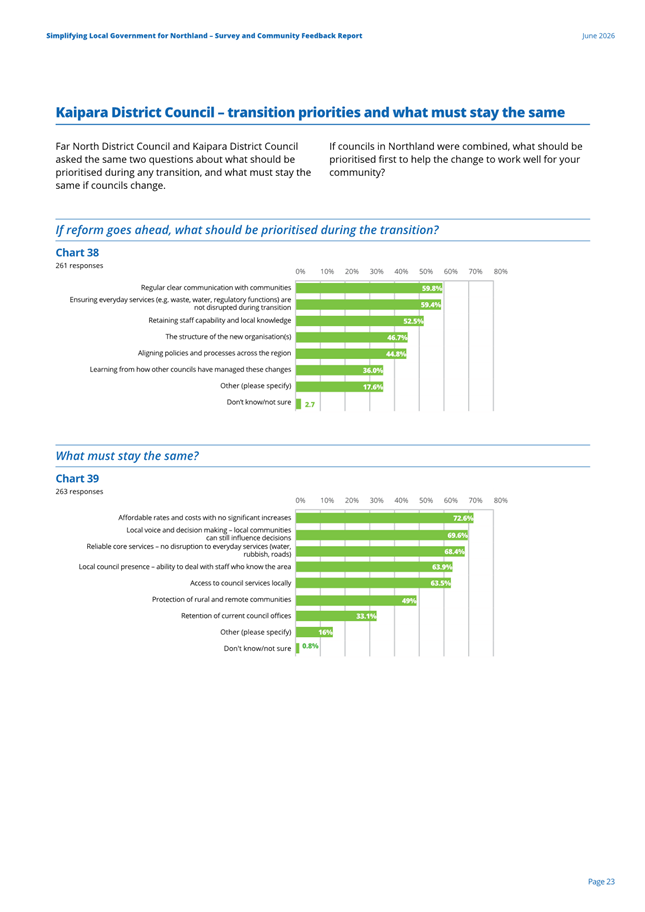
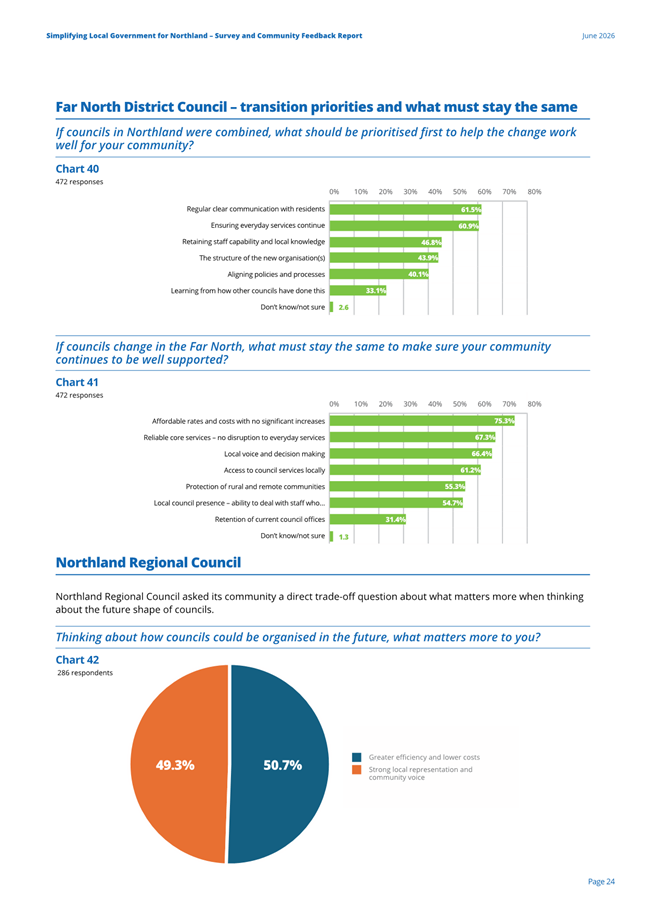
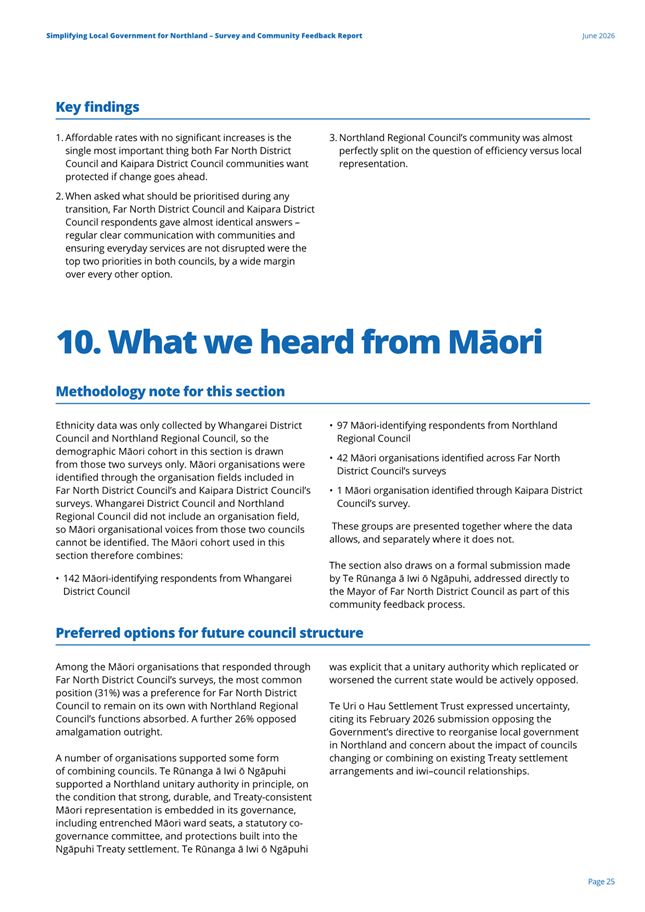
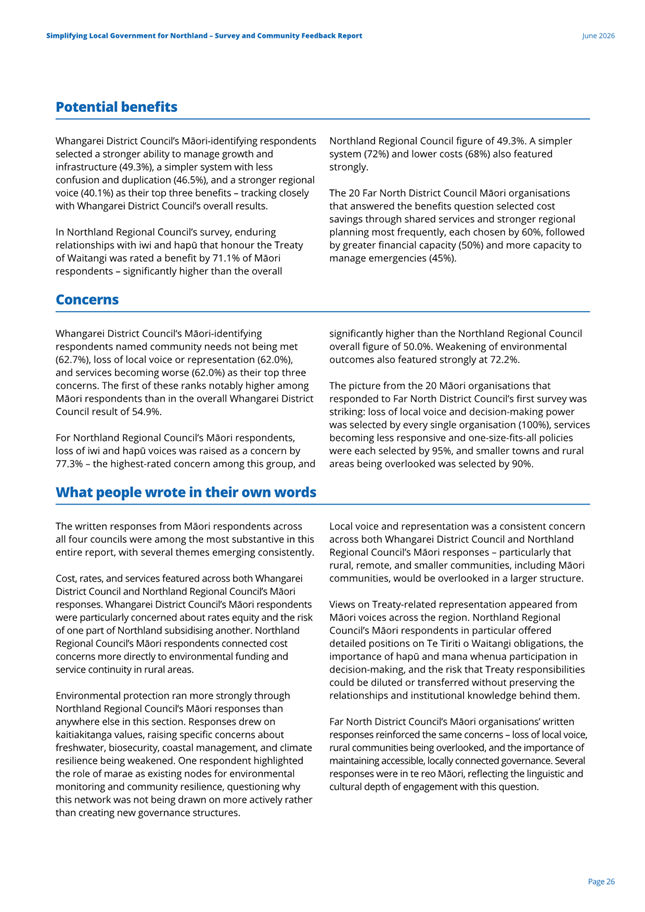
of the regional engagement findings is provided in Attachment 2.
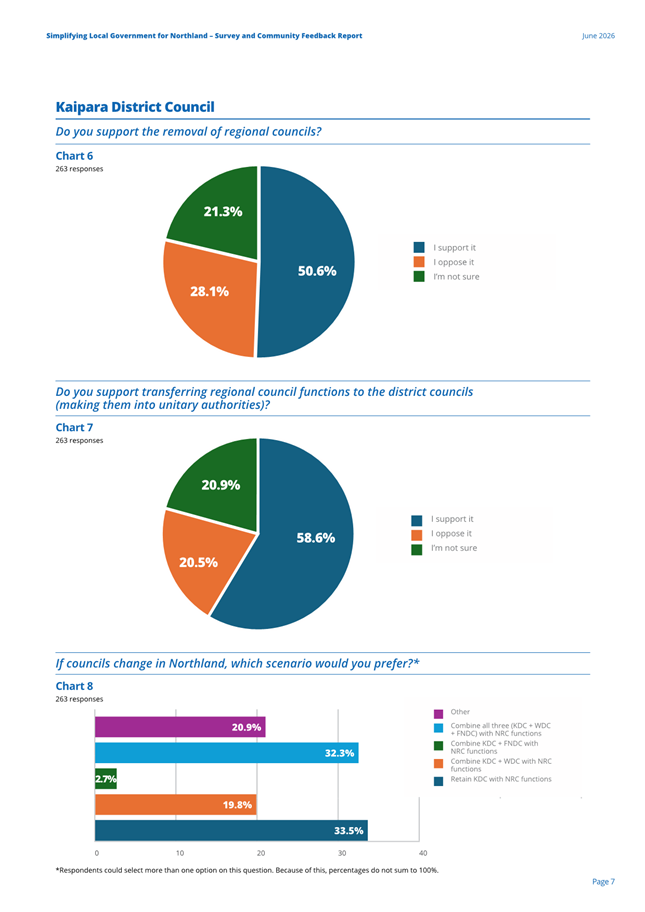
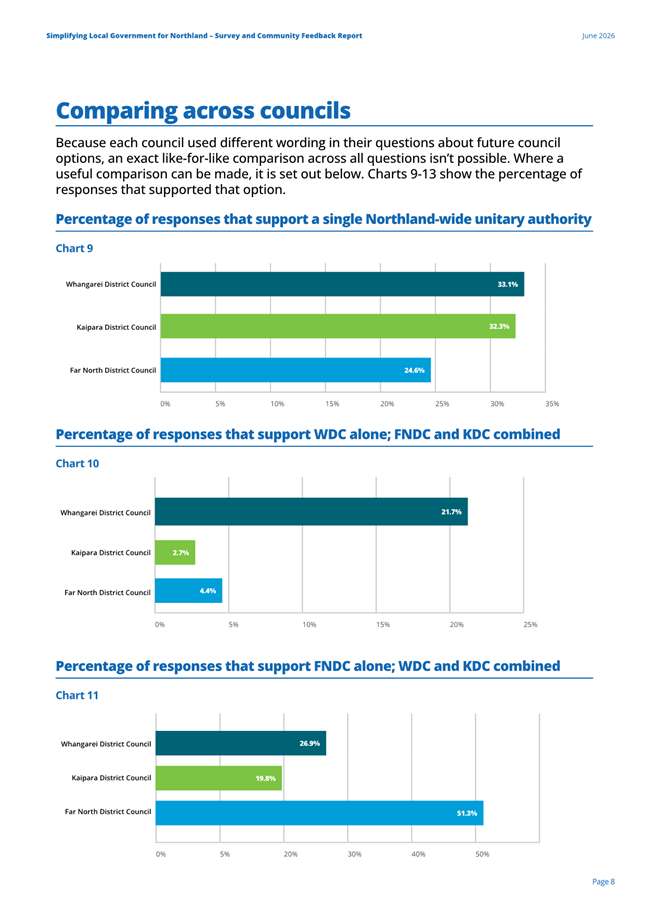
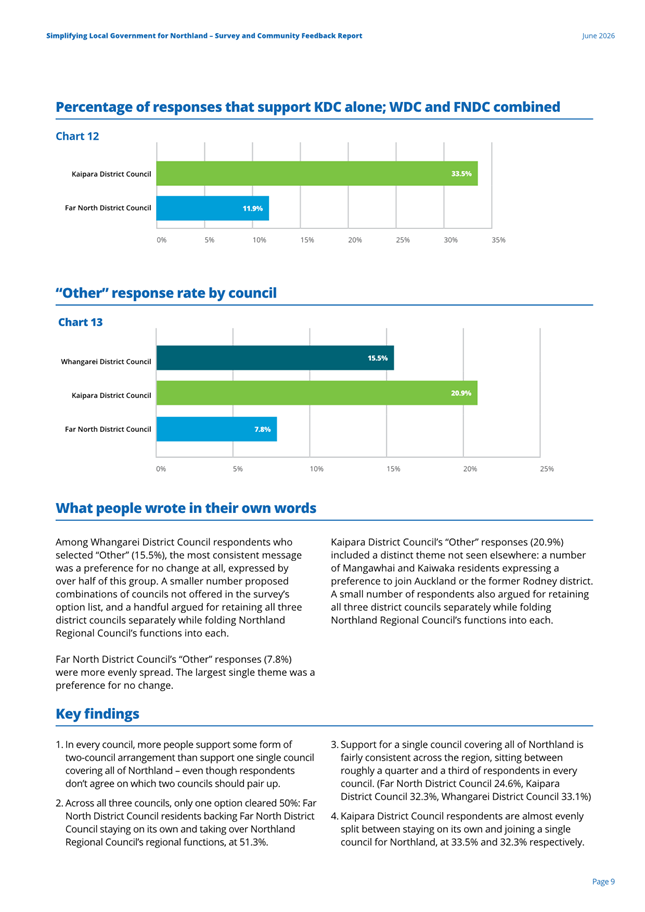
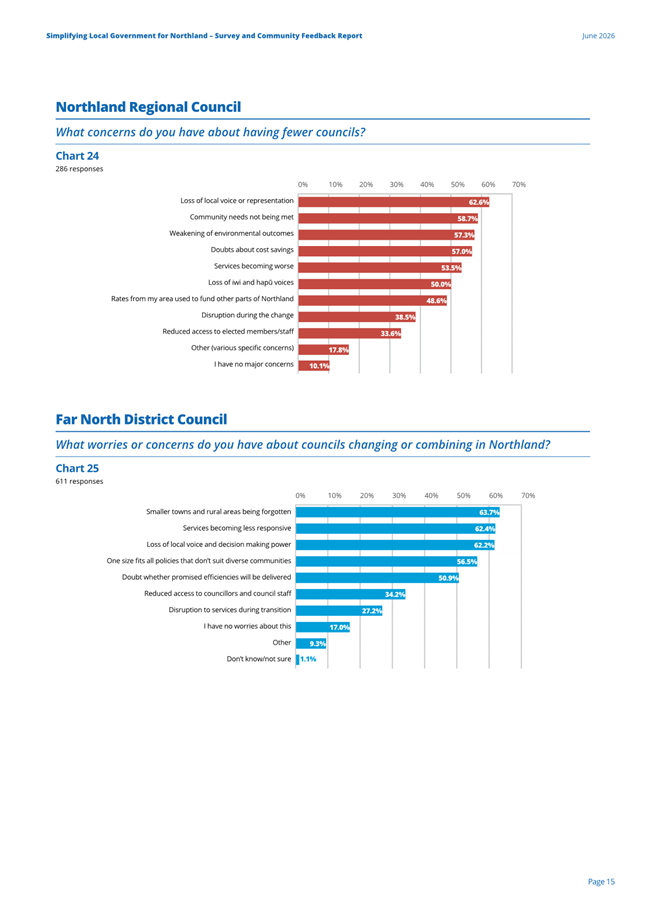
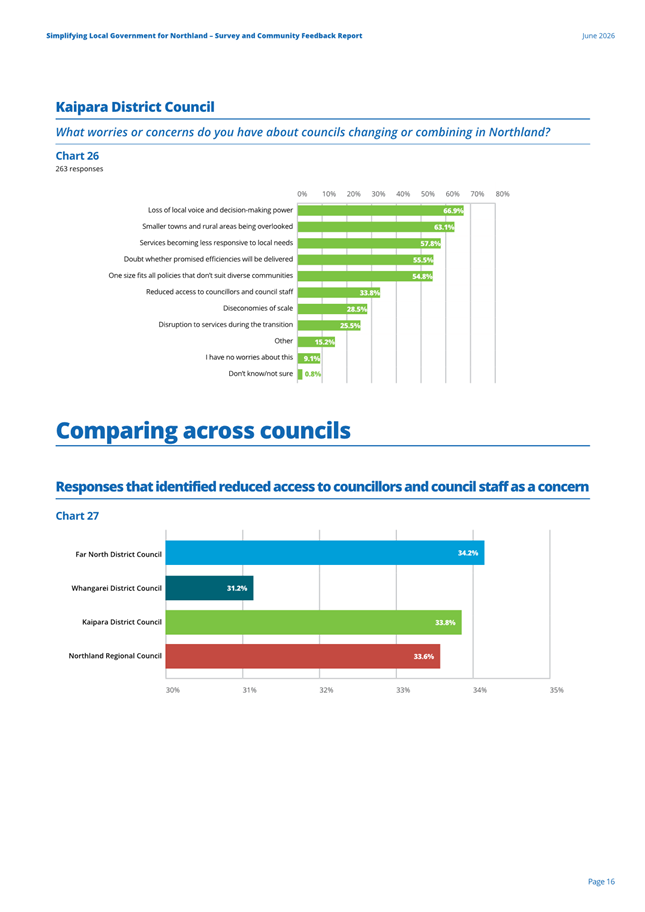
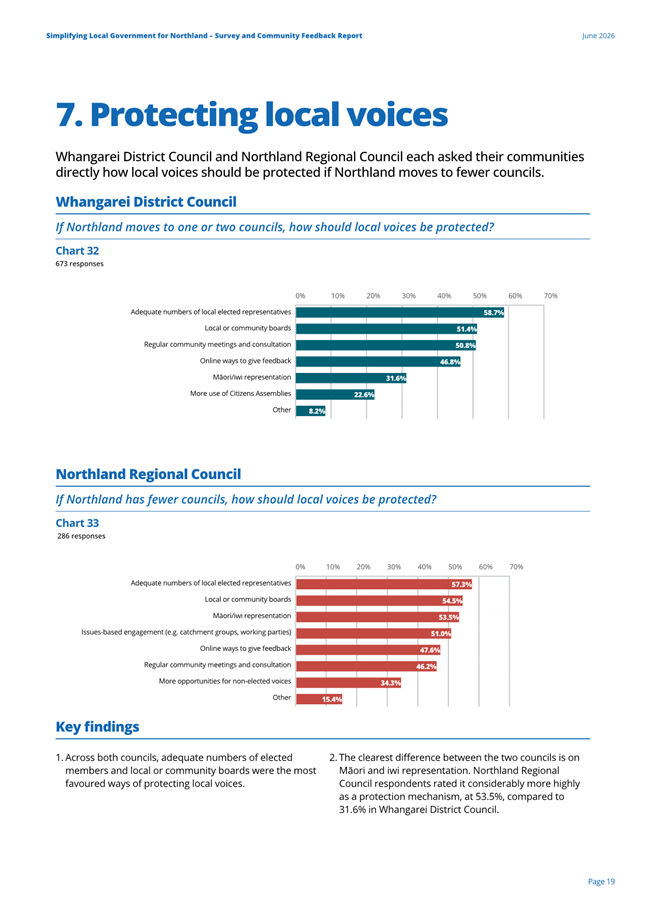
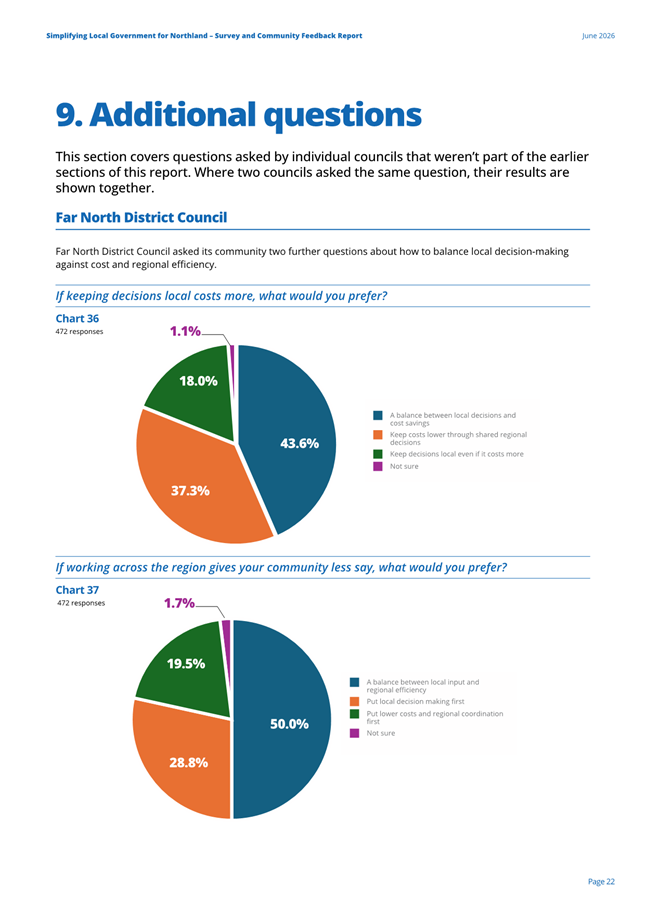
Across Northland, respondents generally showed greater
support for some form of two-unitary authority arrangement than for a single
Northland-wide unitary authority. While preferences varied between districts,
no single two-unitary authority configuration emerged as a clear regional
preference.
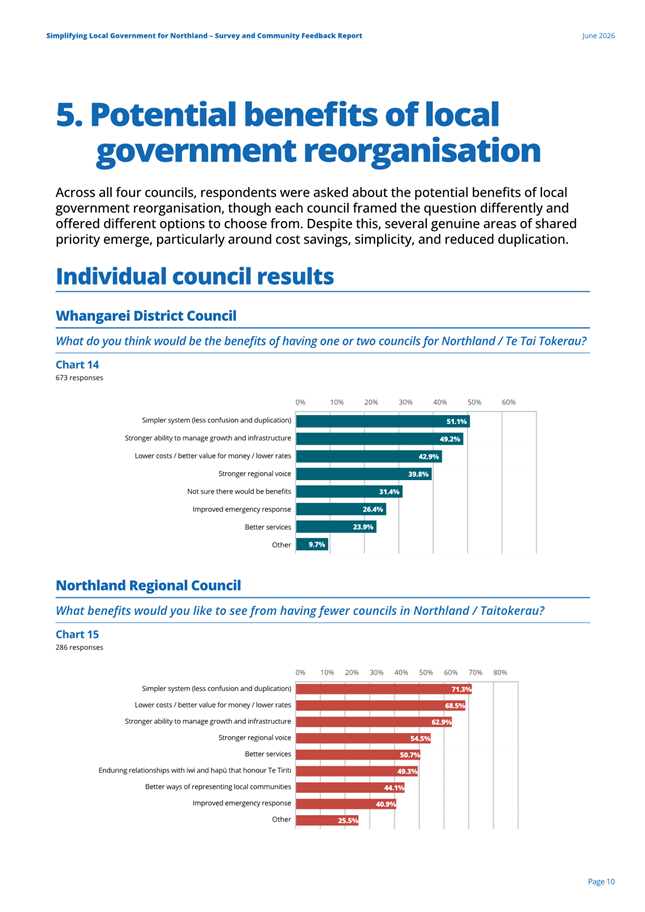
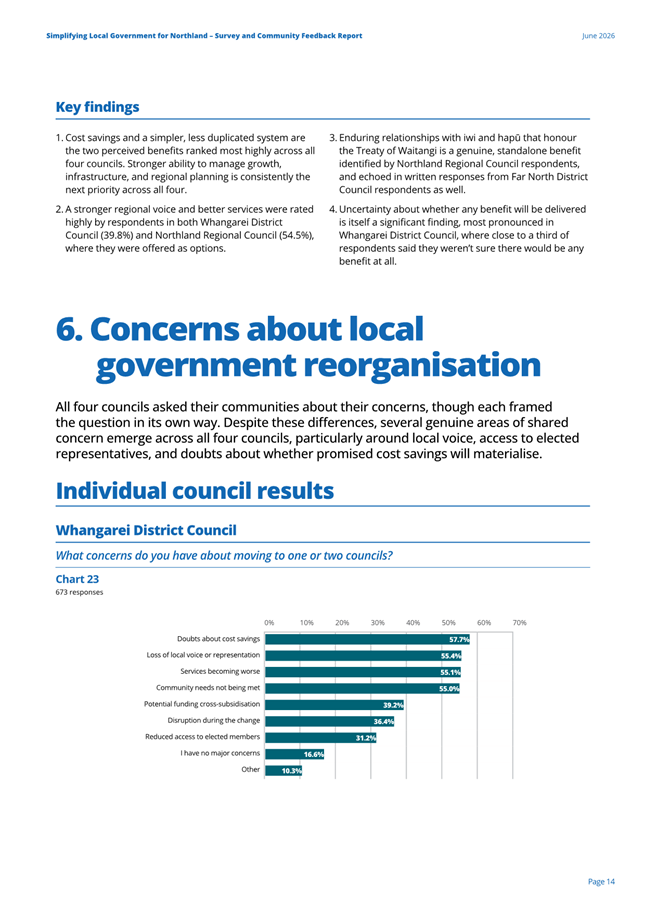
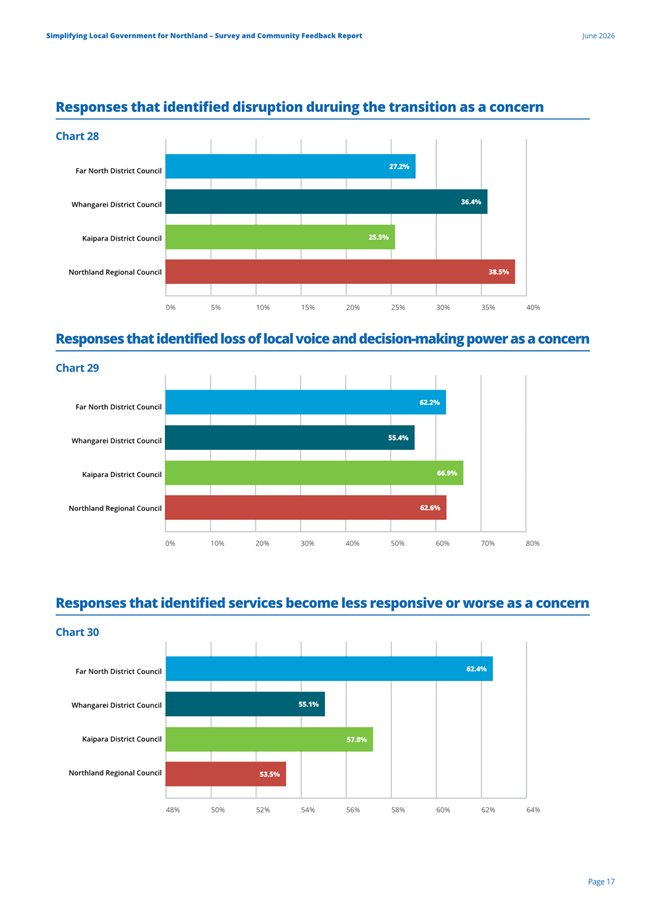
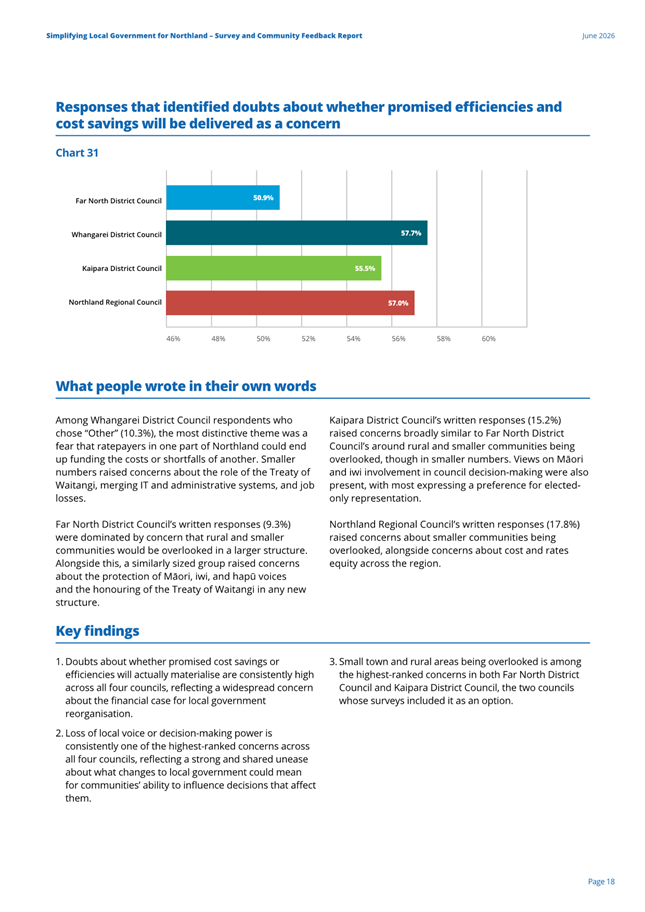
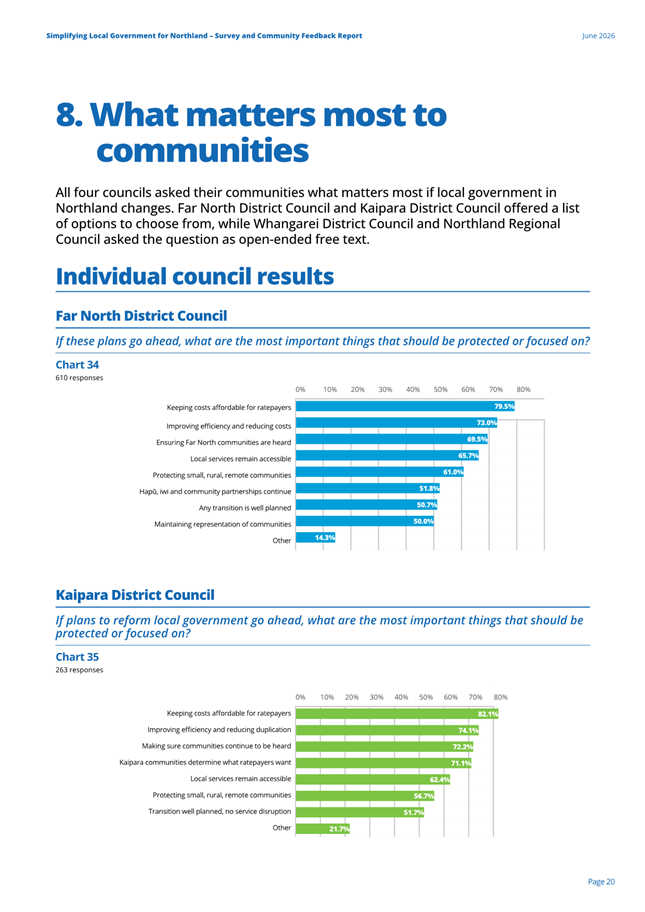
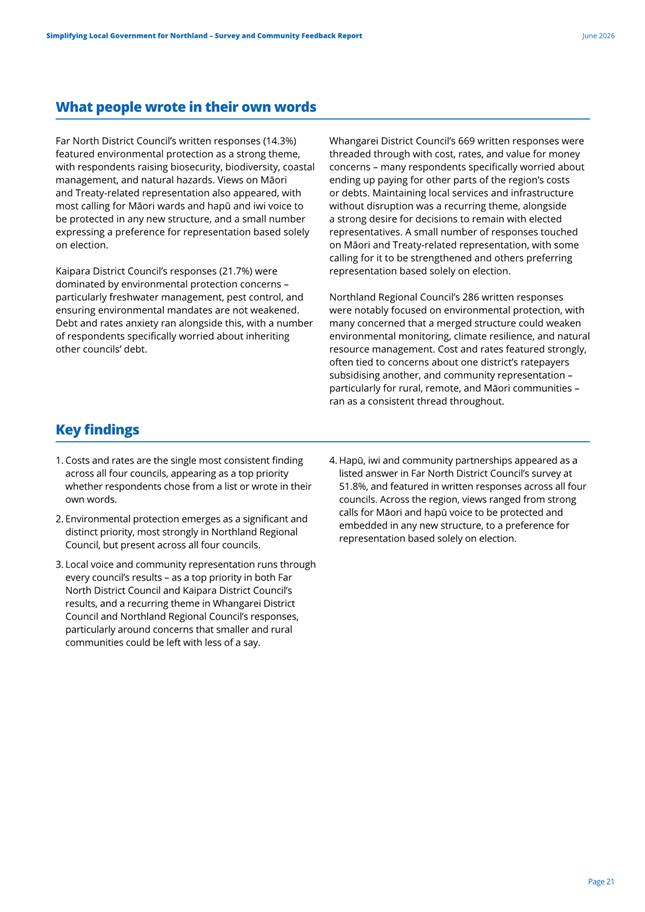
Across all councils, recurring themes included the
importance of maintaining local voice and representation, concerns about
whether anticipated efficiencies and cost savings would be realised, and a
desire to ensure rates remain affordable. Respondents also emphasised the need
to protect services, support rural communities, and carefully manage any
transition process.
It is important to note that this engagement occurred at a
very early stage of the process. Survey participants were not provided with
detailed information on how each governance model might operate in practice,
nor were the advantages, disadvantages or implementation implications of each
option presented in detail. No formal consultation has occurred at this stage.
The survey results therefore reflect initial community views rather than
informed preferences based on fully developed proposals.
On 3 July 2026 Far North District Council conducted a
workshop with all Elected Members[1]
on;
a. the
survey results and
b. the
4 options within the Morrison Low Advisory report
An output of the workshop was a set of conditions to protect
in any Outline Proposal that the Far North District Council will participate
in. These conditions are as follows (not in any order);
· Local voice and
decision-making close to communities
· Strong Community
Boards or Local Boards with real powers
· Māori
representation, Māori wards, and Tiriti-based relationships
· Rural and small
community voice
· Equal access to
regional wealth, assets, and investment
· Fair funding,
local budgets, and financial accountability
· Service levels,
local access, and essential infrastructure
· Rates
affordability, value for money, and financial sustainability
· Clear allocation
of regional and local functions
The full set of conditions can be found in Attachment 3.
Each attendee at the workshop was then asked by the mayor to
rank each of the Options presented in the Morison Low Advisory Report from 1
(best) to 4 (worst). Most favoured Two Unitary Authorities (Option 3) or
One Unitary Authority (Option 1) often with caveats regarding local
representation and Māori wards, with many attendees identifying a staged
transition (Option 4) as their second choice ranking.
The outputs from this workshop were taken by the FNDC EMSG
representatives to the 6 July 2026 Elected Member Steering Group Meeting.
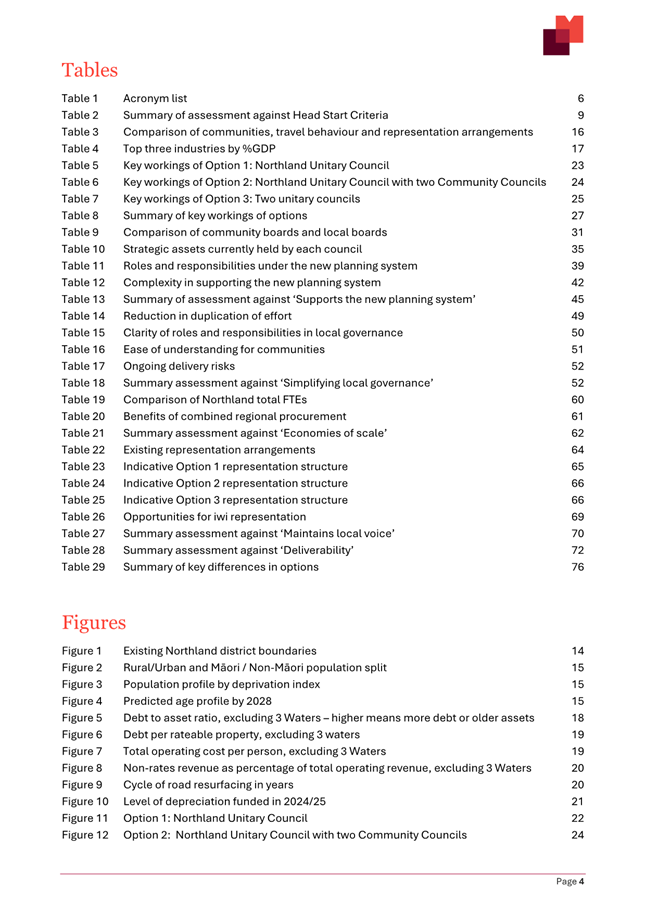
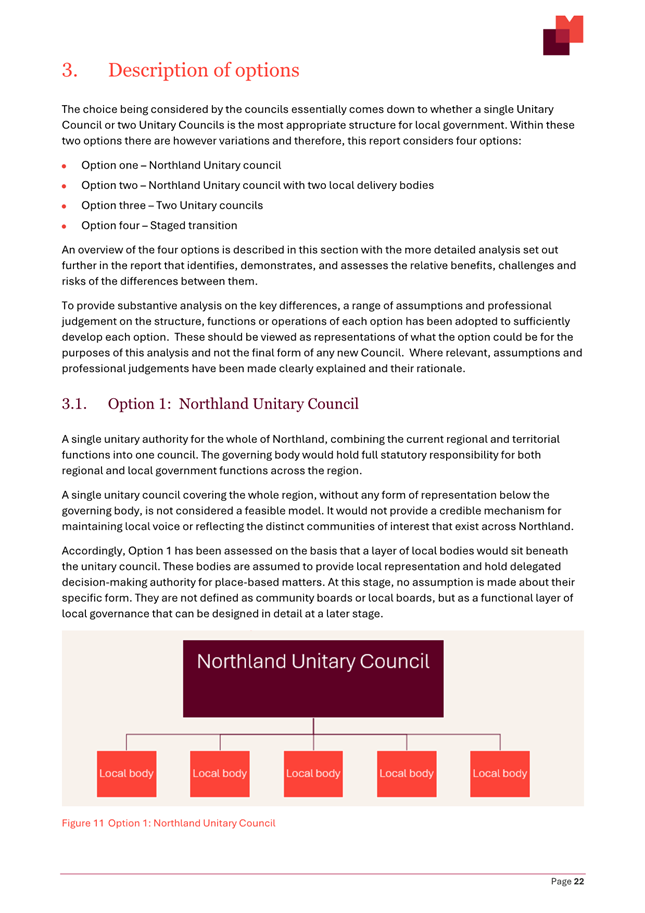
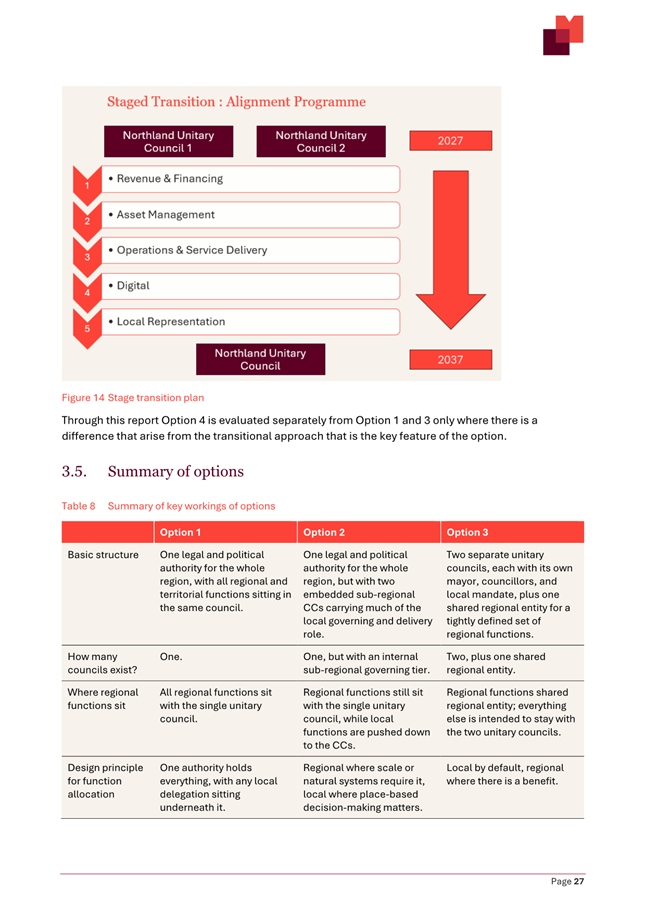
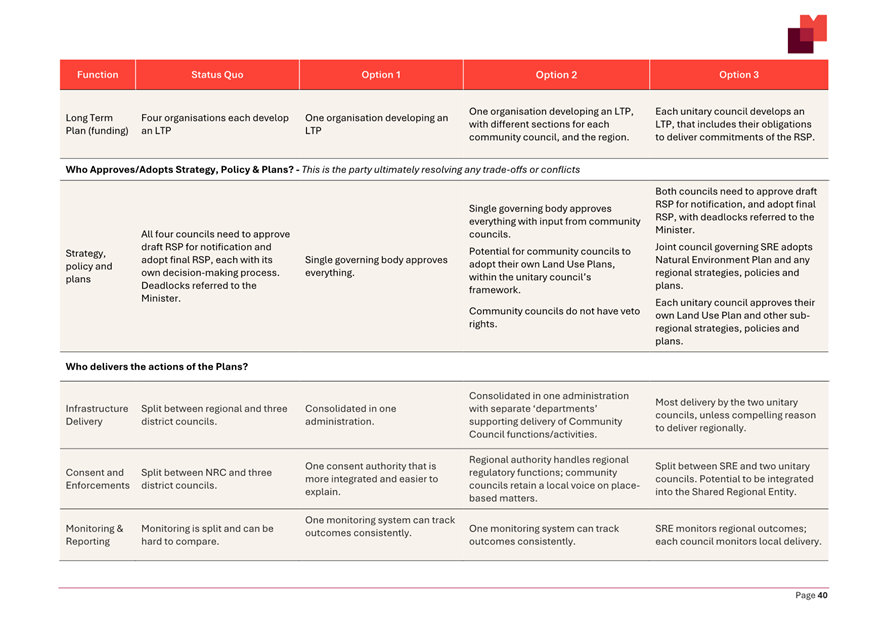
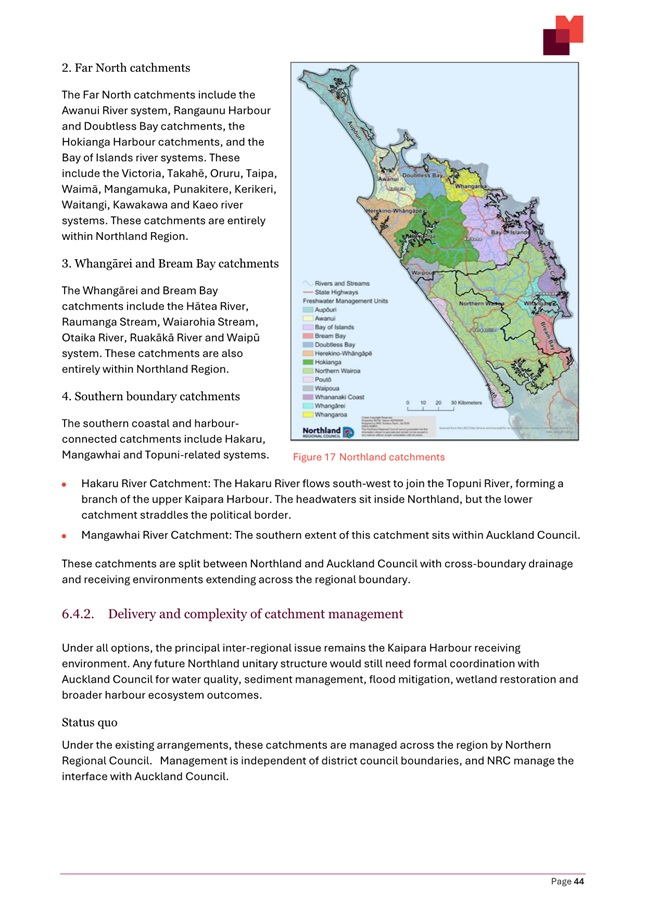
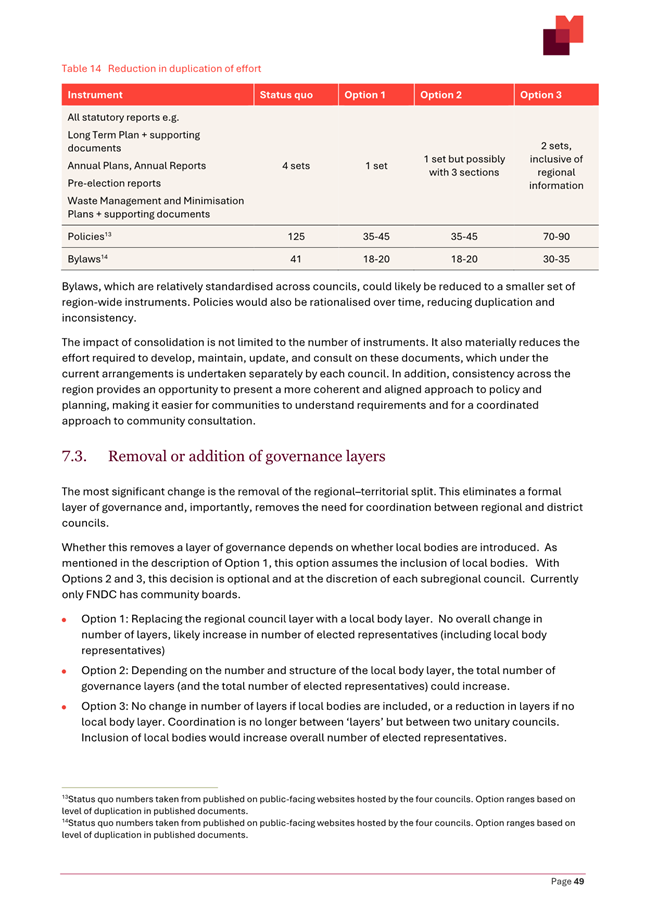
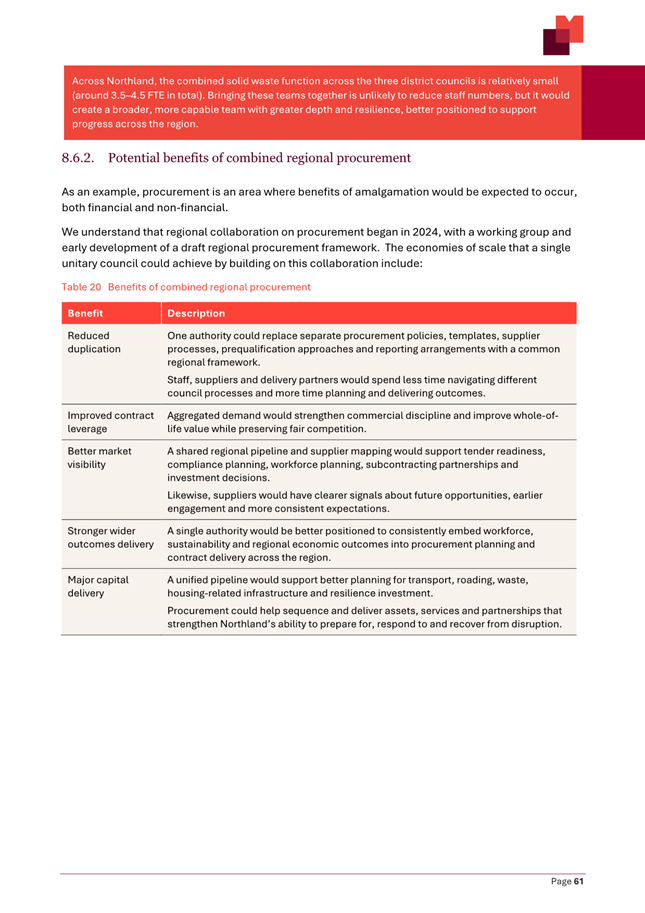
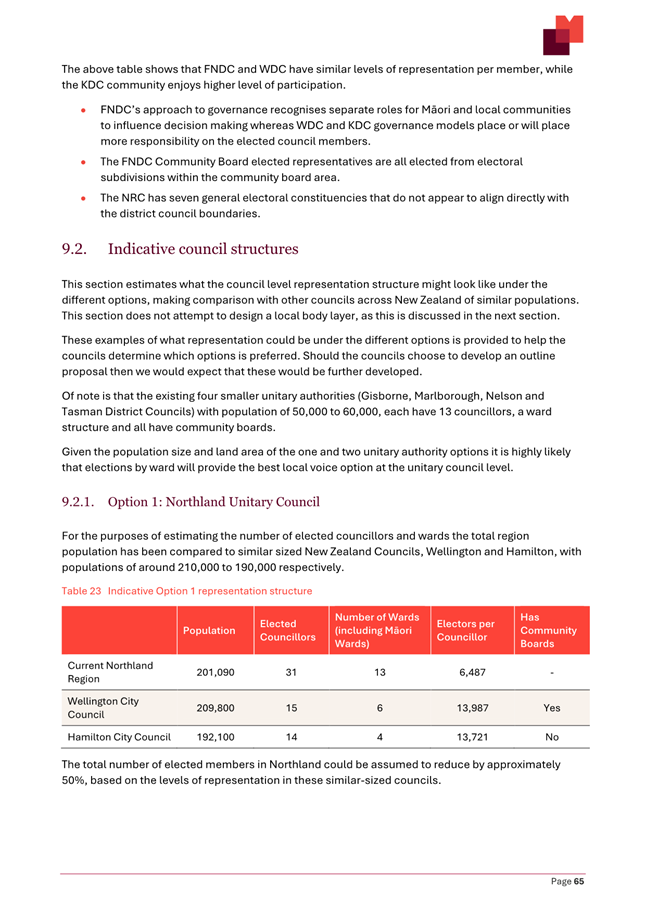
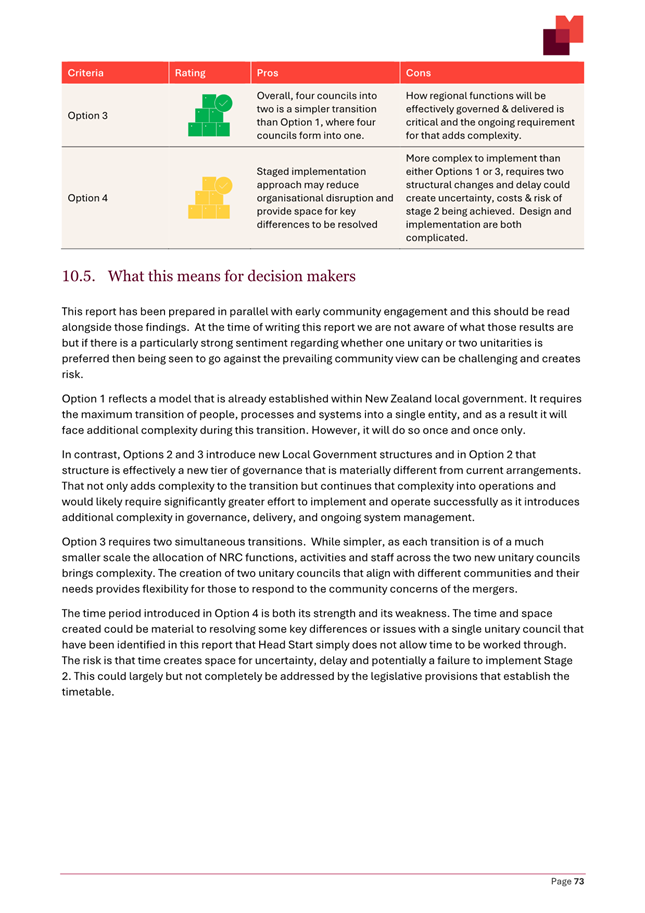
Option 1: One Unitary Authority Model
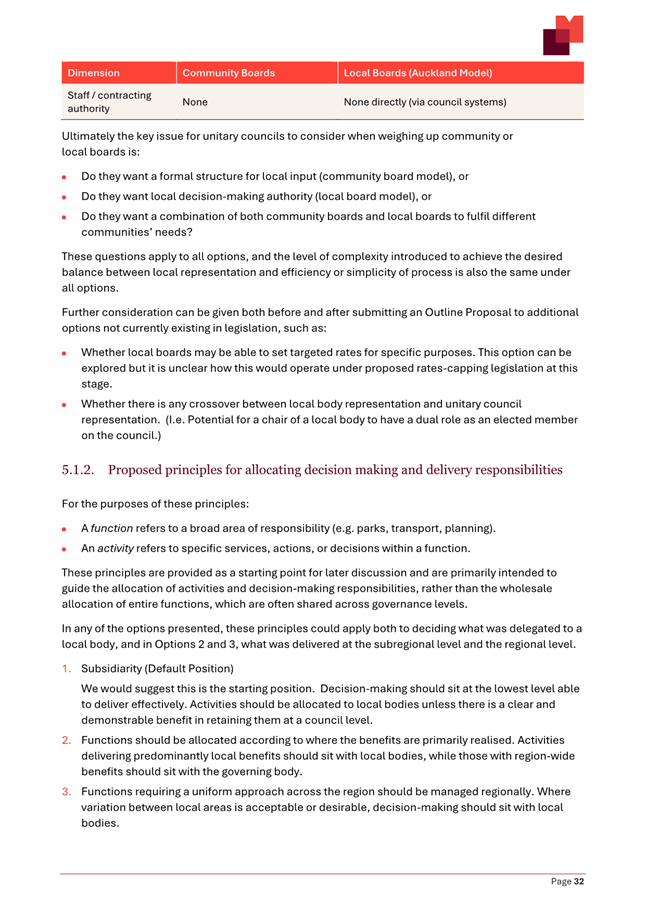
Figure 1: One
Unitary Authority Model (please note the number of local bodies is indicative
only)
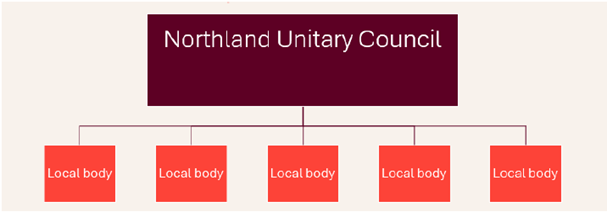
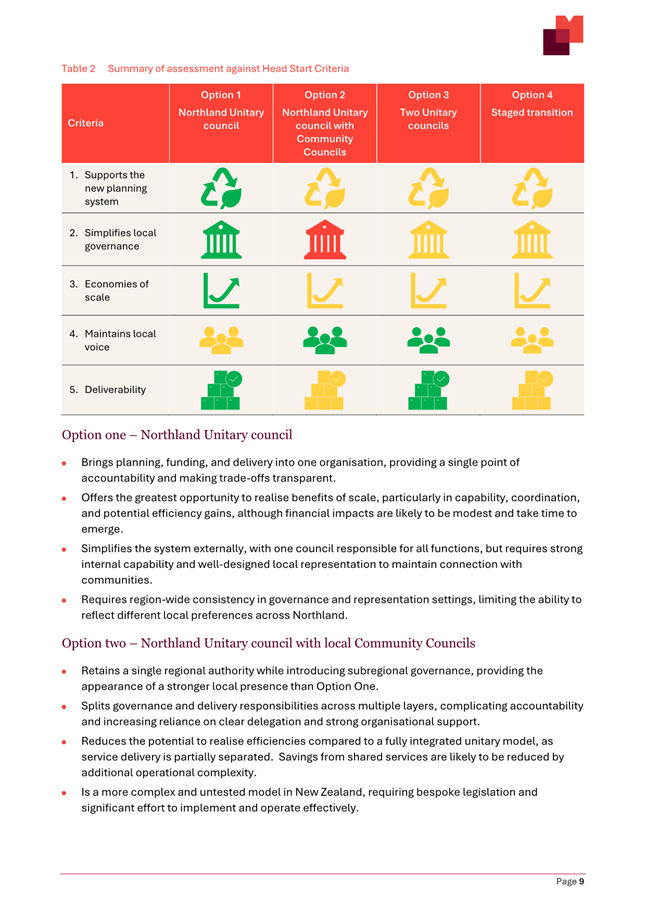
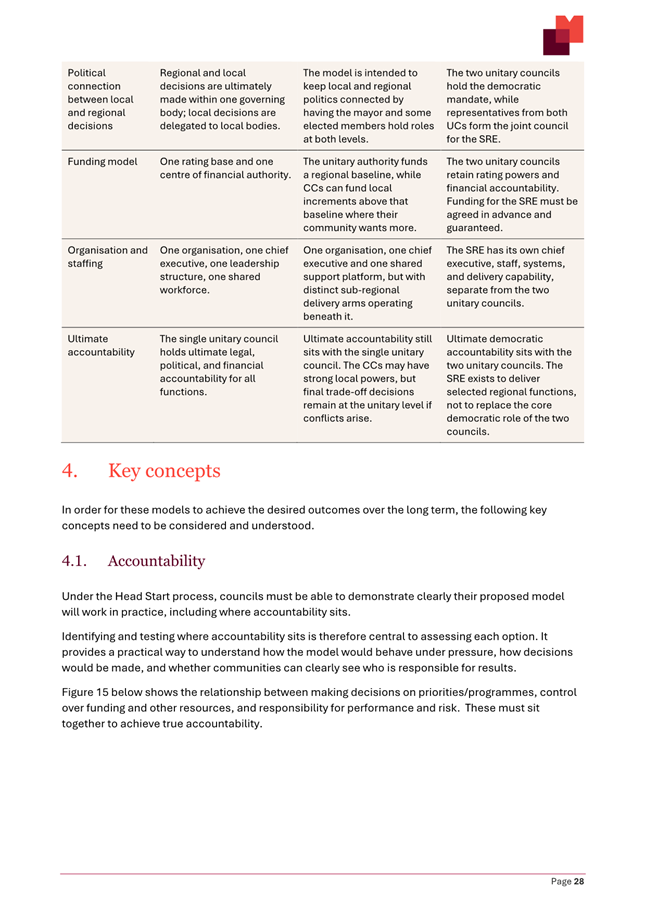
Under this model, a single Northland-wide unitary authority
would be established, bringing together all current regional and territorial
local government functions into one organisation. Local representation
arrangements would be required to ensure communities continue to have input
into decision-making. Morrison Low's assessment found this model aligns most
strongly with the Government's objectives for simplification, efficiency,
service integration and regional coordination.
Key advantages:
· Provides a single
point of accountability for governance, planning and service delivery.
· Maximises
opportunities to reduce duplication and achieve efficiencies through scale.
· Supports
integrated infrastructure planning and investment across Northland.
· Provides the
strongest ability to address region-wide strategic issues.
· Aligns most
closely with the Government's objective of simplifying local government
structures.
Key challenges:
· May be perceived
as reducing local influence over decisions.
· Requires strong
local representation arrangements to maintain community voice.
· Less flexibility
to accommodate differing local priorities and approaches.
· Significant
transition and implementation requirements.
The key difference between this model and the other options
is that it places the strongest emphasis on regional integration, efficiency
and system simplification, while relying on local representation mechanisms to
maintain community connection and influence.
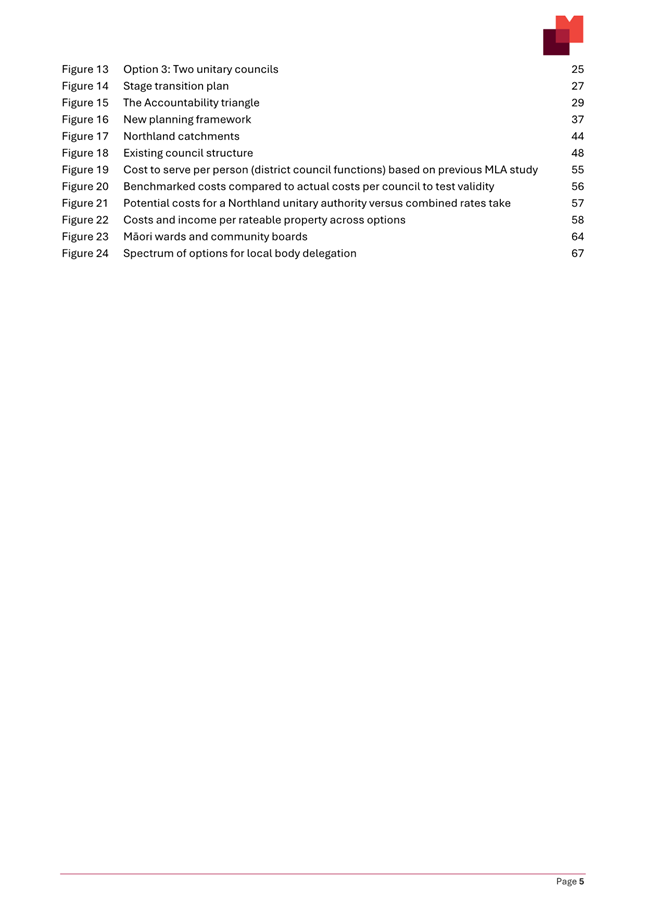
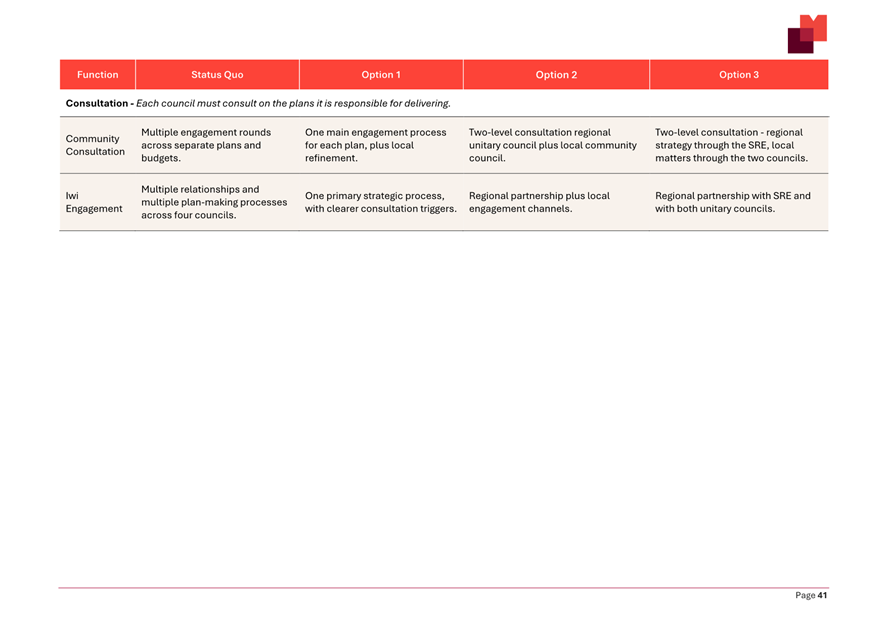
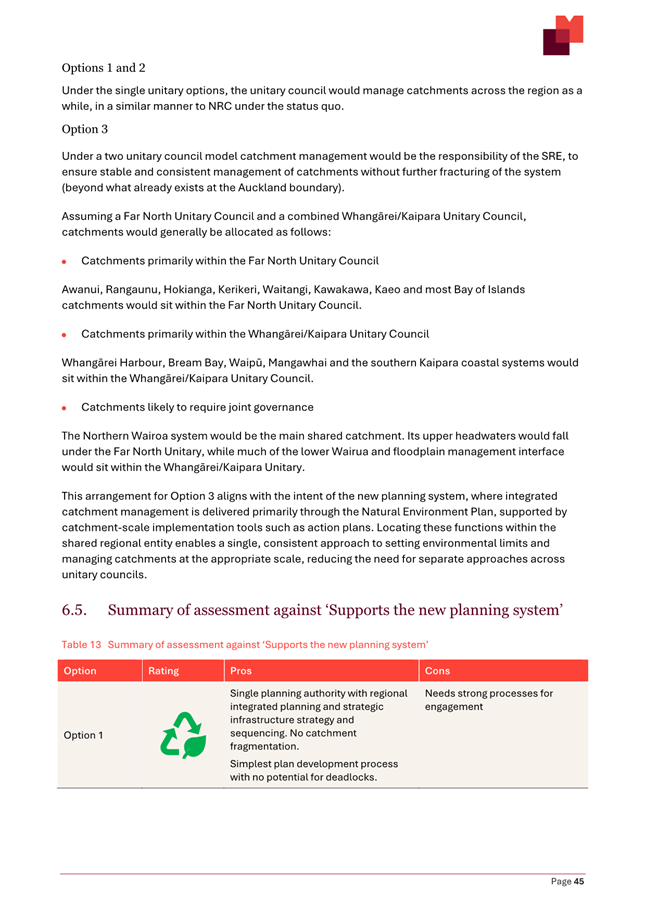
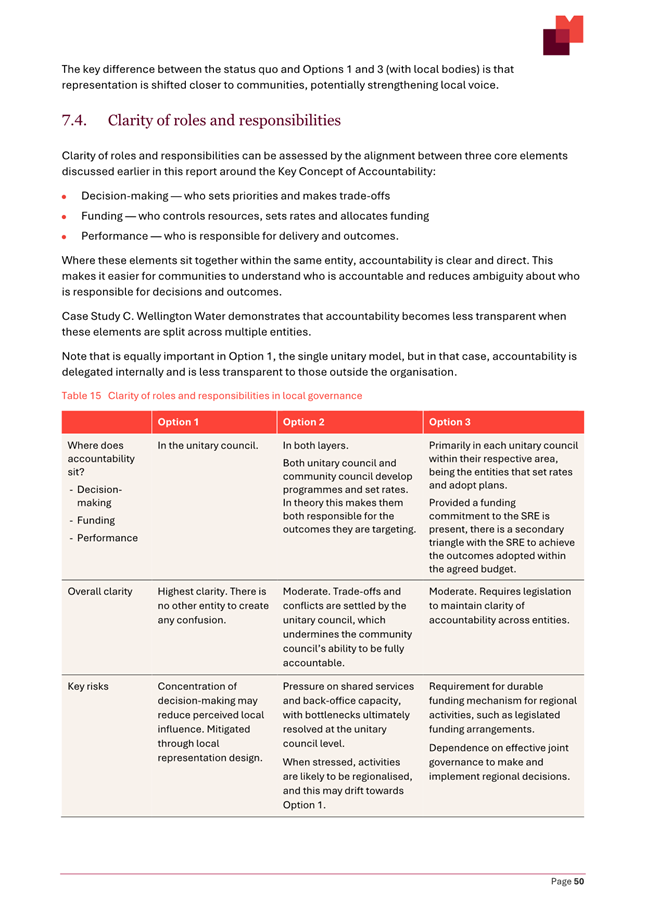
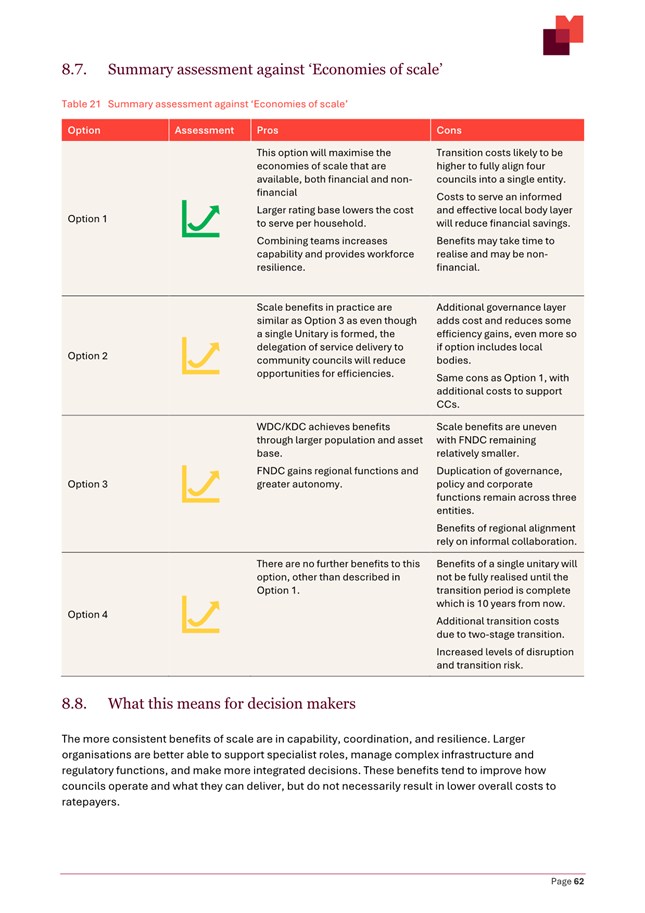
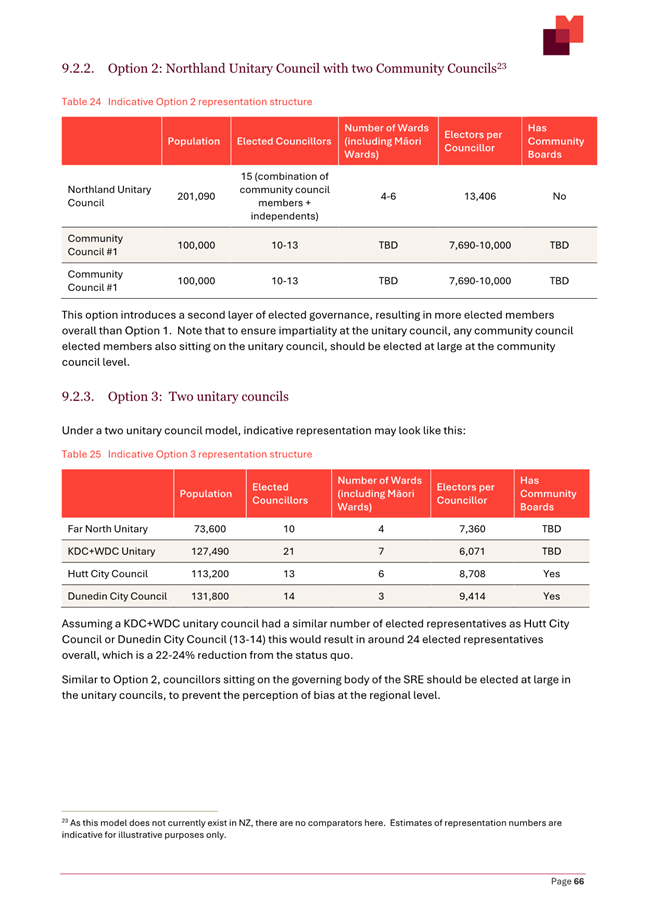
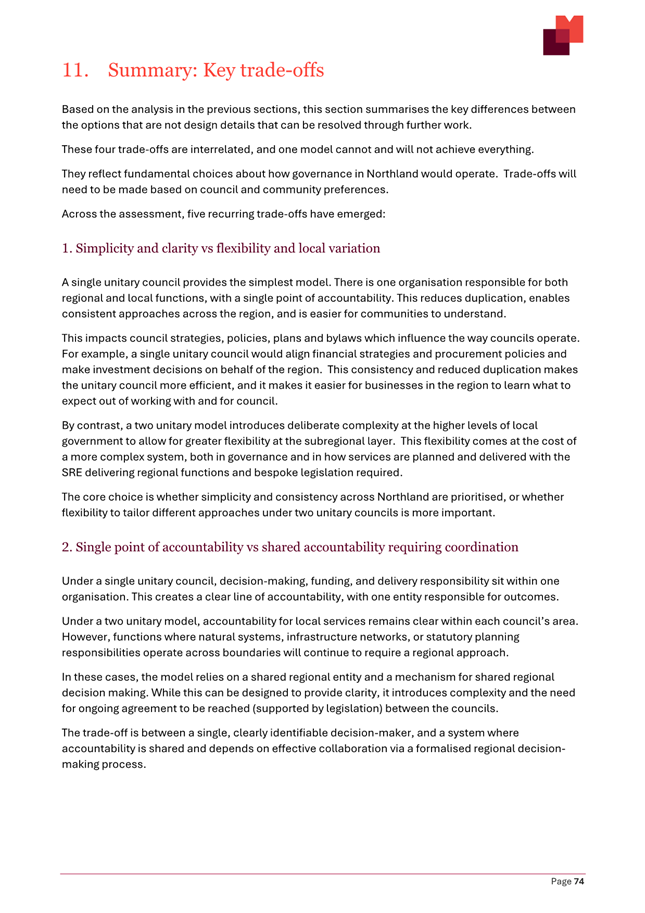
Option 2: One Unitary Authority with Community Councils
Model
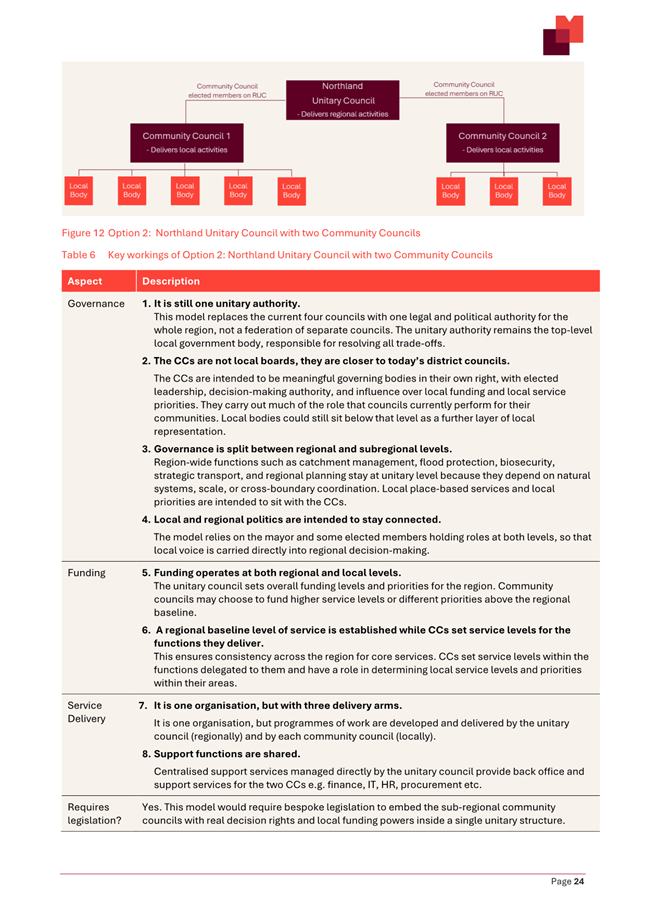
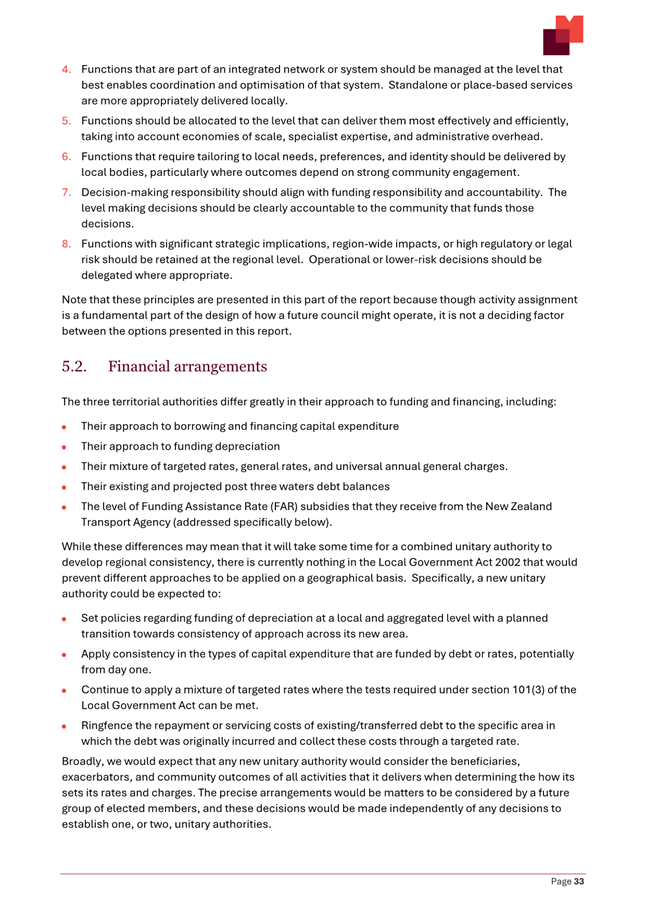
Figure 2: One Unitary
Authority with Community Councils Model (please note the number of local bodies
is indicative only)
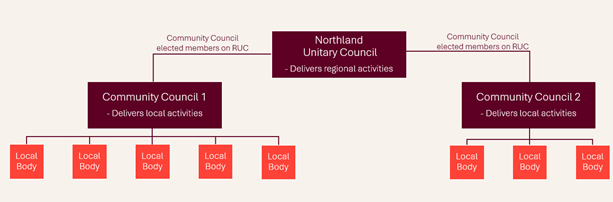
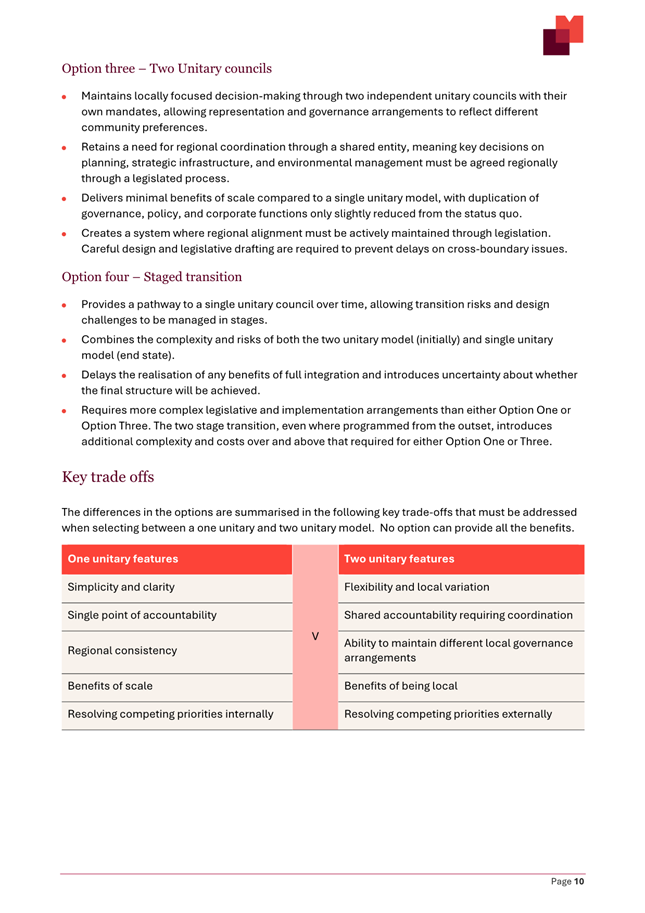
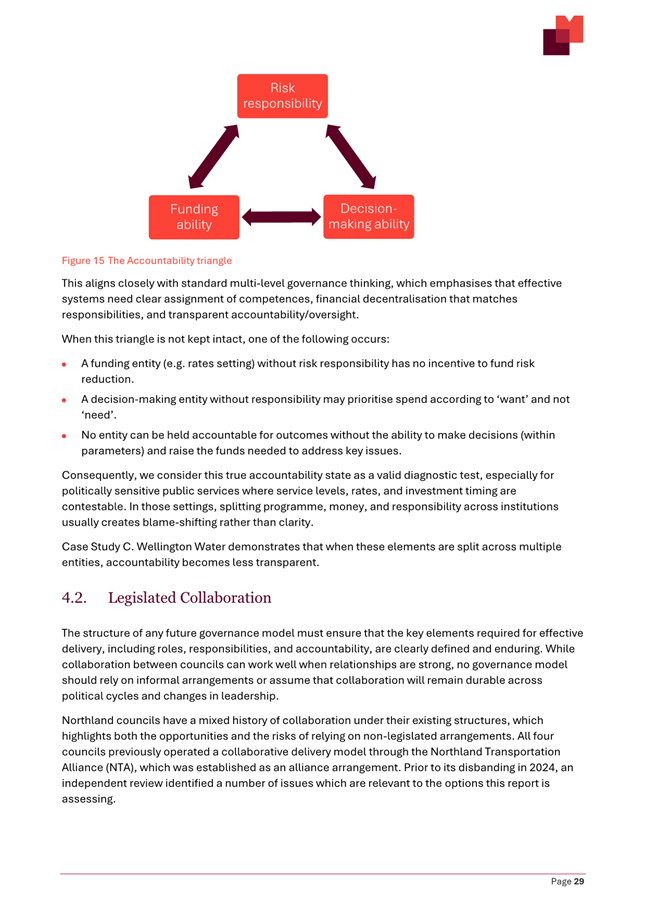
This model would establish a single Northland unitary
authority supported by two Community Councils responsible for many local-level
functions. It seeks to balance the efficiencies and strategic benefits of a
single organisation with greater local involvement in decision-making.
Key advantages:
· Retains a single
regional organisation and many of the associated efficiency benefits.
· Provides a
stronger local decision-making presence than a traditional single unitary
authority.
· Supports regional
consistency while allowing some responsiveness to local needs.
· May address
concerns regarding local representation and community identity.
Key challenges:
· Creates additional
governance complexity through multiple layers of decision-making.
· Accountability may
be less clear than under a single governing body.
· Some efficiency
benefits may be reduced due to the additional governance layer.
· Requires bespoke
legislative arrangements and is not a proven model in New Zealand.
The key difference between this model and the others is that
it attempts to achieve both regional integration and local decision-making.
While this may improve representation outcomes, it also creates greater
complexity and aligns less strongly with the Government's objective of
simplifying local government structures.
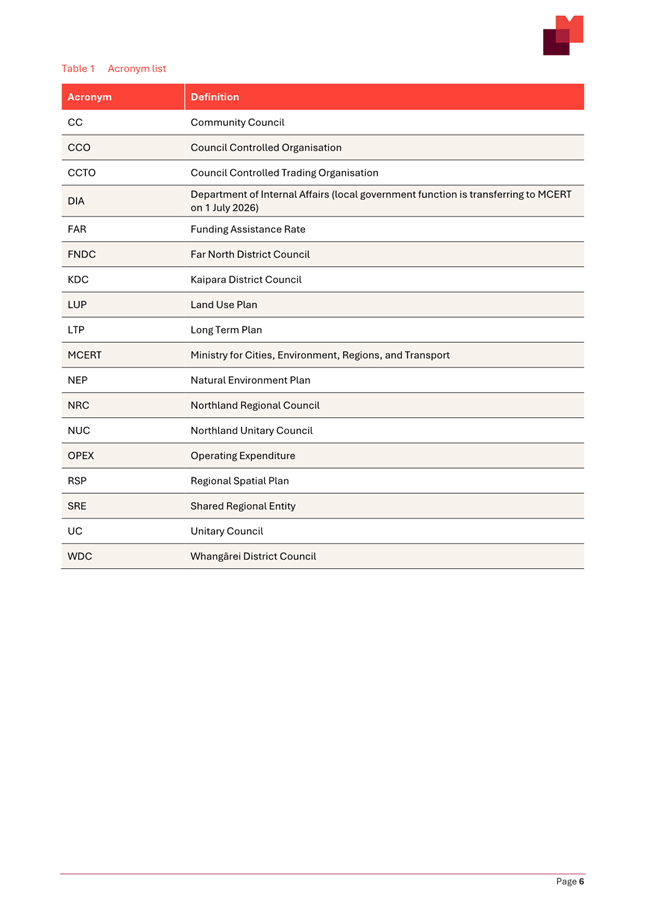
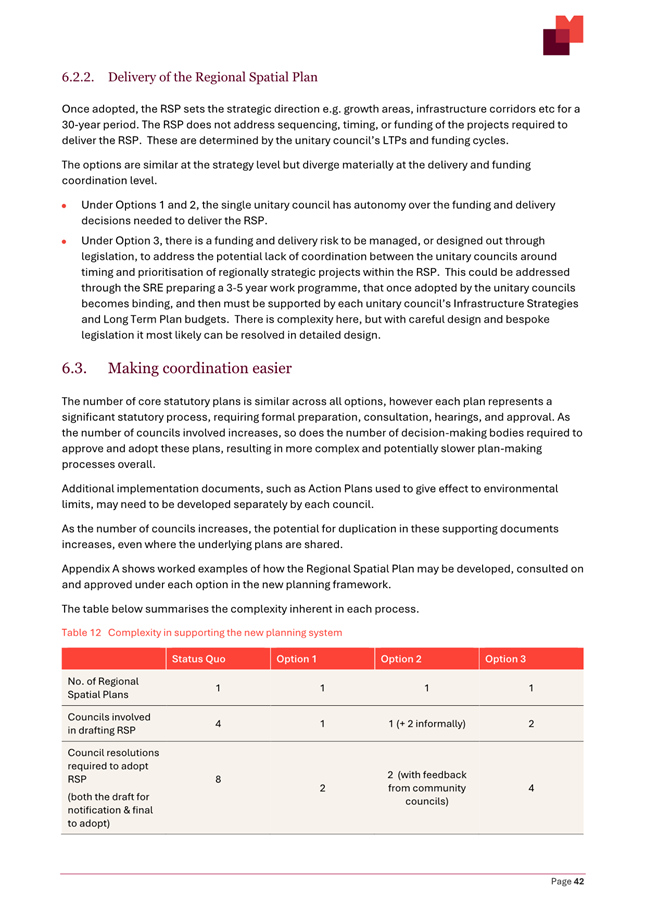
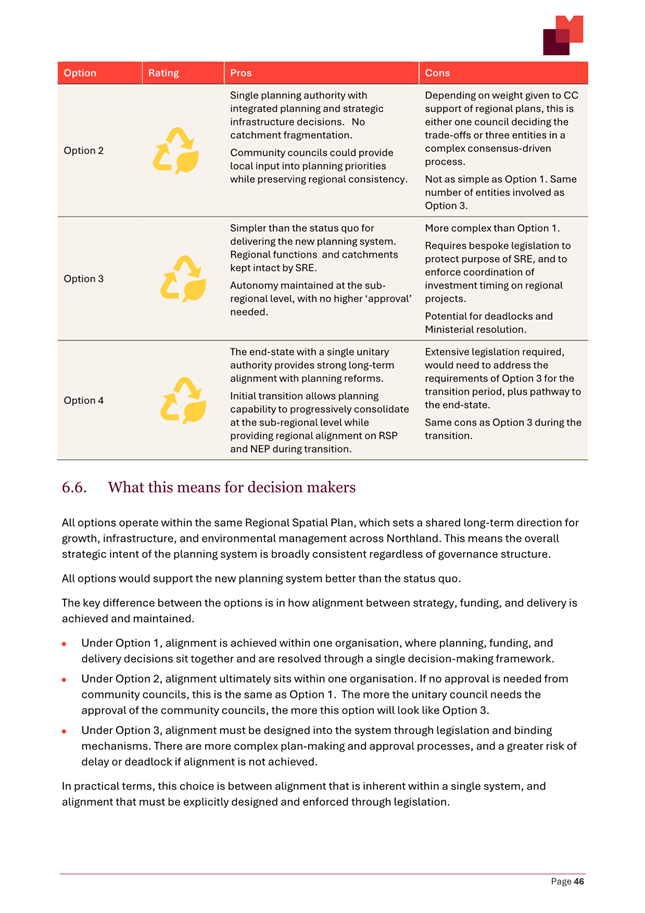
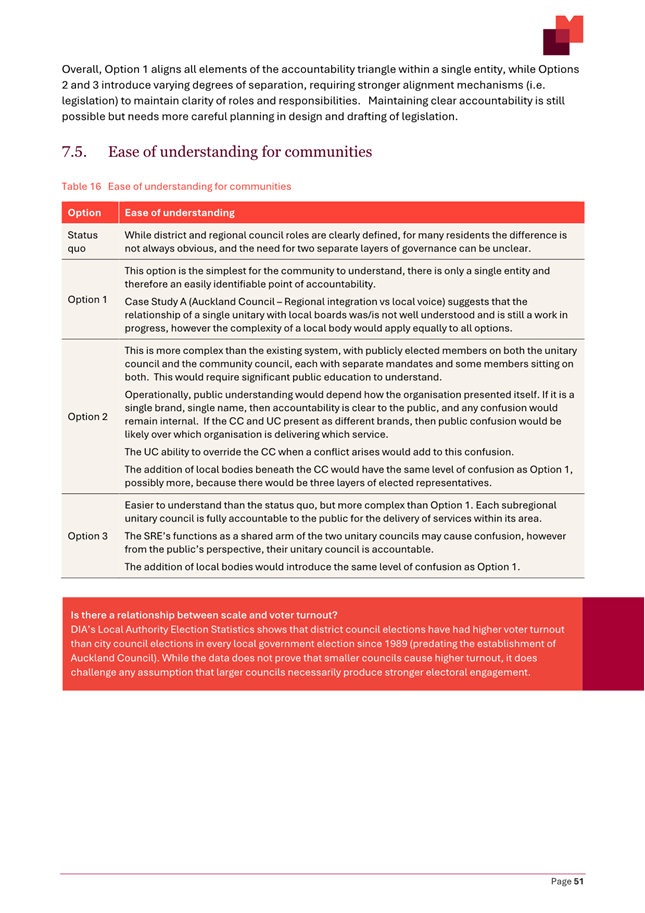
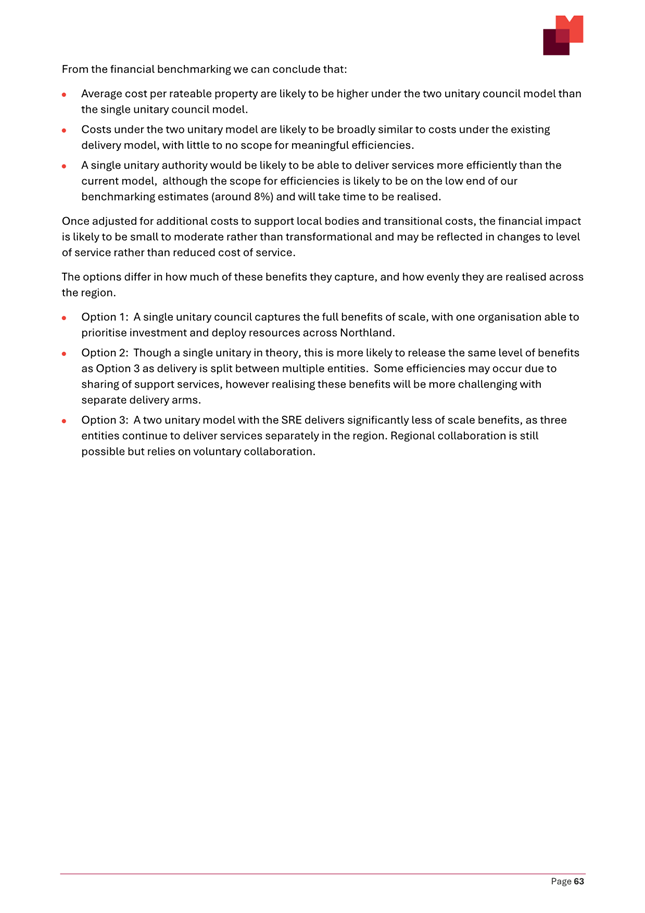
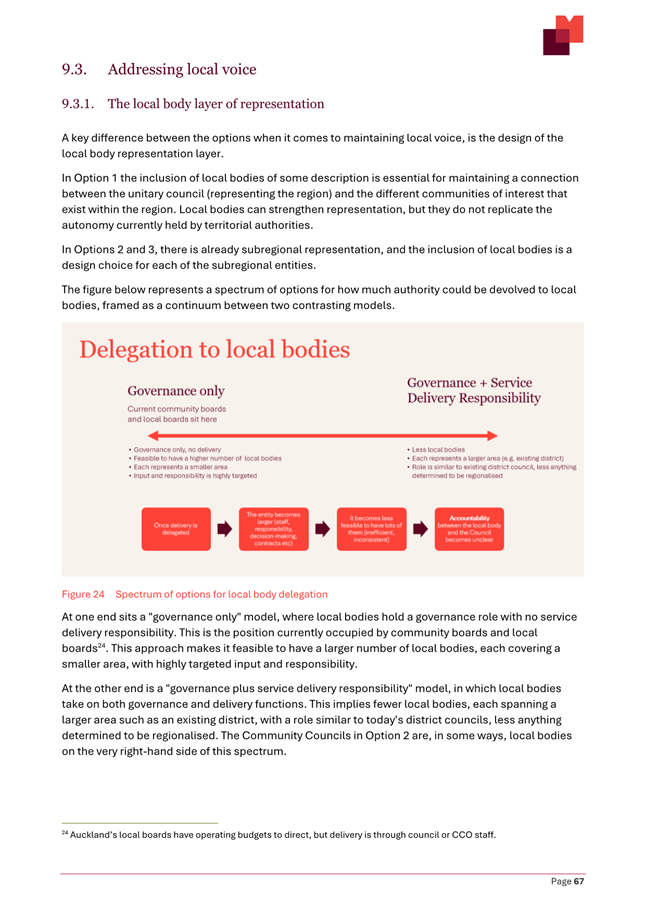
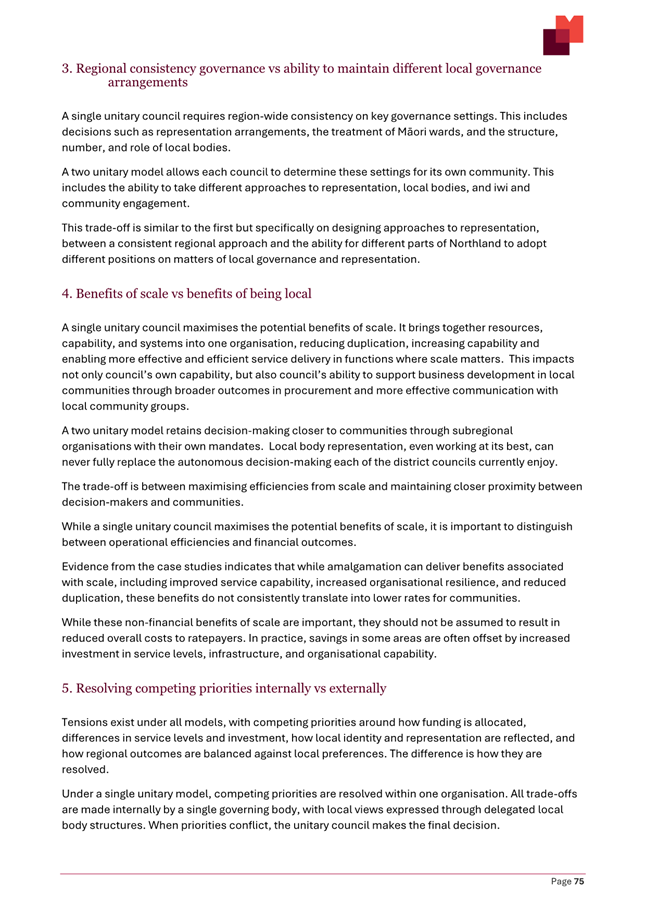
Option 3: Two Unitary Authorities Model
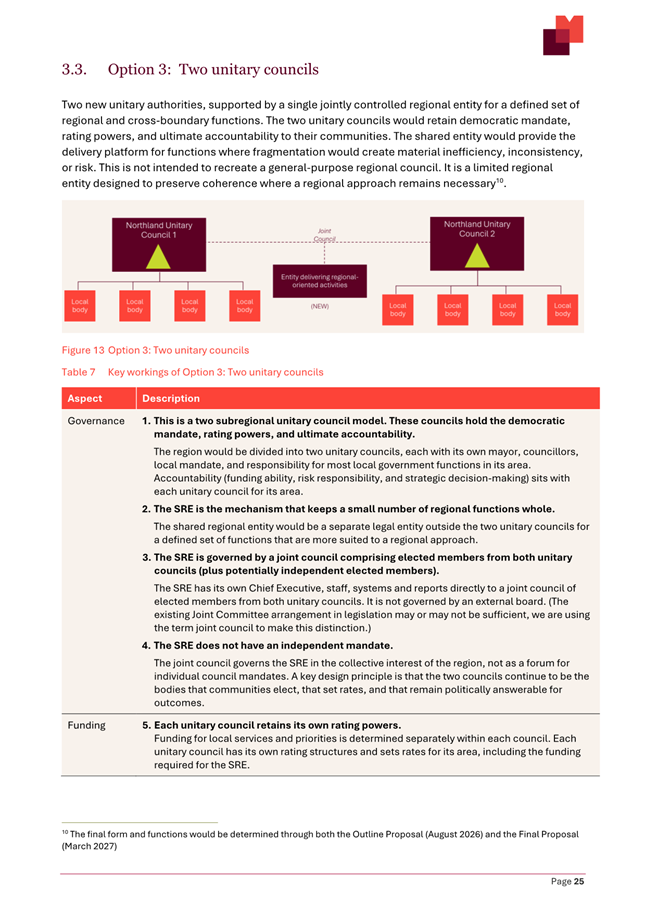
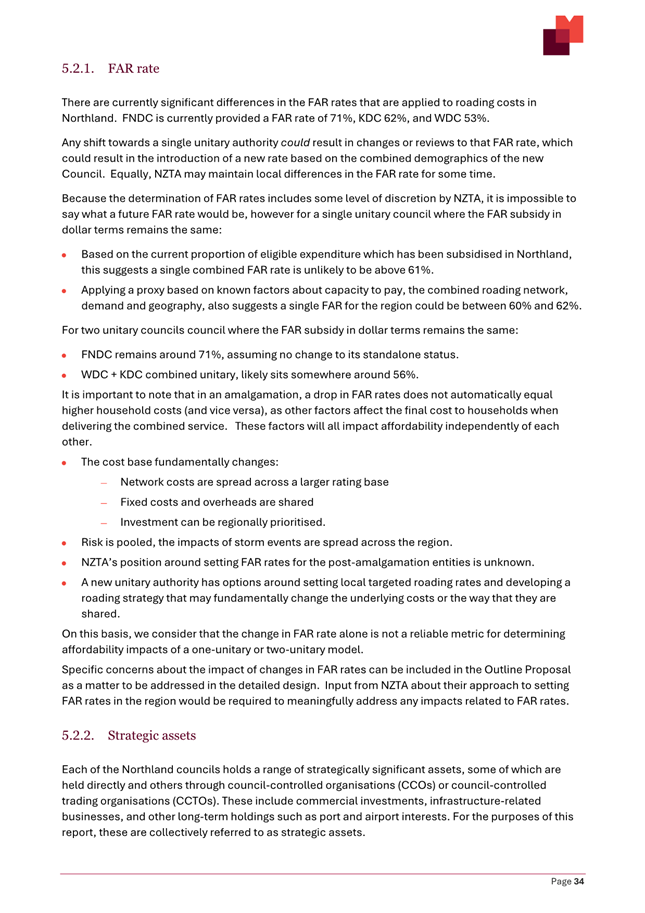
Figure 3: Two Unitary
Authorities Model (Please note the number of local bodies is indicative only)
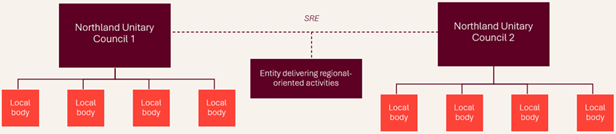
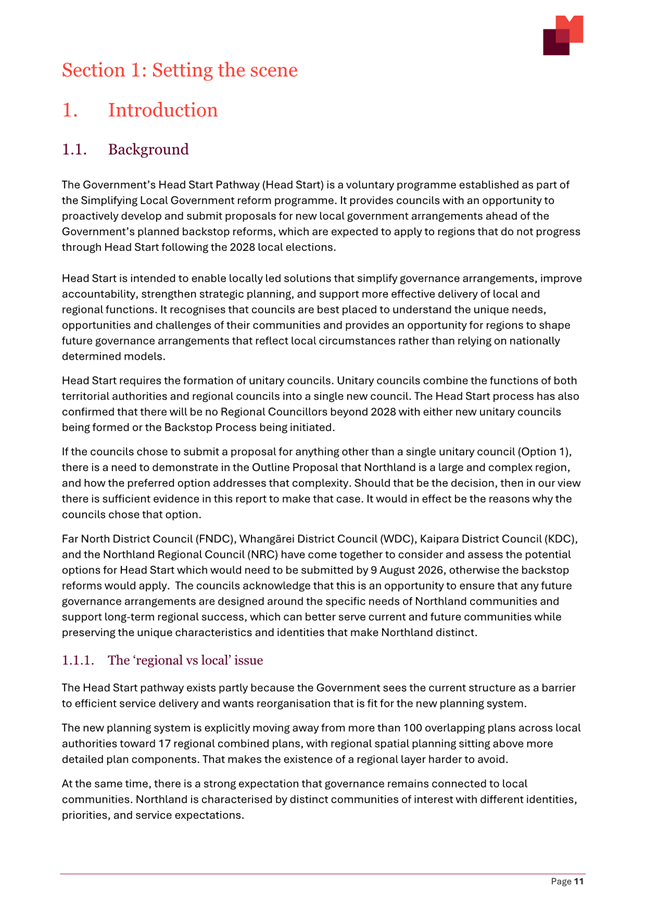
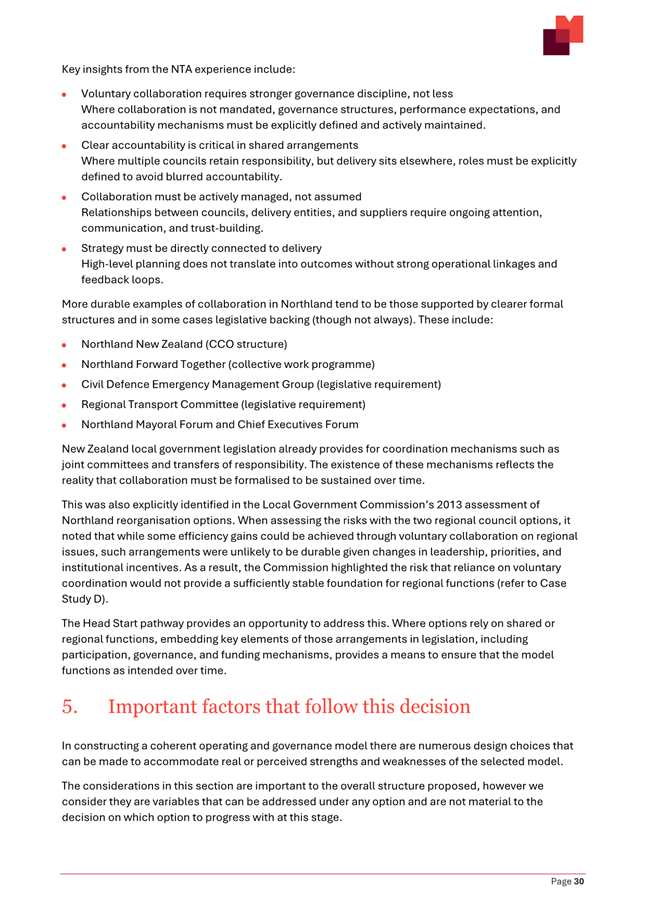
Under this model,
Northland would be divided into two separate unitary authorities, each
responsible for both regional and territorial functions within their area.
Arrangements would need to be established to coordinate region-wide activities
and strategic issues.
Key Advantages:
· Maintains
decision-making closer to communities.
· Allows
different governance and representation arrangements to reflect local
preferences.
· Preserves
stronger local identity and local accountability.
· May
better address concerns regarding local voice and representation.
Key Challenges:
· Retains
more duplication than a single unitary authority model.
· Delivers
fewer opportunities for efficiency gains and economies of scale.
· Would
require formal coordination arrangements for regional issues.
· Potential
for inconsistent approaches to region-wide challenges.
The key difference
between this model and the unitary authority options is that it places greater
weight on local autonomy and representation. While it performs more strongly
against local democracy considerations, it aligns less strongly with the Government's
objectives relating to simplification, efficiency and integrated regional
decision-making.
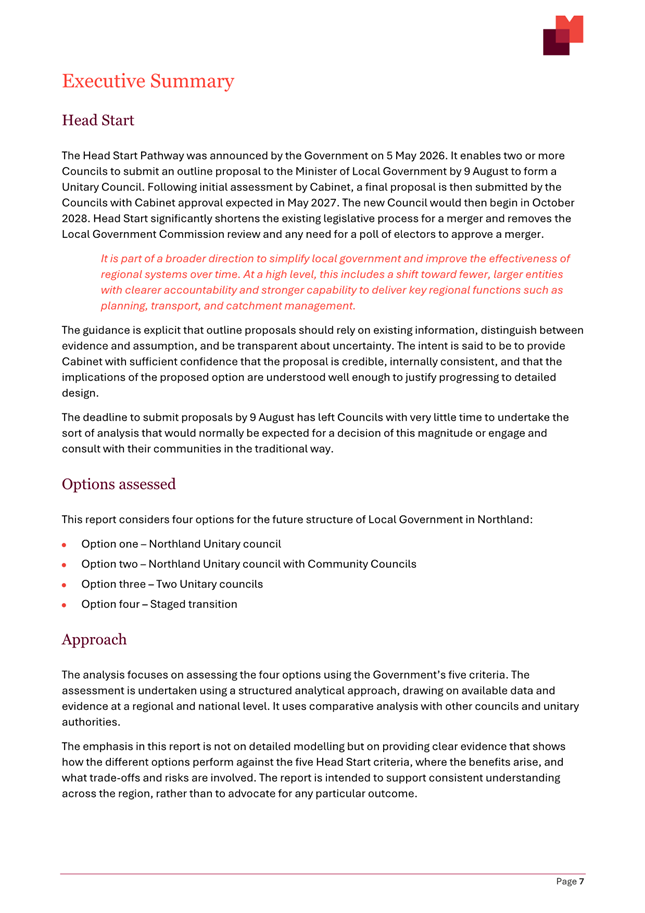
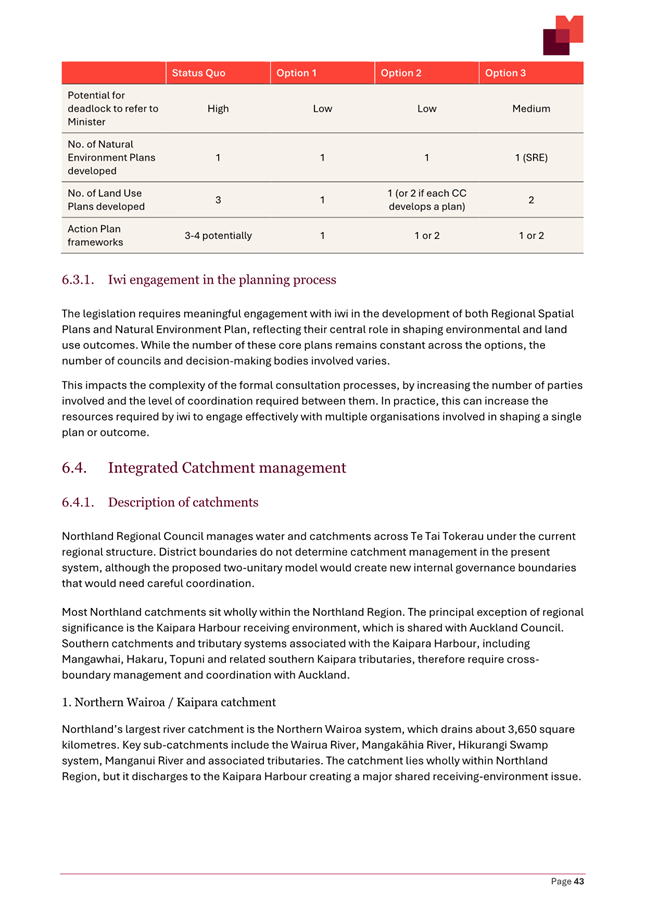
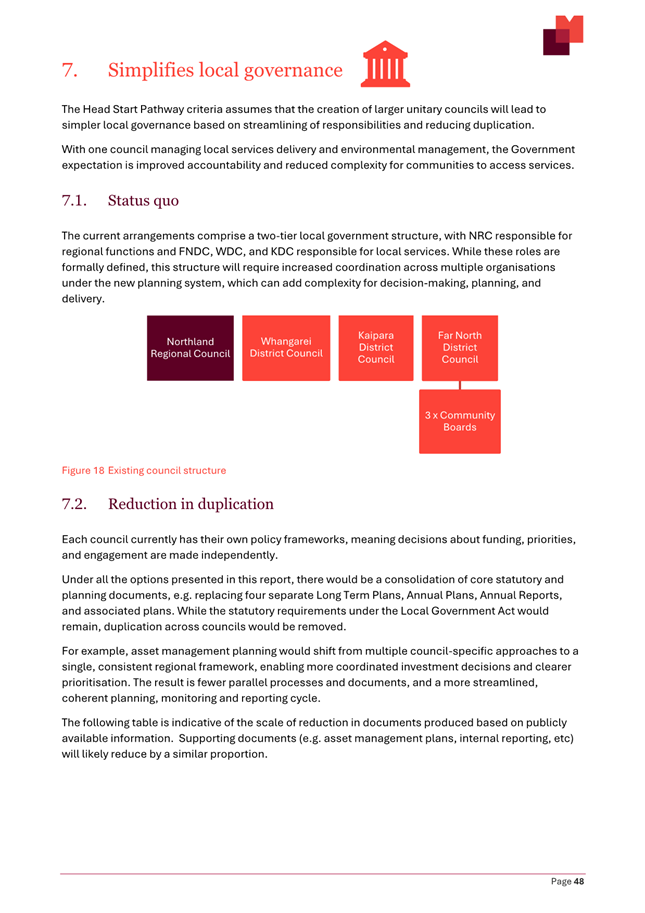
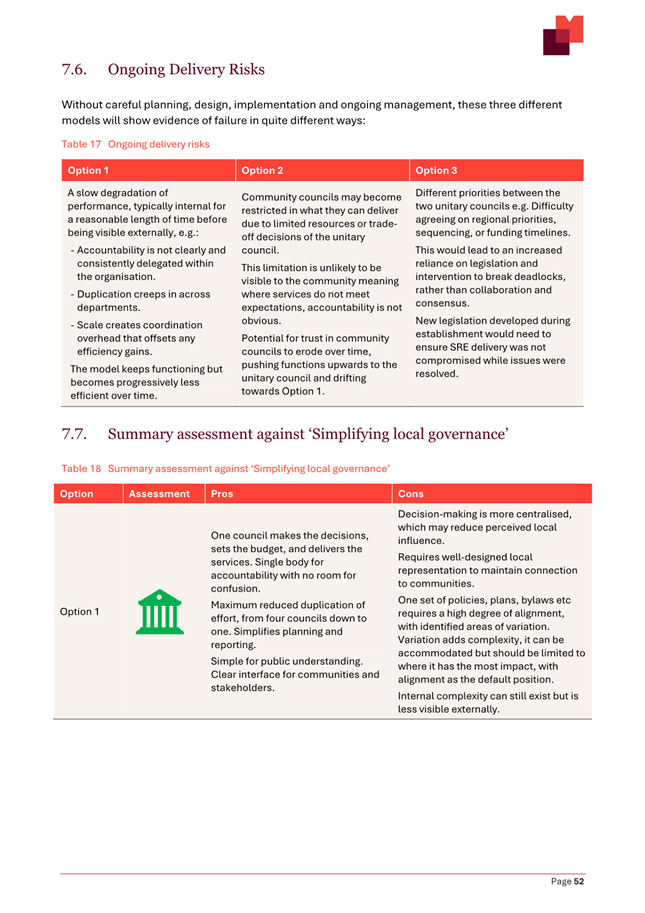
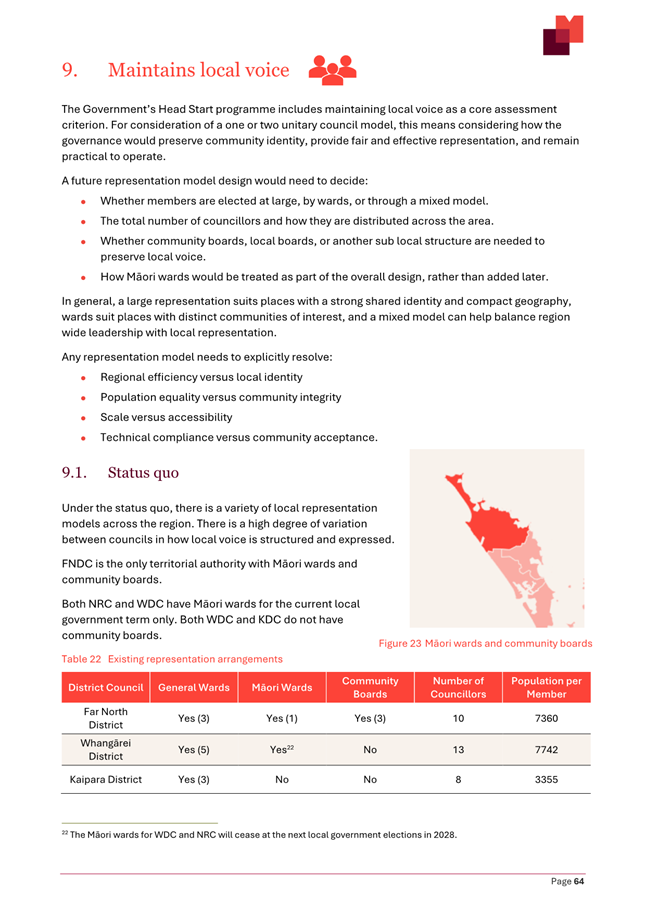
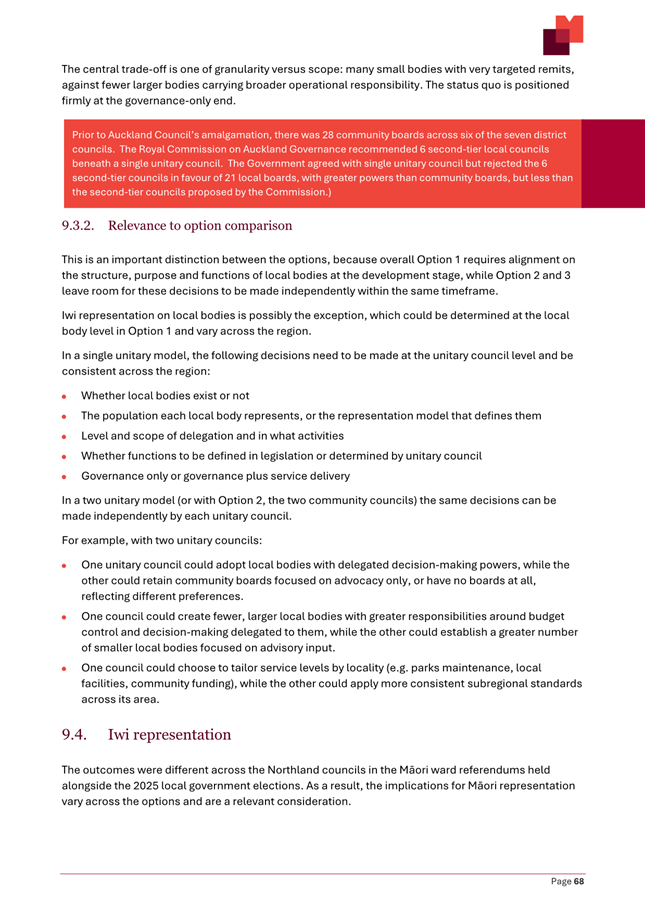
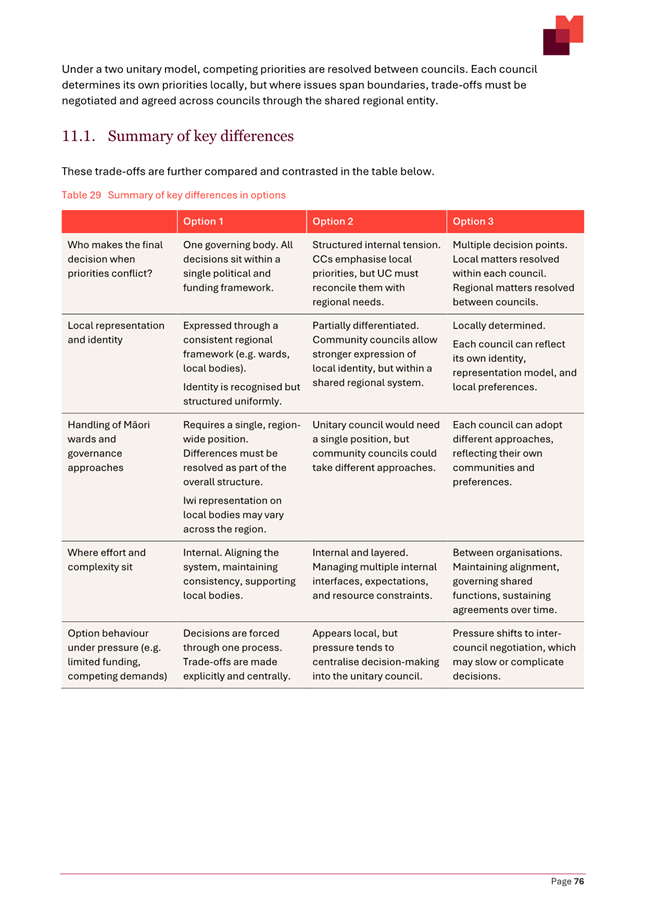
Option 4: Staged
Transition Model: EMSG recommended
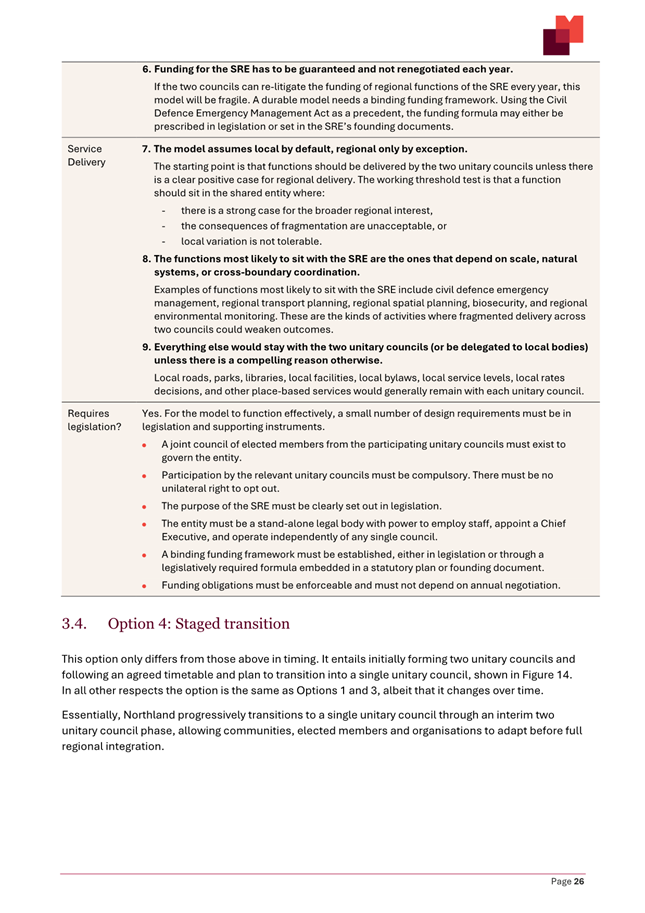
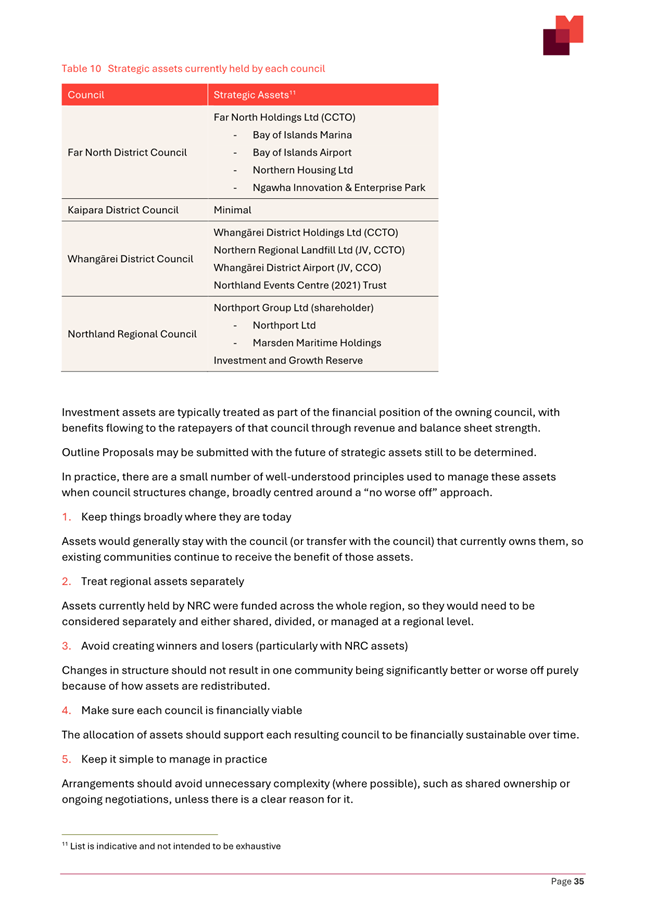
Figure 4: Staged Transition Model (please note the
timeframe is indicative only)
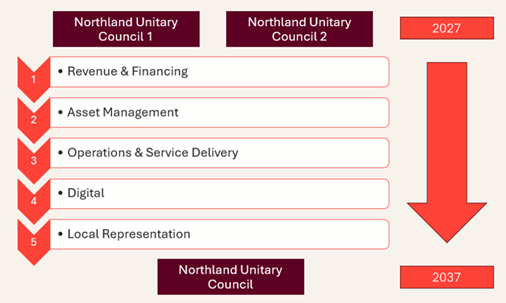
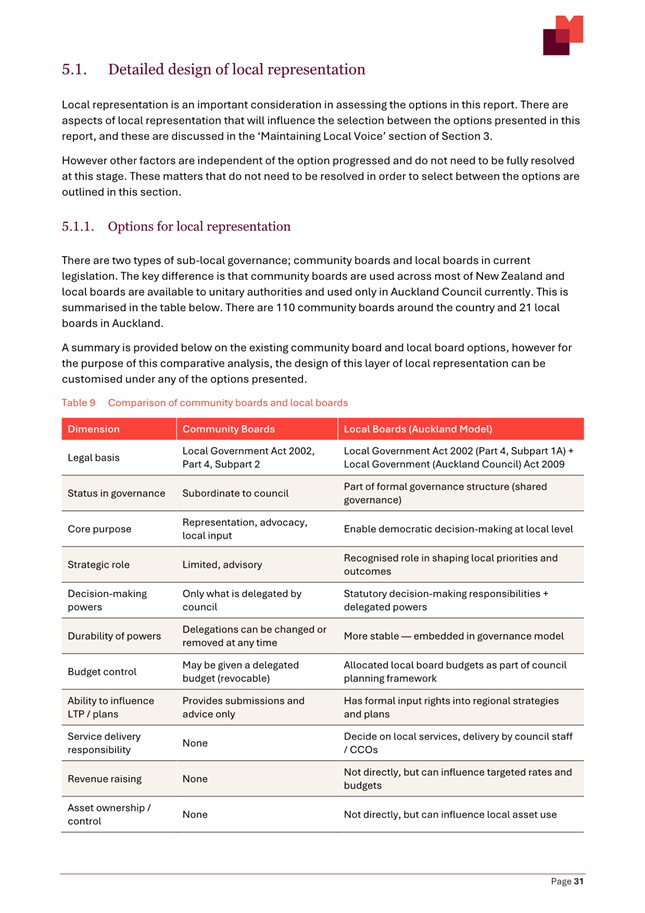
The staged transition
model would establish two unitary authorities initially, with a future
transition to a single Northland-wide unitary authority. This approach is
intended to provide a gradual pathway towards a more integrated governance
structure, allowing time to resolve implementation challenges and work through
areas where regional alignment may not be achievable in the short term.
Key Advantages:
· Allows
reform to occur progressively over time.
· Provides
an opportunity to test and refine governance arrangements before full
integration.
· May
reduce some short-term implementation risks.
· Allows
communities and organisations more time to adapt to change.
Key Challenges:
· Increases
the complexity and duration of the reform process.
· Delays
the realisation of long-term efficiency and integration benefits.
· Creates
uncertainty regarding future governance arrangements.
· Requires
multiple transition phases and associated costs.
The key difference
between this model and the others is that it focuses on the pathway to reform
rather than a single end-state. The staged approach provides additional time to
build alignment on complex issues and refine governance arrangements before progressing
to a fully integrated model. While this may make change more manageable, it
also creates additional complexity, cost and uncertainty, and delays the
realisation of benefits associated with the final governance structure.
TAKE
TŪTOHUNGA / REASON FOR THE RECOMMENDATION
The EMSG met on 6 July 2026 to consider the results of the
early community engagement and the options analysis undertaken by Morrison Low
Advisory. Following discussion of the opportunities, challenges and trade-offs
associated with each option, the EMSG resolved to recommend that the Northland
Head Start Proposal be developed based on Option 4 – the Staged
Transition Model.
In reaching this recommendation, EMSG members acknowledged
that the staged approach provides a pathway towards greater regional
integration while allowing additional time to work through complex design
matters and areas where regional alignment may require further consideration.
Members also recognised that a number of important decisions relating to
governance, representation, service delivery and implementation would need to
be worked through as part of the detailed design phase.
The EMSG did not reach agreement on the length of the
transition period. As a result, the recommendation to councils is based on the
Staged Transition Model, with the duration and timing of the transition still
to be determined in the next phase.
3) PĀnga PŪtea me ngĀ
wĀhanga tahua / Financial Implications and Budgetary Provision
WDC, FNDC and NRC have each made provision to support the
Local Government Reform programme through initial budget allocations to support
programme establishment, governance arrangements, and early-stage analysis,
including development of options and supporting evidence.
The overall programme budget is indicative at this stage,
with further detailed financial analysis and cost estimates to be developed as
the programme progresses. Longer-term costs, including any potential transition
and implementation costs, will be dependent on the final form of local
government arrangements and will require future council decisions.
KDC has not, at this stage, confirmed a budget allocation
for participation in the programme.
Āpitihanga / Attachments
1. Morrison
Low Advisory Options Analysis - A5860529 ⇩ 
2. Simplifying
Local Government for Northland – Survey and Community Feedback Report -
A5860527 ⇩ 
3. Conditions
for Local Government Reform Briefing Paper - A5864740 ⇩
Hōtaka Take Ōkawa / Compliance Schedule:
Full consideration has been given to the provisions of the
Local Government Act 2002 S77 in relation to decision making, in particular:
1. A
Local authority must, in the course of the decision-making process,
a) Seek
to identify all reasonably practicable options for the achievement of the
objective of a decision; and
b) Assess
the options in terms of their advantages and disadvantages; and
c) If
any of the options identified under paragraph (a) involves a significant
decision in relation to land or a body of water, take into account the
relationship of Māori and their culture and traditions with their
ancestral land, water sites, waahi tapu, valued flora and fauna and other
taonga.
2. This
section is subject to Section 79 - Compliance with procedures in relation to
decisions.
|
He Take Ōkawa /
Compliance Requirement
|
Aromatawai Kaimahi /
Staff Assessment
|
|
State the level of significance (high or low) of the
issue or proposal as determined by the Council’s
Significance and Engagement Policy
|
In accordance with Council’s Significance and
Engagement Policy this matter is assessed as being significant due to its
potential long-term impact on Council’s direction and the associated
level of public interest.
At this stage, councils are being asked to identify a
preferred model to form the basis of a Head Start proposal. This does not
constitute a decision to proceed with local government reorganisation or
implement any specific structural, governance or service delivery changes,
which would require further work, community consultation and future
decision-making.
Accordingly, engagement will be proportionate to this
stage of the process and falls within the inform to involve range of the
engagement spectrum. As outlined in the Northland Head Start Communications
and Engagement and Communication Plan, engagement during this phase will be
targeted and focused on informing the development of options.
Should a proposal progress beyond this stage, further
and more comprehensive engagement and consultation will be undertaken in line
with statutory requirements and Council policy.
|
|
State the relevant Council policies (external or
internal), legislation, and/or community outcomes (as stated in the LTP) that
relate to this decision.
|
This report relates to the Local Government Act 2002,
including sections 10, 14, 76–82 relating to decision-making and
consultation principles, and the Government's Head Start pathway for local
government reform. Relevant Council policies include the Far North District
Council Significance and Engagement Policy and associated governance and
decision-making provisions. The report also supports Council's long-term
objectives relating to effective governance, sustainable service delivery,
financial prudence, community wellbeing and strong regional partnerships.
|
|
State whether this issue or proposal has a District wide
relevance and, if not, the ways in which the appropriate Community
Board’s views have been sought.
|
This matter has district-wide and regional significance
as it concerns potential future local government arrangements across
Northland. The decision affects all communities within the Far North District
and is therefore not limited to a particular ward, community board area or
locality. Community Board views have not been specifically sought at this
stage as Council is being asked only to identify a preferred model for
further development as part of the Head Start process. Further engagement
would occur should a formal proposal be progressed.
|
|
State the
possible implications for Māori and how Māori have been provided
with an opportunity to contribute to decision making if this decision is
significant and relates to land and/or any body of water.
State the
possible implications and how this report aligns with Te Tiriti o Waitangi /
The Treaty of Waitangi.
|
As per guidelines all Councils have engaged with the
relevant Post Settlement Governance Entities that they have a relationship
with.
Te Kahu o Taionu has also been contacted and were
invited to a hui with the Mayor of Whangarei District Council in his capacity
as the chair and spokesperson for the Elected Member Steering Group.
The Far North District Council conducted three hui with
Hapū representatives in Kaikohe, Waitangi and Kaitaia. These hui were
opened up to the public. FNDC received significant feedback in these
hui.
Local government reform may have implications for
Māori representation, participation in local governance, partnership
arrangements and the way councils engage with iwi and hapū across
Northland. No decisions on governance structures, representation arrangements
or service delivery models are being made through this report. The
recommendation is limited to identifying a preferred model for further
investigation and development. As the programme progresses, engagement with
iwi, hapū and Māori organisations will continue to inform the
design of any future proposal. The report is consistent with the principles
of Te Tiriti o Waitangi by recognising the importance of Māori
participation in decision-making and the need for ongoing partnership and
engagement throughout any future reform process.
|
|
Identify persons likely to be affected by or have an
interest in the matter, and how you have given consideration to their views
or preferences (for example – youth, the aged and those with
disabilities).
|
Persons with an interest in this matter include
residents, ratepayers, businesses, iwi and hapū, community
organisations, elected members, council staff, central government and other
stakeholders across Northland. Council has considered the results of both Far
North District Council surveys, which received 611 and 472 responses
respectively, together with the wider Northland engagement programme that
received 2,305 responses across the region. While the surveys are not
statistically representative and do not constitute formal consultation, they
provide a significant evidence base that has been considered alongside the
independent options analysis and EMSG recommendations in developing the
advice contained in this report.
|
|
State the financial implications and where budgetary
provisions have been made to support this decision.
|
Financial implications are outlined in Section 3 of this
report. WDC, FNDC and NRC have made budget provision to support programme
establishment, governance arrangements and early-stage analysis associated
with the Local Government Reform programme. Further costs associated with
proposal development, transition planning or implementation have not yet been
determined and would be subject to future analysis and council
decision-making. KDC has not yet confirmed a budget allocation for
participation in the programme.
|
|
Chief Financial Officer review.
|
The Chief Financial Officer has reviewed this report.
|