|

|
Authorising Body
|
Mayor/Council
|
|
Status
|
Standing Committee
|
|
COUNCIL COMMITTEE
|
Title
|
Te Koekoeā Committee for
Council Controlled Organisations Terms of Reference
|
|
Approval Date
|
11 December 2025
|
|
Responsible Officer
|
Chief Executive
|
(1) Kaupapa
/ Purpose
Te Koekoeā Committee for
Council Controlled Organisations safeguards community interests by providing
strategic oversight of the Far North District Council's Council-Controlled
Organisations (CCOs) by:
·
Overseeing the establishment of CCOs and key governance
activities under the Local Government Act 2002, including director appointments
·
Recommending to Council on the content of Letters of
Expectations.
·
Reviewing Statements of Intent and ensuring CCO strategies align
with Council priorities.
·
Monitoring CCO performance to ensure accountability and
transparency.
·
Promoting a culture of openness and continuous improvement
between Council and it’s CCOs.
·
Reporting to other Council committees and to Council as required.
(2) Ngā Huānga / Membership
The Council will determine the
membership of the Committee including at least one independent
appointment with suitable financial and risk management knowledge and experience.
The Committee will comprise of
elected members, and one independent appointed member, appointed as Deputy-Chairperson
with full voting rights.
Kahika
/ Mayor Moko Tepania is an ex-officio member of all Committees.
|
Cr John
Vujcich – Chairperson
|
|
Gordon
Shaw – Deputy Chairperson and Independent Member
|
|
Cr
Rachel Baucke
|
|
Cr
Ann Court
|
|
Cr
Felicity Foy
|
|
Cr
Davina Smolders
|
(3)
Kōrama / Quorum
The quorum at a
meeting of the Committee is 4 members.
(4) Ngā
Hui / Frequency of Meetings
The Committee shall meet 8
weekly.
(5) Ngā
Apatono / Power to Delegate
The Committee may not
delegate any of its responsibilities, duties or powers.
(6) Ngā
Herenga Paetae / Responsibilities
The Committee's responsibilities
are described below:
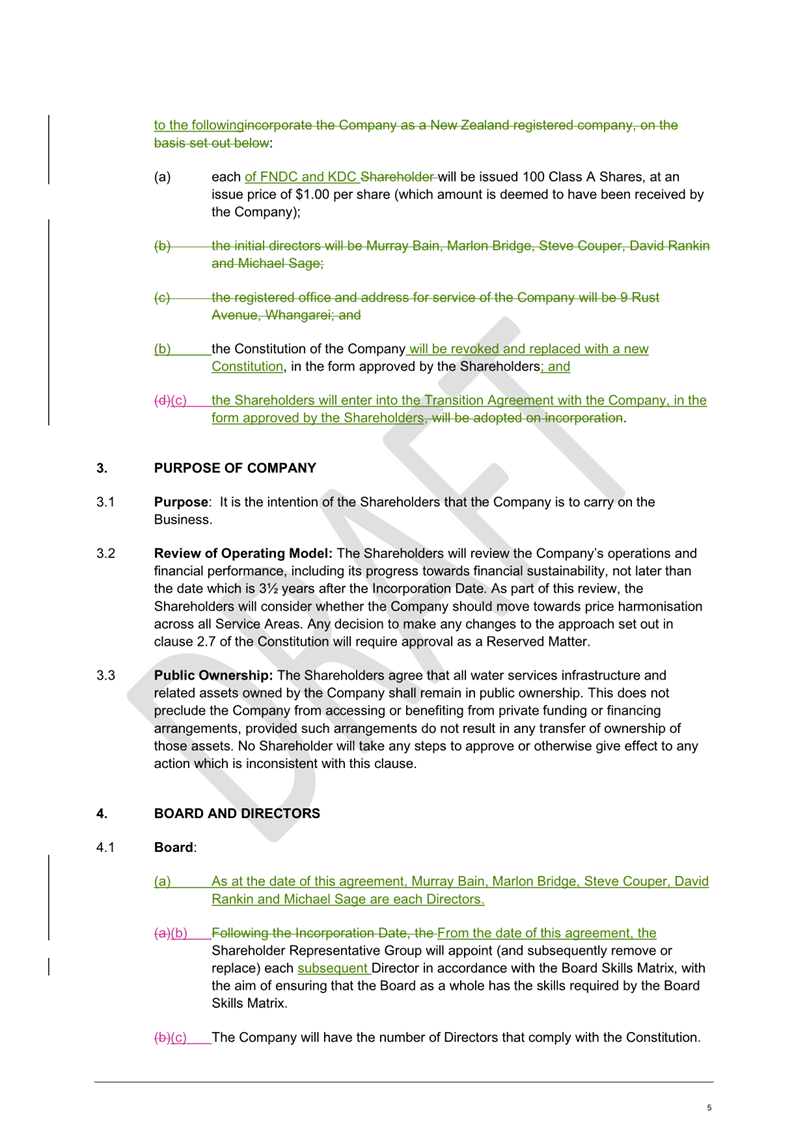
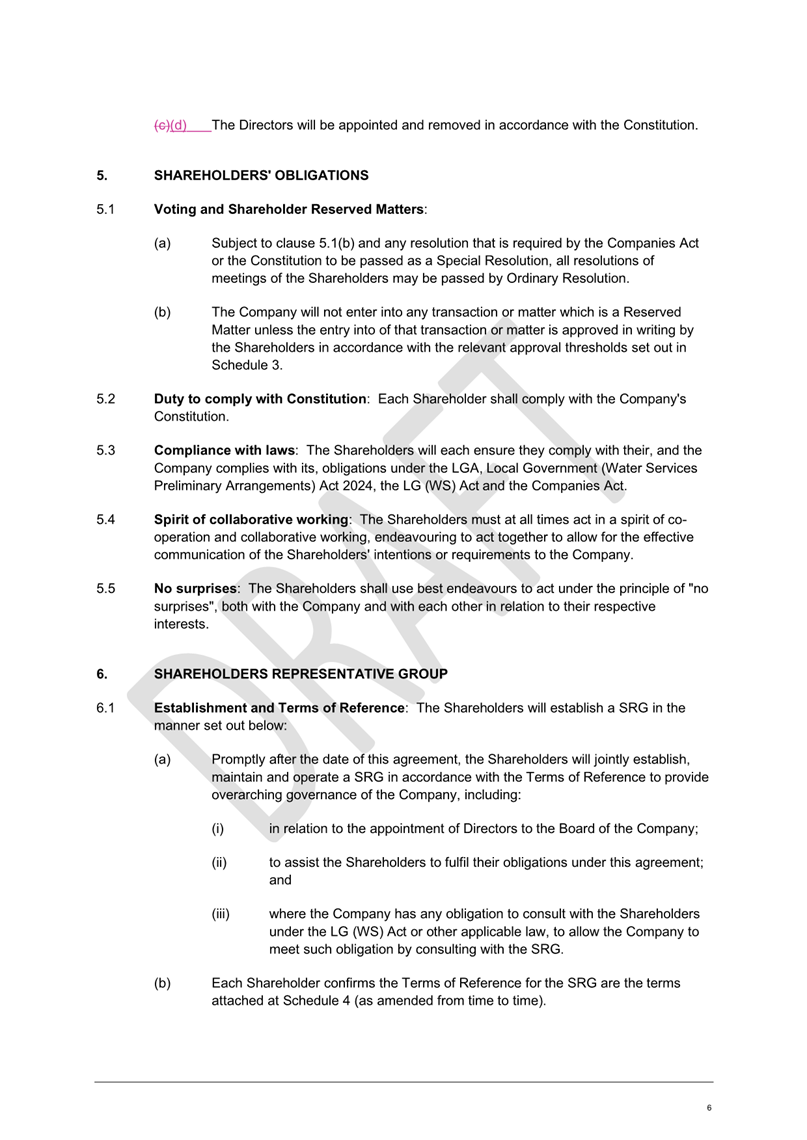
6.1 Establishment
Evaluations (s56 LGA)
6.1.1
Ensure new CCOs are formed in compliance with LGA and aligned with
Council frameworks.
6.2
Director Appointments and Board Evaluations (s57 LGA)
6.2.1
Perform ‘Appointment Committee’ duties in accordance
with FNDC Policy: Appointment and Remuneration of Directors for Council
Organisations.
6.2.2 Recommend
external advisors or consultants to Council as required.
6.3 Planning and
Statements of Intent (s64; Schedule 8, LGA)
6.3.1 Review CCO strategic plans and advise on their suitability.
6.3.2 Review and recommend approval of Letters of Expectation.
6.3.3 Review
draft Statements of Intent (SoIs) for clarity, alignment and deliverability.
6.3.4 Recommend
adoption of final SoIs.
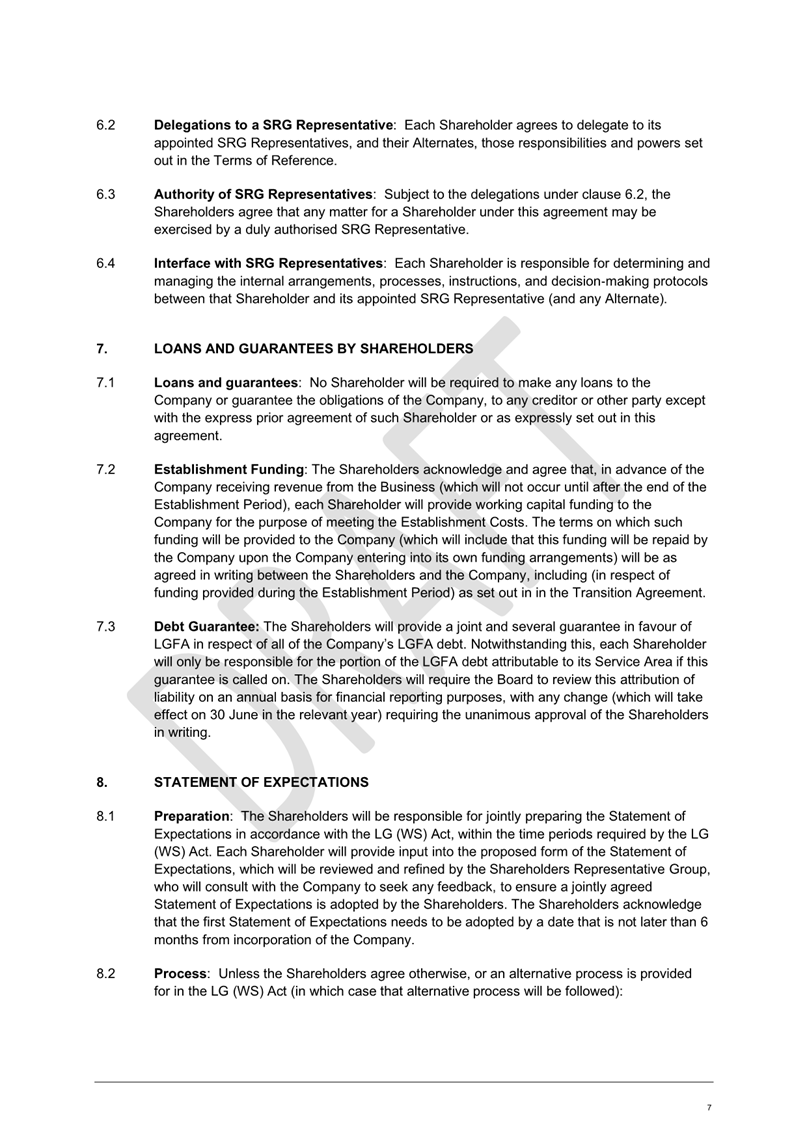
6.4 Monitoring and
Reporting (s65 – 67 LGA)
6.4.1
Review and recommend Council adoption of each CCO’s Annual
Report as required (s 67 LGA)
6.4.2
Review half-yearly or quarterly reports, including performance
against SoI requirements (s 66 LGA).
6.4.3
Participate in governance-to-governance meetings with CCOs to
strengthen oversight and strategic alignment.
6.4.4 Request
any information or reports from CCO management to fulfil its duties.
6.4.5 Receive reports on CCO delivery against strategies and
plans.
6.4.6 Monitor
all CCO reporting and escalate variances or concerns as appropriate.
6.4.7 Monitor
key risks and emerging issues reported by CCOs and ensure material matters are
escalated to Council as required.
(7) Ngā
Ture / Rules and Procedures
These
Terms of Reference should be read in conjunction with the Local Government Act
2002, the FNDC Code of Conduct, and all other applicable legislation and
internal policies, including but not limited to:
·
Appointment and Remuneration of
Directors for Council Organisations
All
Committee meetings will be conducted in accordance with Council’s
Standing Orders and the FNDC Code of Conduct.
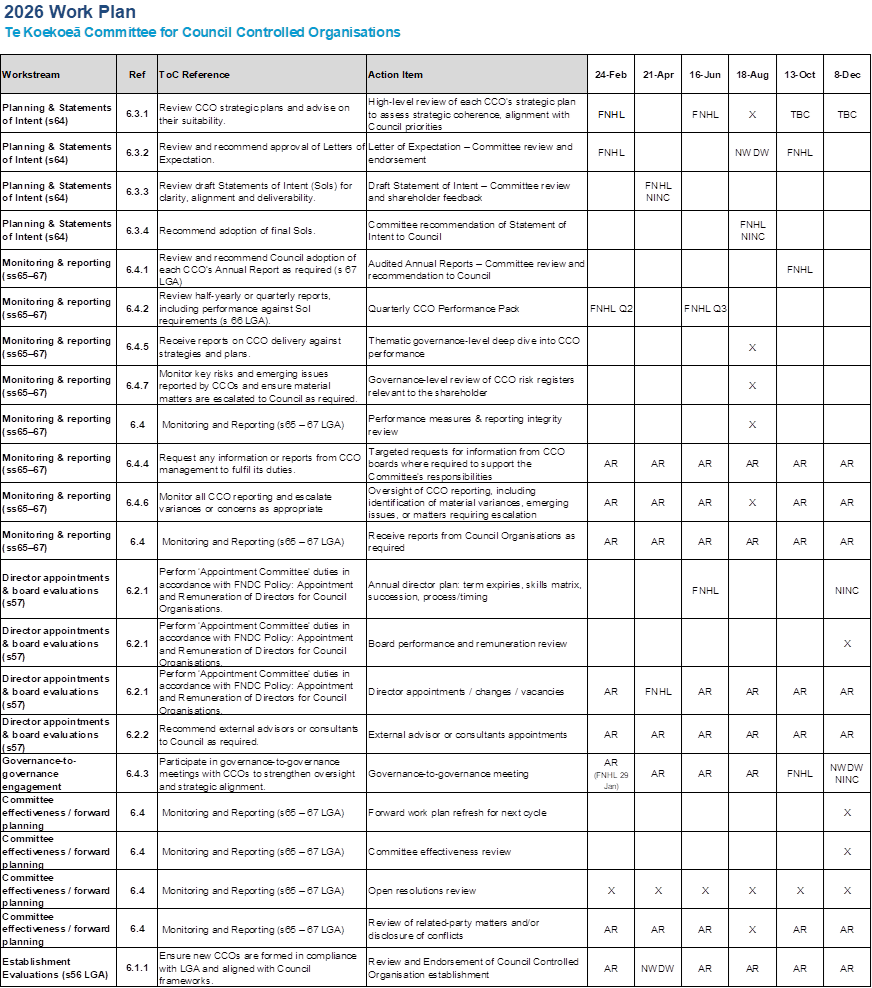
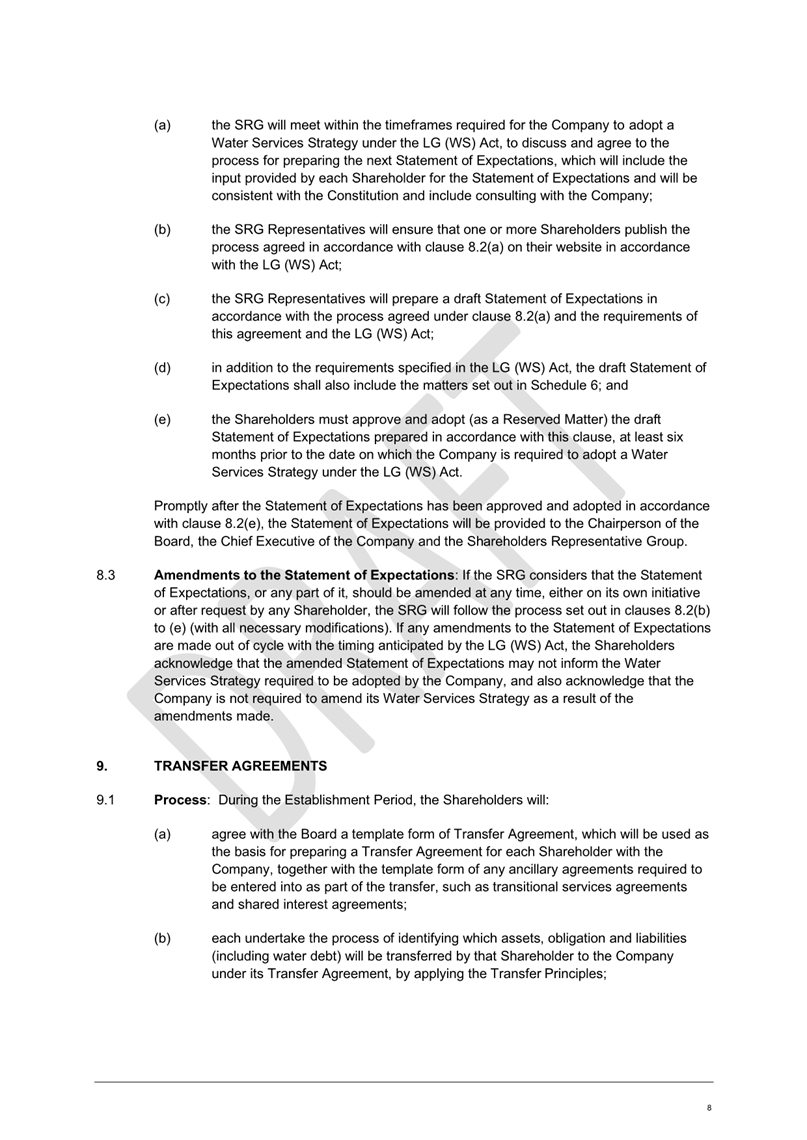
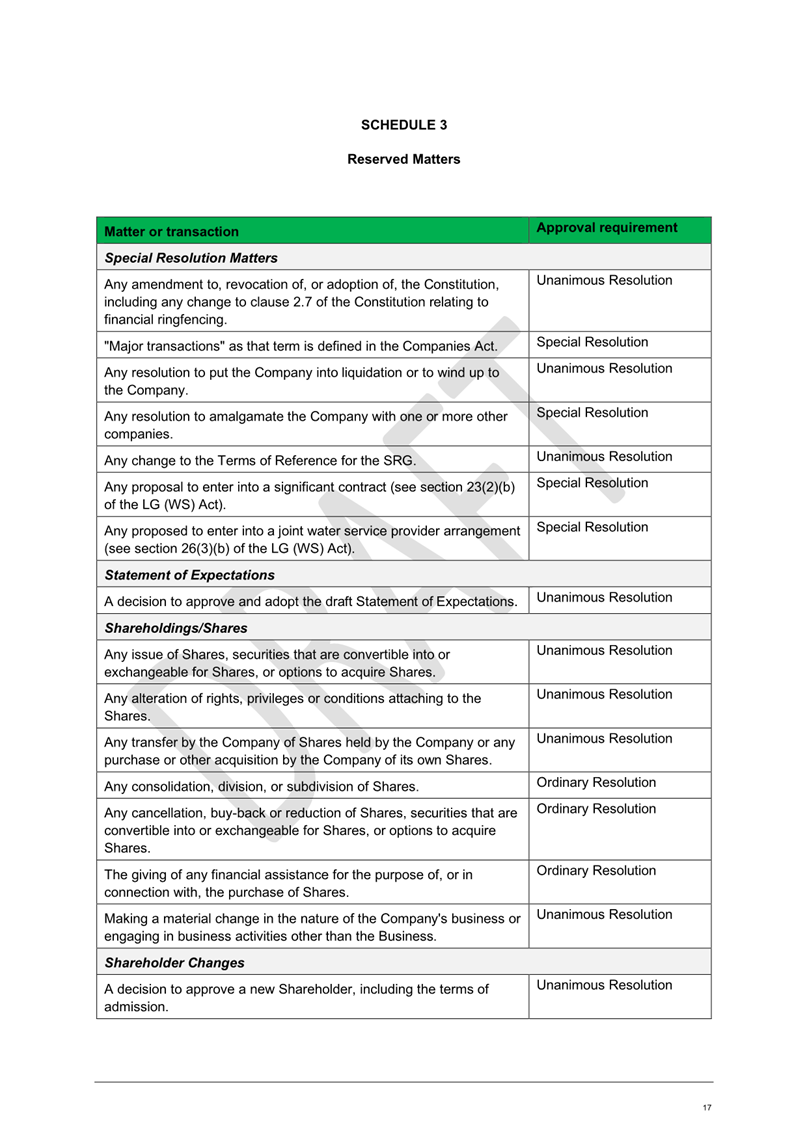
X = All CCOs
FNHL = Far North Holdings Ltd
NINC = Northland Inc (Primary oversight managed by a Joint
Regional Committee)
NWDW = Northland Water Done Well/Northland Waters Ltd (Primary
oversight managed by a Joint Regional Committee)
AR = As Required
Far North District Council
Te Koekoeā Committee for Council Controlled
Organisations Meeting
will be held in the Council Chamber, Memorial Ave,
Kaikohe on:
Tuesday 16 June 2026 at 10:00 am
Te Paeroa Mahi / Order
of Business
1 Karakia
Tīmatanga / Opening Prayer 7
2 Ngā
Whakapāha Me Ngā Pānga Mema / Apologies and Declarations of
Interest 7
3 Ngā Tono
Kōrero / Deputation. 7
4 Te
Whakaaetanga o Ngā Meneti o Mua / Confirmation of Previous Minutes. 8
4.1 Confirmation
of Previous Minutes. 8
5 Ngā
Pūrongo / Reports. 13
5.1 Northland
Waters Limited - Standing Approach to Shareholders' Representative Appointments. 13
6 Ngā
Pūrongo Taipitopito / Information Reports. 59
6.1 Pou
Herenga Tai - Twin Coast Cycle Trail - Half Year Report 59
7 Te Wāhanga
Tūmataiti / Public Excluded. 63
7.1 Confirmation
of Previous Minutes - Public Excluded. 63
7.2 Far
North Holdings Limited - CCO Performance Report 63
7.3 Far
North Holdings Limited - Board Appointments. 63
8 Karakia
Whakamutunga / Closing Prayer 64
9 Te Kapinga
Hui / Meeting Close. 64
4 Te
Whakaaetanga o Ngā Meneti o Mua / Confirmation of Previous Minutes
4.1 Confirmation
of Previous Minutes
File
Number: A5789869
Author: Marysa
Maheno, Democracy Advisor
Authoriser: Aisha
Huriwai, Manager - Democracy Services
Take Pūrongo / Purpose of the Report
The minutes are attached to allow the Committee to confirm
that the minutes are a true and correct record of previous meetings.
|
tŪtohunga / Recommendation
That Te Koekoeā Committee for Council Controlled
Organisations confirm the minutes of the meeting held 21 April 2026 are true
and correct.
|
1) TĀhuhu kŌrero / Background
Local Government Act 2002 Schedule 7 Section 28 states that
a local authority must keep minutes of its proceedings. The minutes of these
proceedings duly entered and authenticated as prescribed by a local authority
are prima facie evidence of those meetings.
2) matapaki me NgĀ KŌwhiringa /
Discussion and Options
The minutes of the meetings are attached.
Far North District Council Standing Orders Section 27.3
states that no discussion shall arise on the substance of the minutes in any
succeeding meeting, except as to their correctness.
TAKE
TŪTOHUNGA / REASON FOR THE RECOMMENDATION
The reason for the recommendation is to confirm the minutes
are a true and correct record of the previous meetings.
3) PĀnga PŪtea me ngĀ
wĀhanga tahua / Financial Implications and Budgetary Provision
There are no financial implications or the need for
budgetary provision as a result of this report.
Attachments
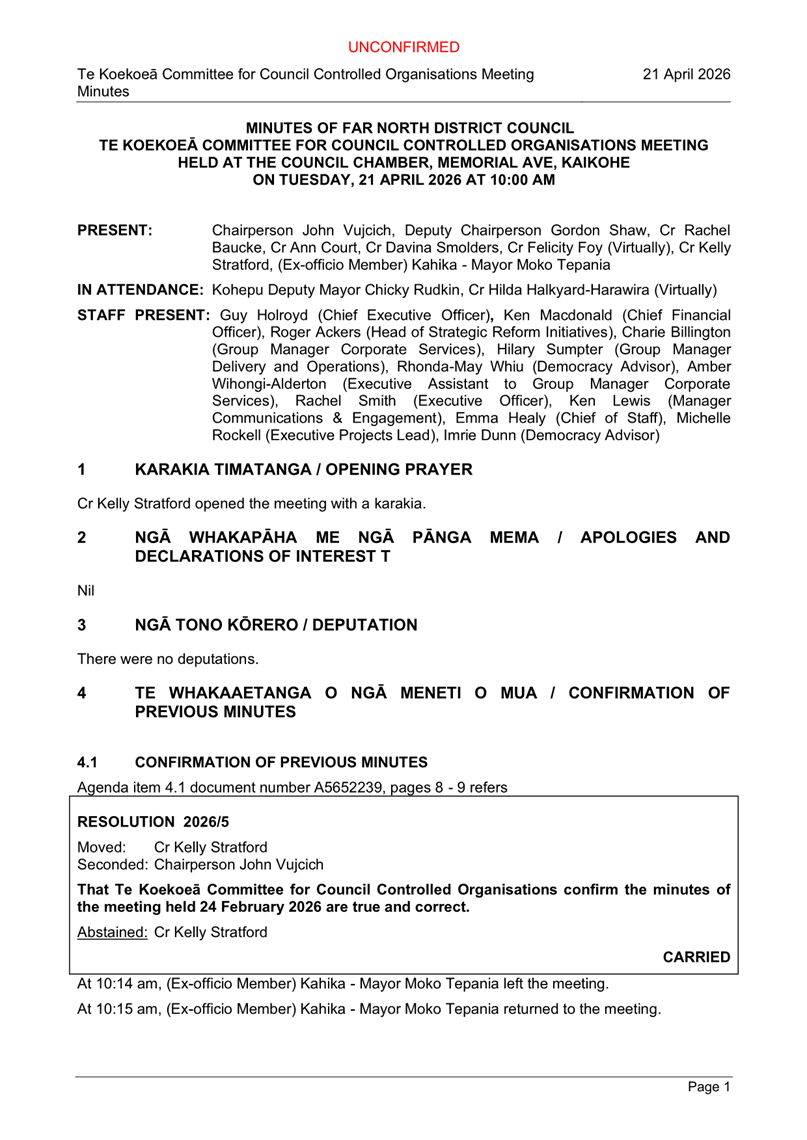
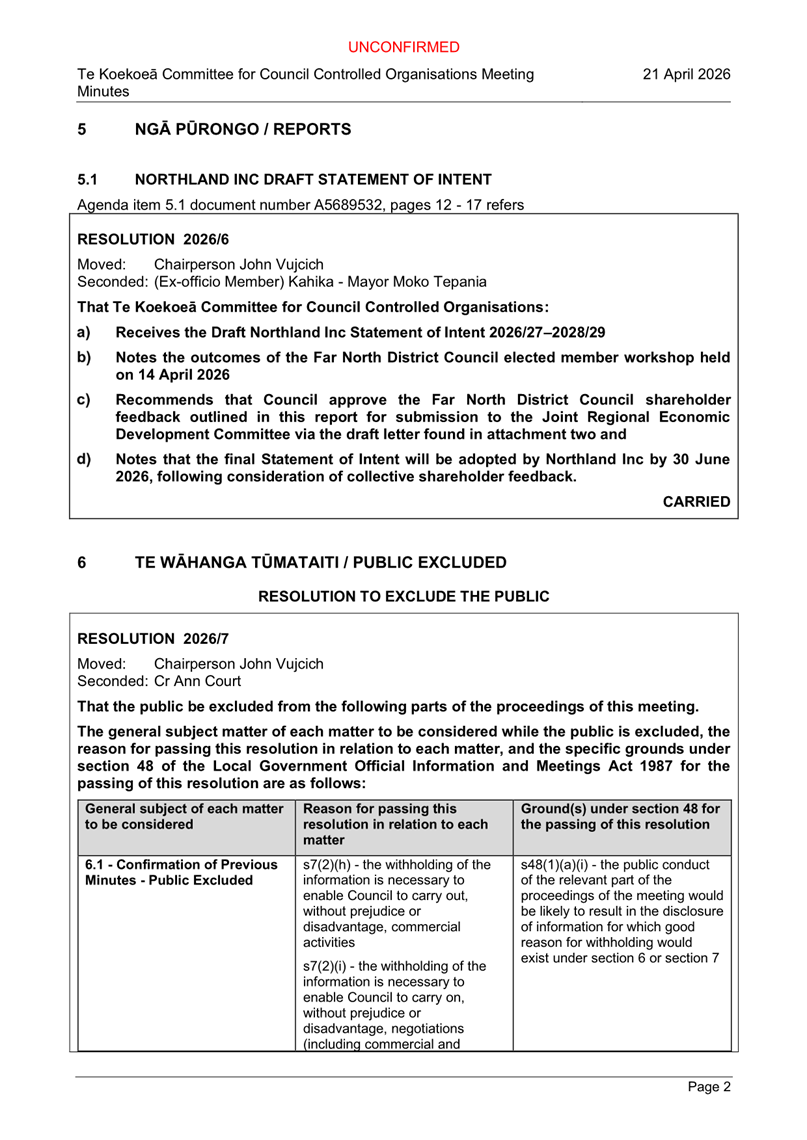
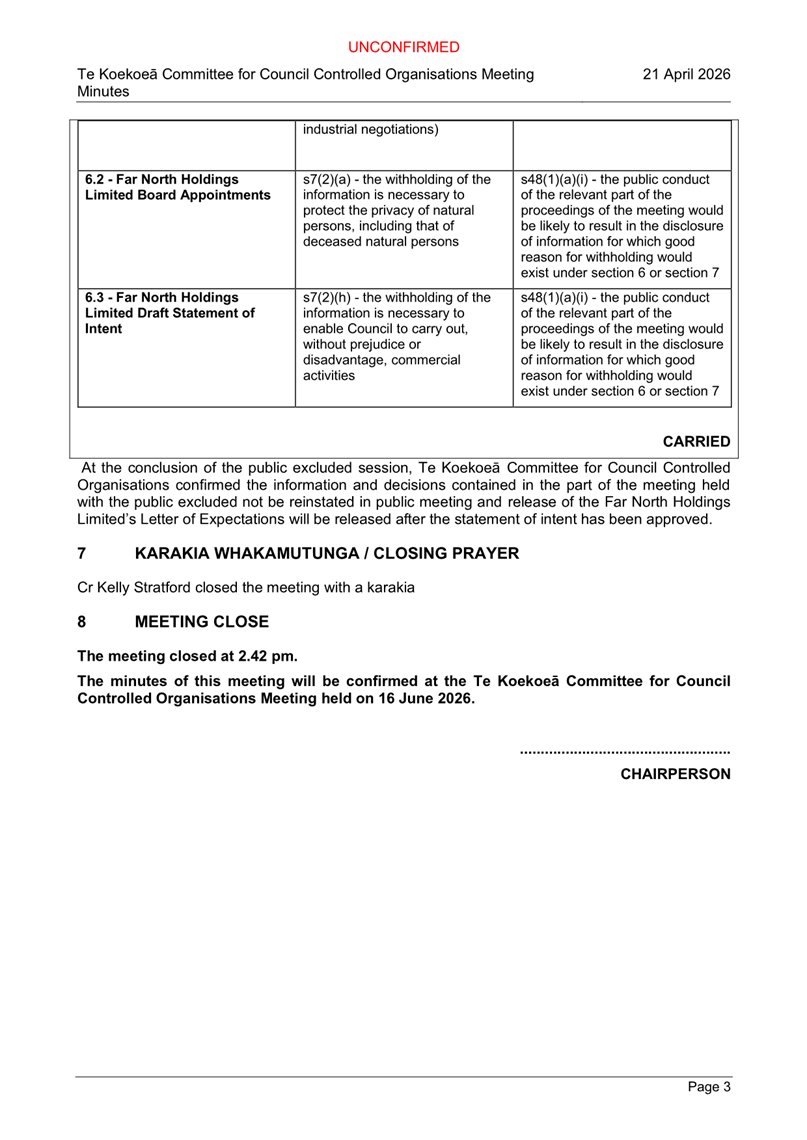
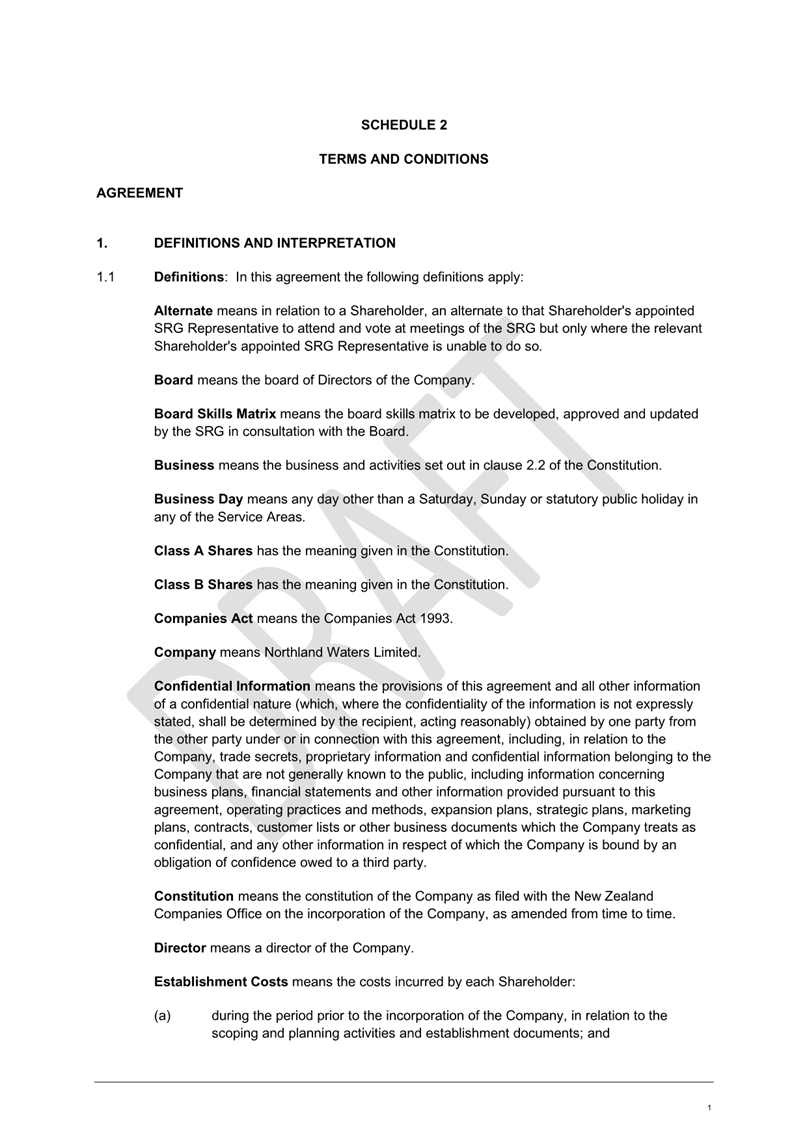
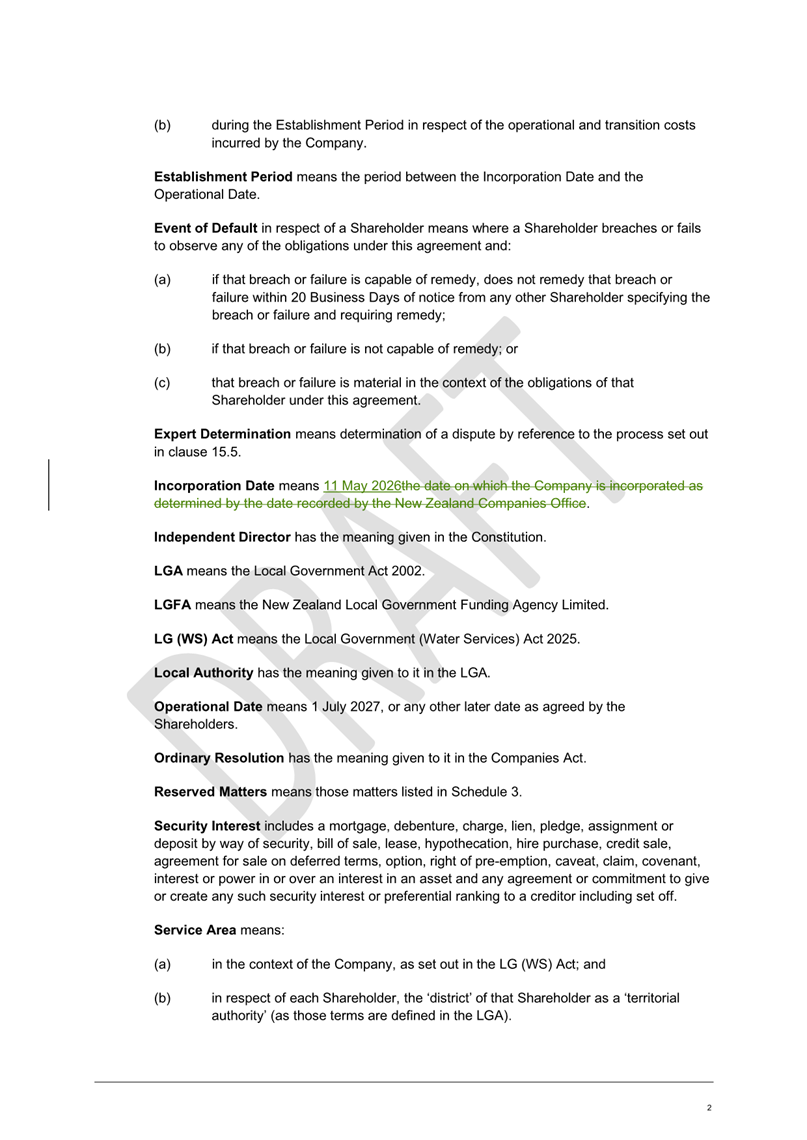
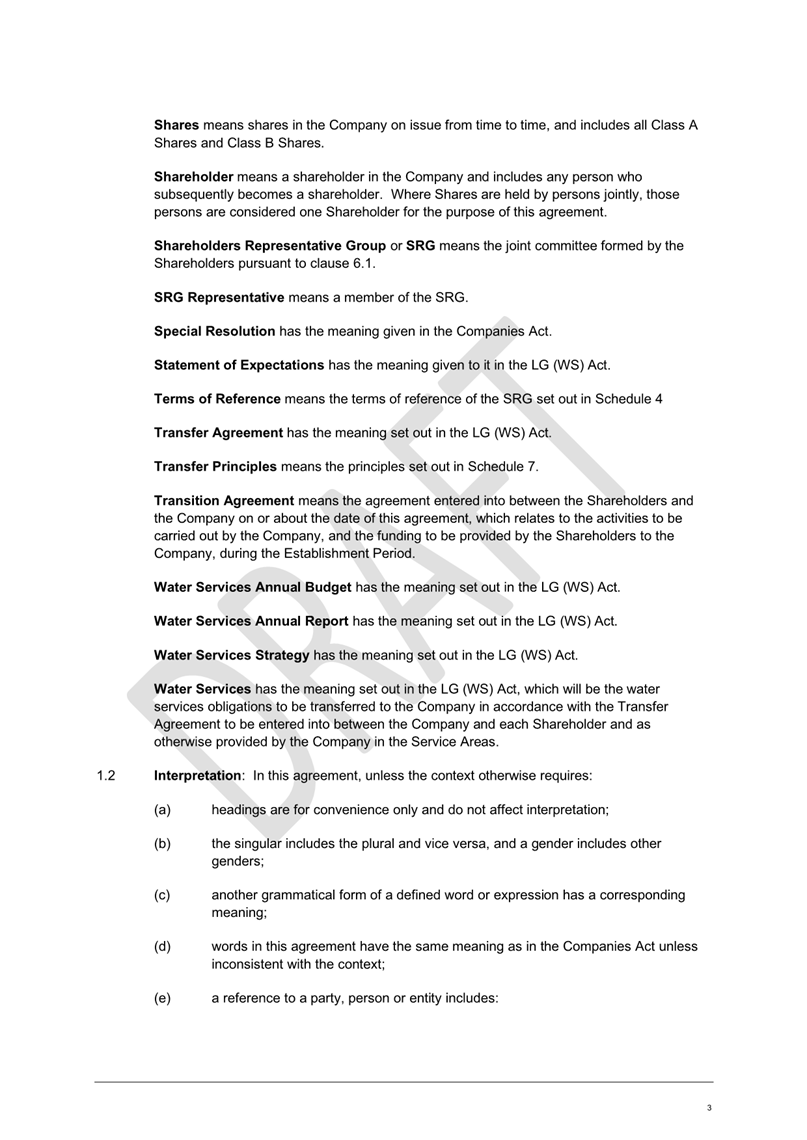
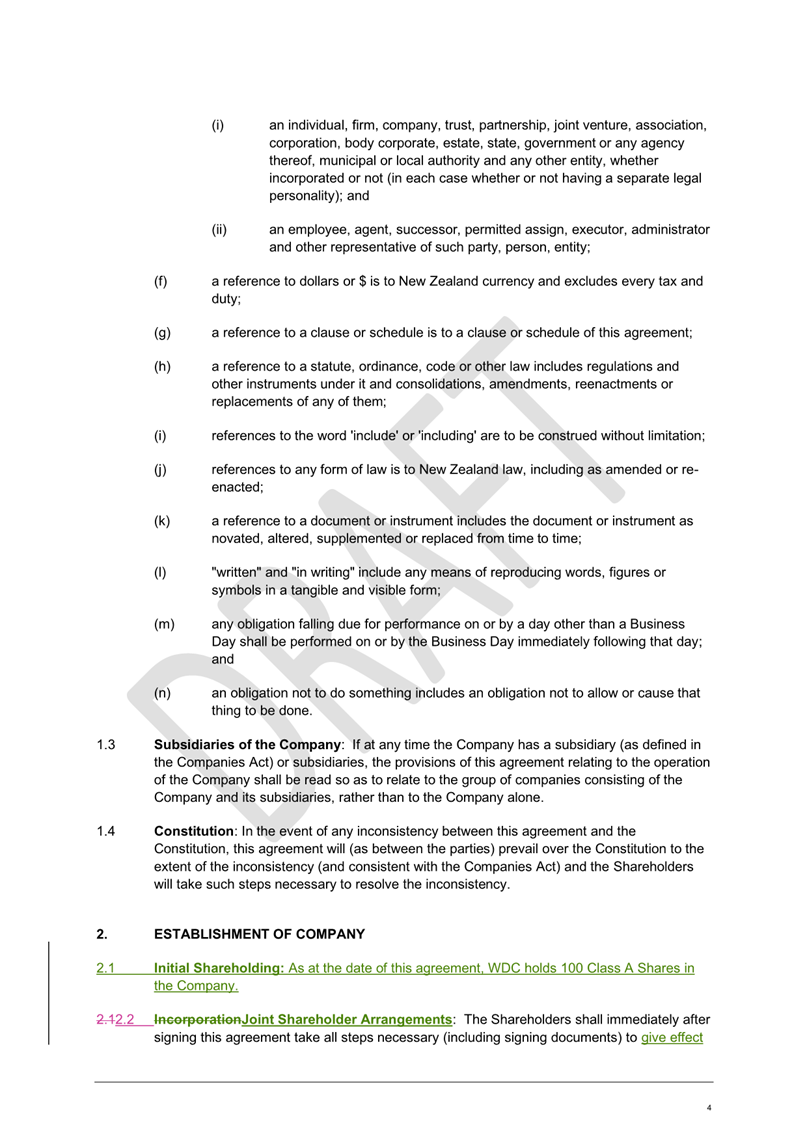
1. 2026-04-21
Te Koekoeā Committee for Council Controlled Organisations Minutes -
A5711073 ⇩ 
Hōtaka Take Ōkawa / Compliance schedule:
Full consideration has been given to the provisions of the
Local Government Act 2002 S77 in relation to decision making, in particular:
1. A
Local authority must, in the course of the decision-making process,
a) Seek
to identify all reasonably practicable options for the achievement of the
objective of a decision; and
b) Assess
the options in terms of their advantages and disadvantages; and
c) If
any of the options identified under paragraph (a) involves a significant
decision in relation to land or a body of water, take into account the
relationship of Māori and their culture and traditions with their
ancestral land, water sites, waahi tapu, valued flora and fauna and other
taonga.
2. This
section is subject to Section 79 - Compliance with procedures in relation to
decisions.
|
He
Take Ōkawa / Compliance Requirement
|
Aromatawai
Kaimahi / Staff Assessment
|
|
State the level of significance
(high or low) of the issue or proposal as determined by the Council’s
Significance and Engagement Policy
|
This is a matter of low
significance.
|
|
State the relevant Council
policies (external or internal), legislation, and/or community outcomes (as
stated in the LTP) that relate to this decision.
|
This report complies with the
Local Government Act 2002 Schedule 7 Section 28.
|
|
State whether this issue or
proposal has a District wide relevance and, if not, the ways in which the
appropriate Community Board’s views have been sought.
|
It is the responsibility of each
meeting to confirm their minutes therefore the views of another meeting are
not relevant.
|
|
State the possible implications for Māori
and how Māori have been provided with an opportunity to contribute to
decision making if this decision is significant and relates to land and/or
any body of water.
|
There are no implications for Māori in confirming minutes
from a previous meeting. Any implications on Māori arising from matters
included in meeting minutes should be considered as part of the relevant
report.
|
|
Identify persons likely to be
affected by or have an interest in the matter, and how you have given
consideration to their views or preferences (for example,
youth, the aged and those with disabilities).
|
This report is asking for minutes
to be confirmed as true and correct record, any interests that affect other
people should be considered as part of the individual reports.
|
|
State the financial implications
and where budgetary provisions have been made to support this decision.
|
There are no financial
implications or the need for budgetary provision arising from this report.
|
|
Chief Financial Officer review.
|
The Chief Financial Officer has
not reviewed this report.
|
5 Ngā
Pūrongo / Reports
5.1 Northland
Waters Limited - Standing Approach to Shareholders' Representative Appointments
File
Number: A5671618
Author: Charlie
Billington, Group Manager - Corporate Services
Authoriser: Guy
Holroyd, Chief Executive Officer
Take
Pūrongo / Purpose of the Report
To present options to Te Koekoeā to consider whether
future Far North District Council (FNDC) appointments to the Northland Waters
Limited Shareholders’ Representative Group should be restricted to
elected members of Council, and to seek Te Koekoeā’s recommendation
to Council.
WhakarĀpopoto
matua / Executive Summary
· On 20 May 2026, Council resolved to enter Northland Waters Limited
(NWL) as a shareholder (Resolution 2026/17).
· That resolution appointed two elected member representatives and two
elected member alternates to the Shareholders’ Representative Group
(SRG).
· That resolution also referred to Te Koekoeā for consideration
whether future SRG appointments, including both representatives and alternates,
should be restricted to elected members of Council.
· This report presents two options, with the advantages and
disadvantages of each.
|
tŪtohunga / Recommendation
That Te Koekoeā Committee for Council Controlled
Organisations adopt one of the following alternative recommendations to
Council:
a) That
Te Koekoeā recommend to Council that Council:
(i) adopt a standing approach that, for future FNDC appointments
to the Northland Waters Limited Shareholders’ Representative Group,
both representative positions and both alternate positions be filled by
elected members of Council; and
(ii)
request that the Chief Executive prepare a decision-making report to Council
with an appropriate governance pathway to give effect to that standing
approach.
Or
b) That
Te Koekoeā recommend to Council that Council make no additional
restriction on future FNDC appointments to the Northland Waters Limited
Shareholders’ Representative Group beyond the requirements of the
Shareholders’ Agreement, under which at least one representative is an
elected member and the second representative may be a non-elected person, and
that Council retain discretion to appoint elected members to all positions in
any appointment round.
|
1)
TĀhuhu kŌrero / Background
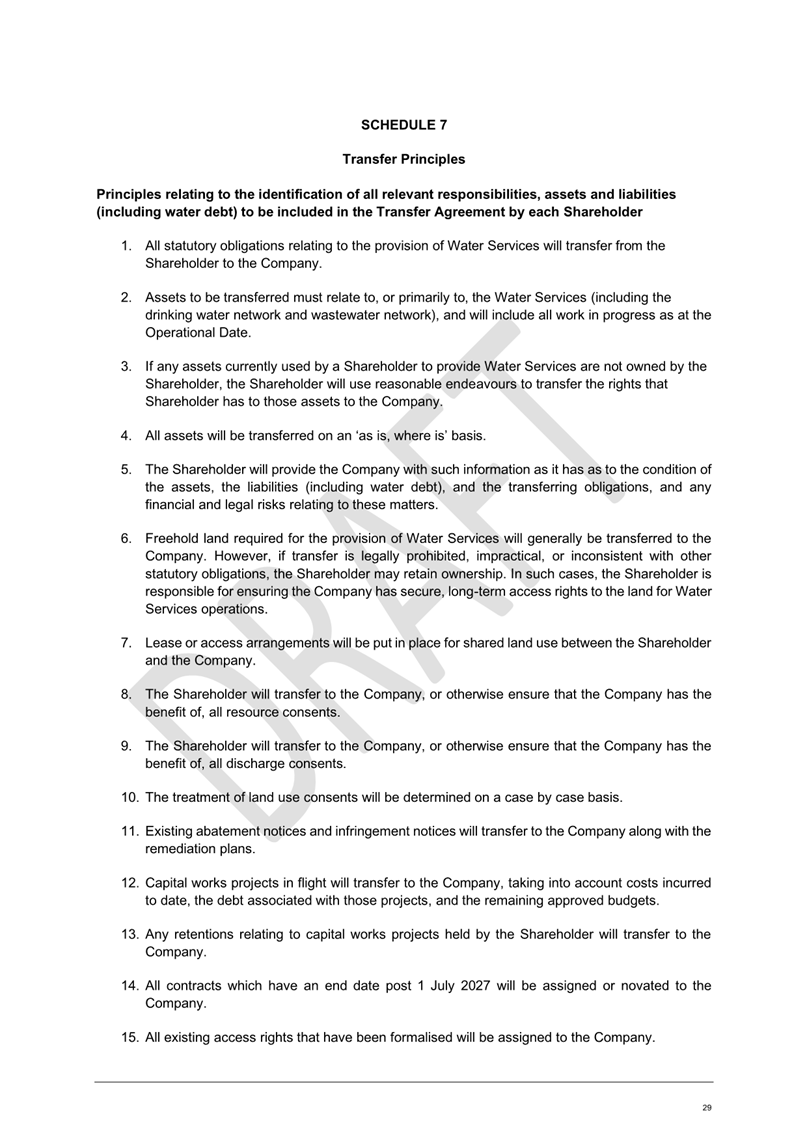
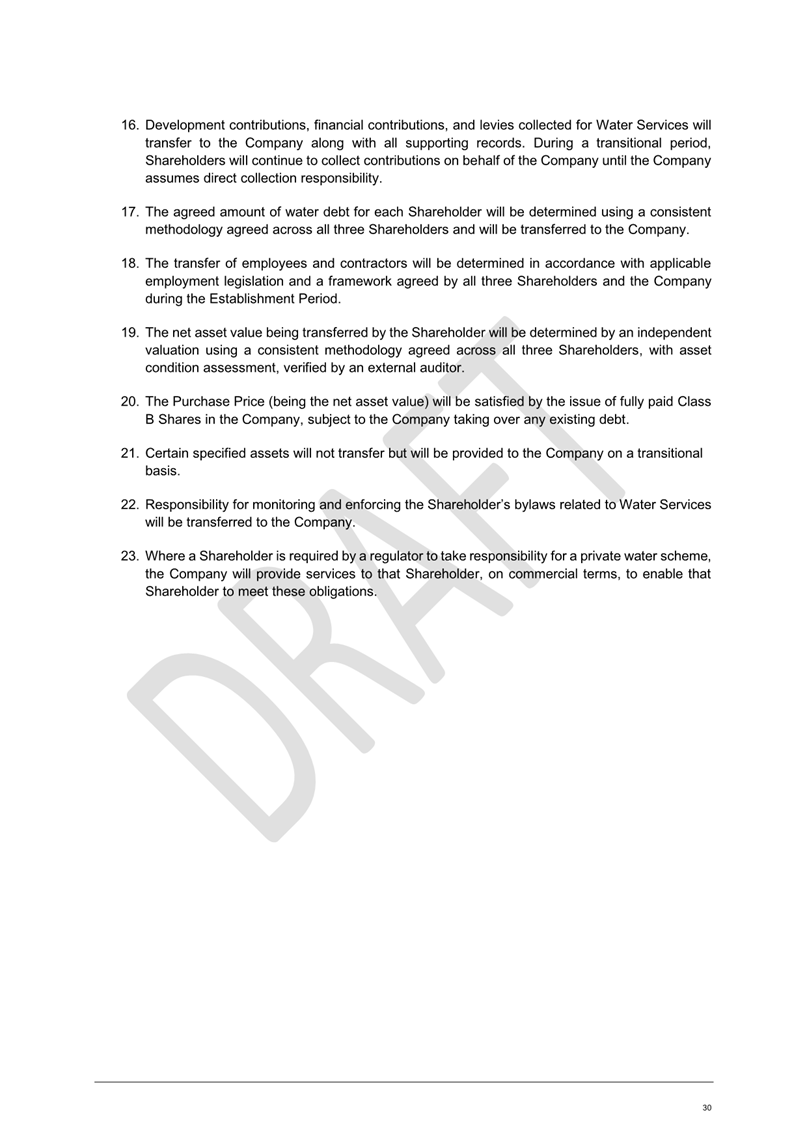
Northland Waters Limited (NWL) is a multi-council water
services council-controlled organisation (CCO) established under the Local
Government (Water Services) Act 2025 as part of the Local Water Done Well
programme. It will deliver drinking water and wastewater services across the
Far North, Whangārei, and Kaipara districts. Far North District Council
(FNDC), Whangārei District Council, and Kaipara District Council are its
shareholder councils.
On 1 April 2026, Council endorsed in principle the Northland
Waters Shareholders’ Agreement (SHA), subject, among other matters, to a
requirement that both SRG representatives be elected members. At that time the
foundation documents were still in draft, and the requirement could have been
tabled at the Elected Member Steering Group (EMSG) as an amendment to clause 6
of Schedule 4, which as drafted requires only that at least one representative
be an elected member. An amendment to the SHA in this manner would be
applicable to all shareholder Councils.
Between 1 April and 20 May 2026, that amendment was not made
at the multi-council level. The other shareholder councils did not adopt the
same position, and the SHA was finalised retaining clause 6 as drafted.
On 20 May 2026, Council resolved to enter NWL and executed
the SHA, the constitution, and the transition agreement. Council appointed
Mayor Moko Tepania and Cr John Vujcich as representatives, with Cr Arohanui
Allen and Cr Kelly Stratford as alternates. All four appointees are elected
members. Clause (i) of the resolution referred the standing approach question
to Te Koekoeā.
The other shareholder councils have taken different
approaches.
· Whangārei
District Council has retained the position provided by the SHA, permitting one
elected representative and one elective representative (elected member or
independent representative).
· Kaipara District
Council has resolved a self-imposed restriction to elected members only.
Council has referred the matter to Te Koekoeā to
consider whether FNDC should apply the same self-imposed restriction to its own
future appointments, and to recommend back to Council.
2) matapaki me
NgĀ KŌwhiringa / Discussion and Options
Legislation, the Shareholders’ Agreement, and the
SRG
NWL is incorporated under the Companies Act 1993. The Local
Government (Water Services) Act 2025 provides the framework for water services
CCOs.
A shareholders’ agreement is a contract between the
shareholders of a company. It sets out how the shareholders exercise their
collective rights, including how each shareholder is represented and how the
shareholders hold the company to account. For NWL, the SHA performs this role
for the three shareholder councils.
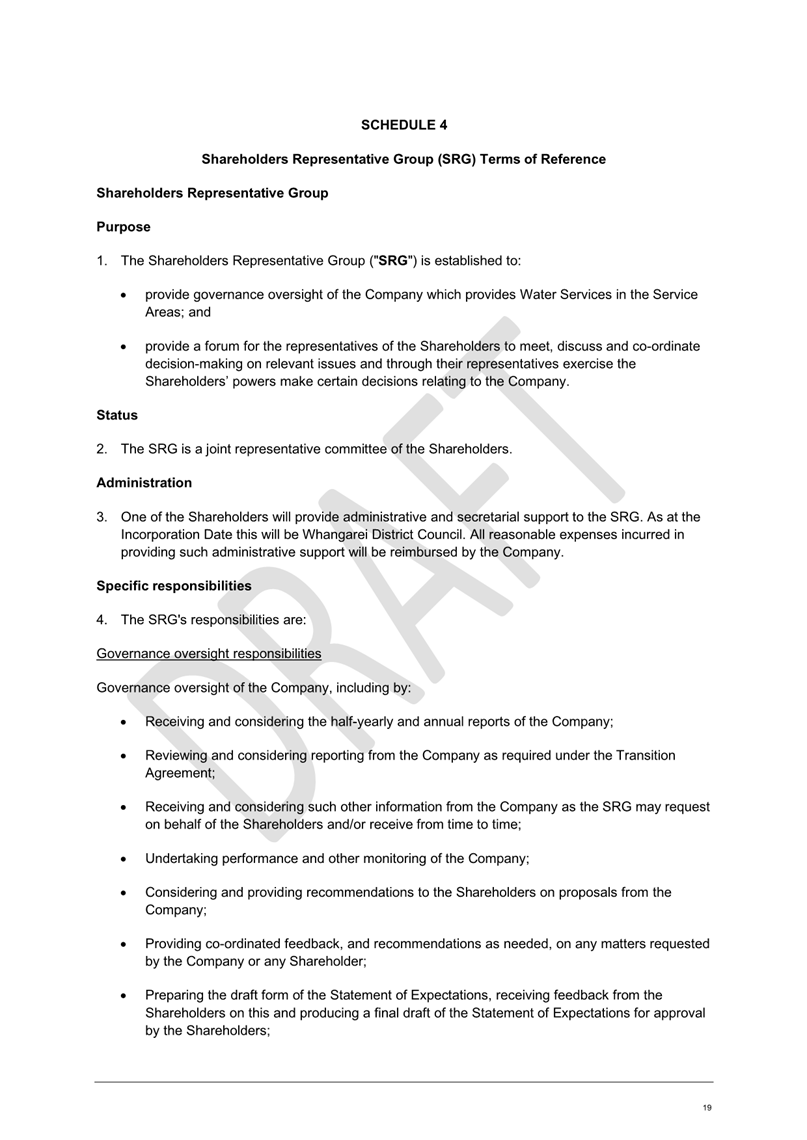
The purpose of the SRG is to:
· provide governance
oversight of the Company which provides Water Services in the Service Areas;
and
· provide a forum
for the representatives of the Shareholders to meet, discuss and co-ordinate
decision-making on relevant issues and through their representatives exercise
the Shareholders’ powers make certain decisions relating to the Company.
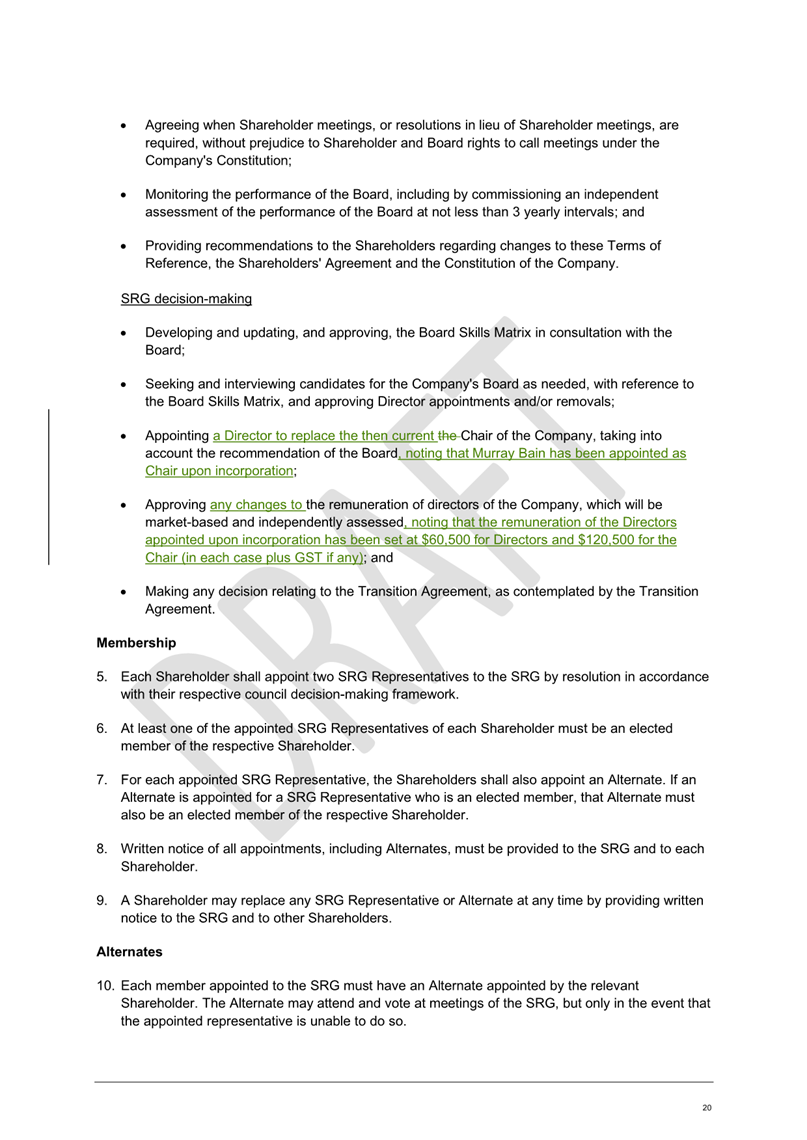
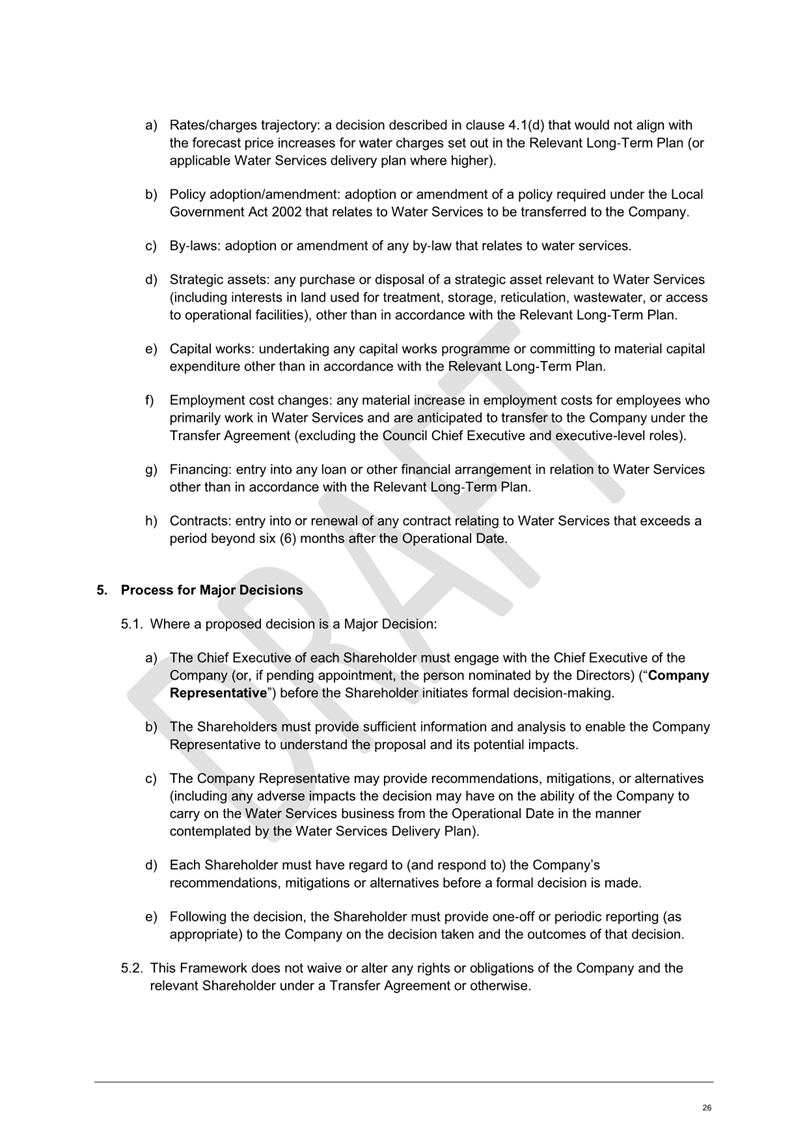
The responsibilities of the SRG are outlined in Schedule 4
of the SHA, and are as follows:
· Receiving and
considering the half-yearly and annual reports of the Company;
· Reviewing and
considering reporting from the Company as required under the Transition
Agreement;
· Receiving and
considering such other information from the Company as the SRG may request on
behalf of the Shareholders and/or receive from time to time;
· Undertaking
performance and other monitoring of the Company;
· Considering and
providing recommendations to the Shareholders on proposals from the Company;
· Providing
co-ordinated feedback, and recommendations as needed, on any matters requested
by the Company or any Shareholder;
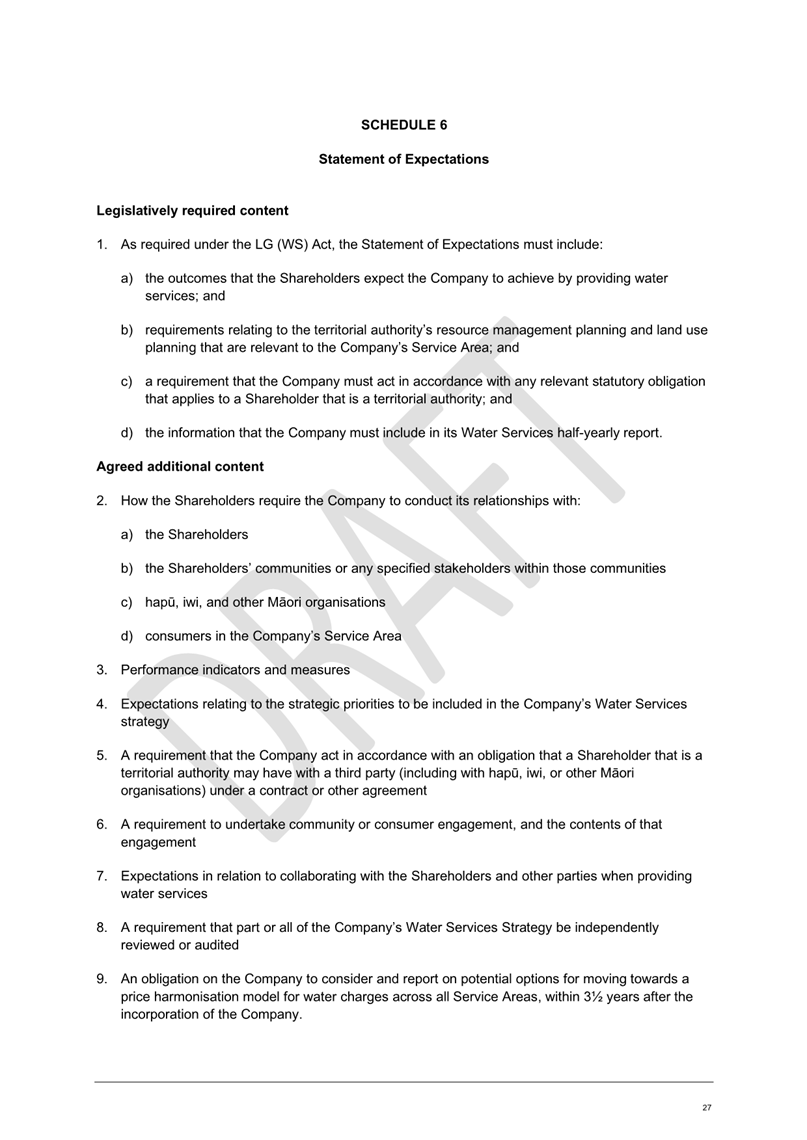
· Preparing the
draft form of the Statement of Expectations, receiving feedback from the
Shareholders on this and producing a final draft of the Statement of
Expectations for approval by the Shareholders;
· Agreeing when
Shareholder meetings, or resolutions in lieu of Shareholder meetings, are
required, without prejudice to Shareholder and Board rights to call meetings
under the Company's Constitution;
· Monitoring the
performance of the Board, including by commissioning an independent assessment
of the performance of the Board at not less than 3 yearly intervals; and
· Providing
recommendations to the Shareholders regarding changes to these Terms of
Reference, the Shareholders' Agreement and the Constitution of the Company.
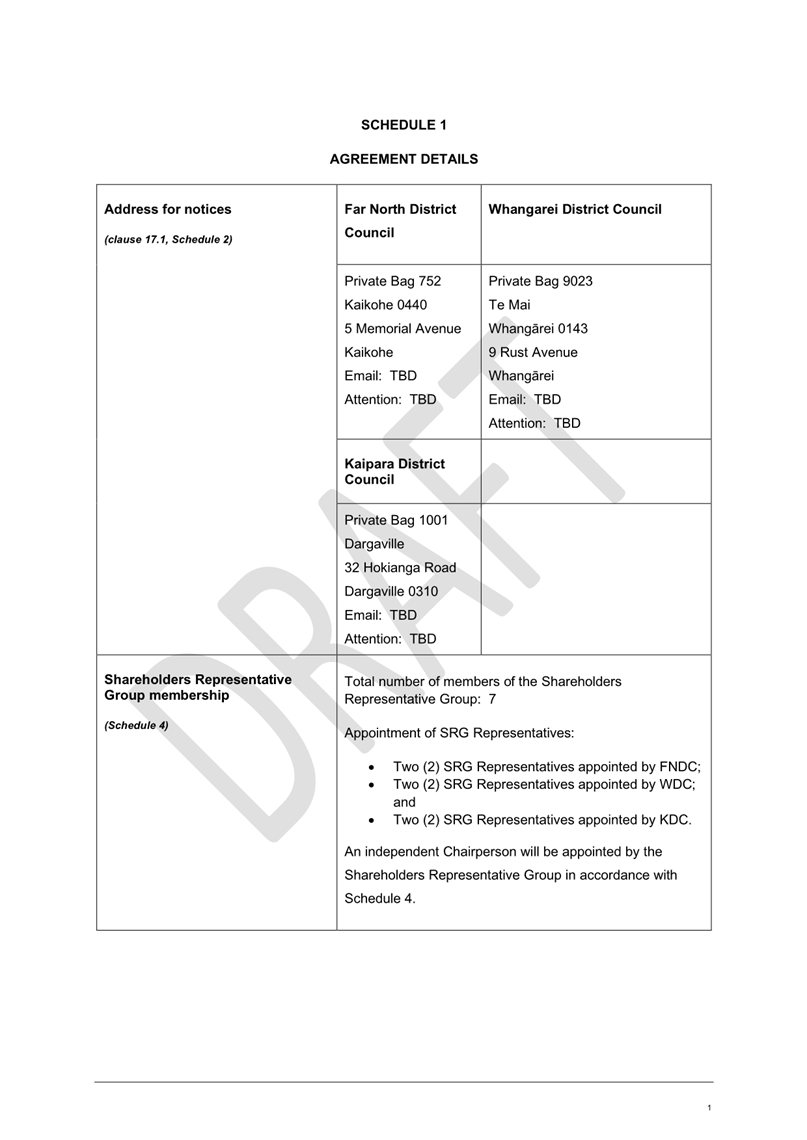
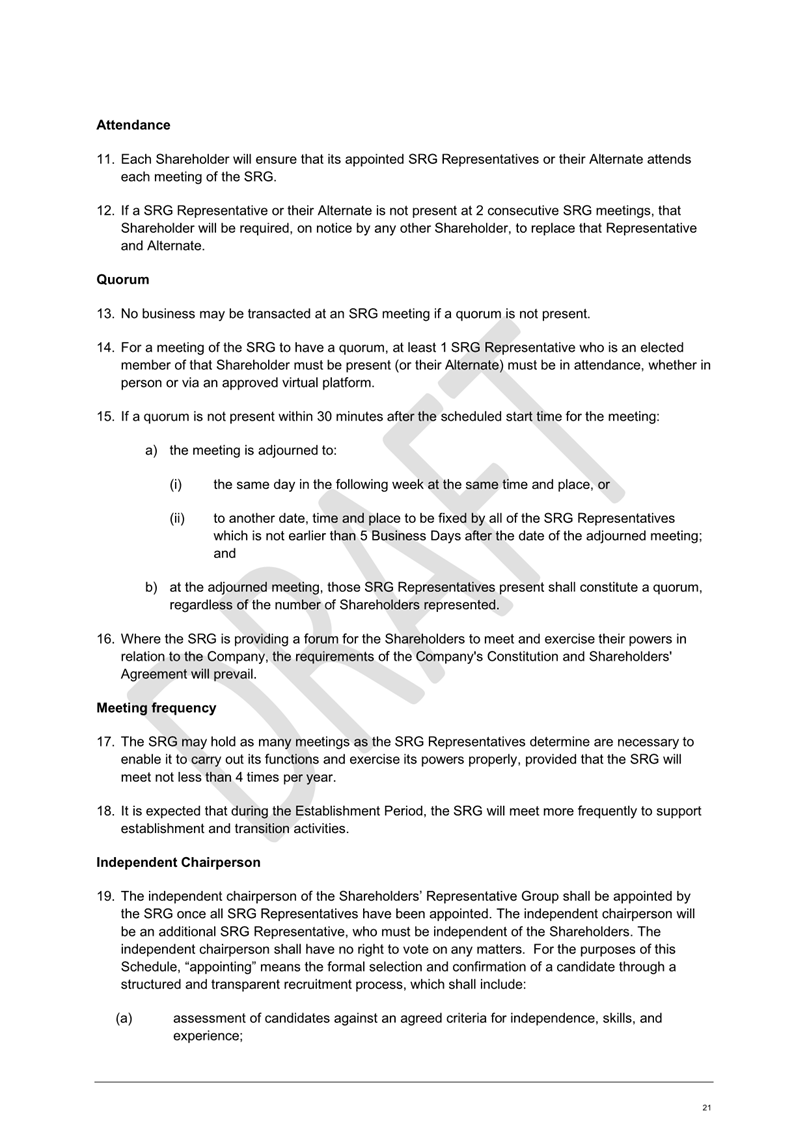
Each shareholder appoints two representatives and two
alternates. Under clause 6, at least one of the two representatives must be an
elected member. Under clause 7, the alternate for an elected-member
representative must also be an elected member. The SRG also has an independent,
non-voting chairperson appointed through a structured process.
Why the matter is before Te Koekoeā
The requirement that both FNDC representatives be elected
members was moved as an amendment from the floor at the 1 April 2026 Council
meeting. It could not be given effect at the multi-council level, because the
SHA was finalised before the amendment could be incorporated. On 20 May 2026,
Council entered NWL, made its appointments, and referred the standing approach
question to Te Koekoeā.
When the matter was discussed in Council, the
decision-making requirements of Part 6 of the Local Government Act 2002 (LGA
2002) were noted. Referring the matter to Te Koekoeā provides the
opportunity to consider the options properly before a recommendation is made to
Council.
Scope of the standing approach
The standing approach would apply to future appointments to
the SRG, appointments following the triennial election, and vacancies arising
mid-term. The SHA intends that no SRG decisions are scheduled during the
election changeover period, and provides that a shareholder may replace a
representative or alternate at any time by written notice. Any standing
approach adopted by Council would apply to future appointments unless Council
later resolved to amend, revoke, or depart from it through a formal decision.
Current appointments
The four positions appointed on 20 May 2026 are filled by
elected members and remain in place. The committee is not being asked to
revisit them. The standing approach concerns future appointments only.
Options
Staff present two options and have not formed a
recommendation.
Option A: representatives and alternates restricted to
elected members only
FNDC would adopt a self-imposed restriction that all its SRG
positions be filled by elected members. This goes beyond the SHA, which
requires only that at least one representative, and the alternate for an
elected-member representative, be an elected member.
Advantages
· Keeps FNDC’s owner decisions, including unanimous decisions on
appointing and removing NWL directors, appointing the chair, and transition
agreement matters, with elected members.
· Maintains a clear line of accountability from SRG decisions to
ratepayers.
· Aligns with the approach taken by Kaipara District Council.
· Avoids
the need to structure and manage a non-elected appointment, including
remuneration and appointment terms.
Disadvantages
· The SRG monitors a complex CCO, approves the board skills matrix,
and scrutinises company reporting; elected members may bring less specialist
governance, commercial, or water-sector expertise to that work.
· May reduce continuity and institutional memory across election
cycles.
· Concentrates the SRG workload, which is at least four meetings a
year and more during establishment, on elected members.
· Goes beyond the SHA requirement and differs from Whangārei
District Council’s approach.
Option B: no additional
restriction; appointments as provided by the Shareholders’ Agreement
FNDC would make no change. Its appointments would remain as
the SHA provides: at least one representative an elected member, the alternate
for an elected-member representative also an elected member, and the second
representative able to be a non-elected person. If Council considered
appointing a non-elected person, matters such as expertise, independence,
conflicts of interest, confidentiality, and role clarity would be assessed at
the time of appointment.
Advantages
· Leaves FNDC consistent with the SHA as executed and with
Whangārei District Council’s approach.
· Allows FNDC to bring independent expertise, such as governance,
commercial, or water-sector, to the SRG’s oversight and
director-appointment functions where Council considers it useful.
· May retain continuity and institutional memory across election
cycles.
· Preserves
flexibility; no standing restriction would need amending to respond to future
needs.
Disadvantages
· A non-elected representative would exercise FNDC’s owner vote,
including on unanimous decisions to appoint or remove NWL directors and on the
Statement of Expectations, without the direct community accountability an
elected member carries.
· If FNDC used the non-elected seat, it would need to select a
suitable person; and, as the SHA requires, that representative’s
remuneration would be set by unanimous agreement of the shareholders and an
indemnity provided (see Section 3).
· Differs
from Kaipara District Council’s approach.
Mechanism to give effect to the standing approach
A mechanism is only required for Option A. Option A
introduces a new self-imposed restriction and would need an instrument to bind
future appointments. Option B requires no mechanism, because it leaves
FNDC’s appointments as provided by the SHA.
If Council wishes to give effect to Option A, such as:
· A standing
resolution of Council, which is the simplest and is changeable by any future
Council; or
· Expanding
FNDC’s Appointment and Remuneration of Directors for Council
Organisations Policy (Policy #2123) to cover shareholder-representative
appointments; or
· A discrete new
policy. Policy #2123 is made under section 57 of the LGA 2002 and currently
governs the appointment of directors to council organisations, which is a
different role from a shareholder representative.
If Council adopts Option A, staff would provide a decision
making report back to Council with an appropriate governance pathway to give it
effect with an appropriate mechanism such as the options above.
Any non-elected appointee would require clear appointment
terms addressing matters such as confidentiality, conflicts of interest,
reporting expectations, remuneration, and indemnity, consistent with the SHA.
Take
Tūtohunga / Reason for the Recommendation
Staff have not presented a recommendation.
ngĀ
wĀhanga tahua / Financial Implications and Budgetary Provision
Option A has no additional direct cost beyond existing
elected member allowance and reimbursement arrangements.
Option B may involve additional cost if Council appoints a
non-elected representative, because the SHA requires the appointing council to
set that representative’s remuneration and provide indemnity. Any such
cost would be considered as part of a future appointment decision.
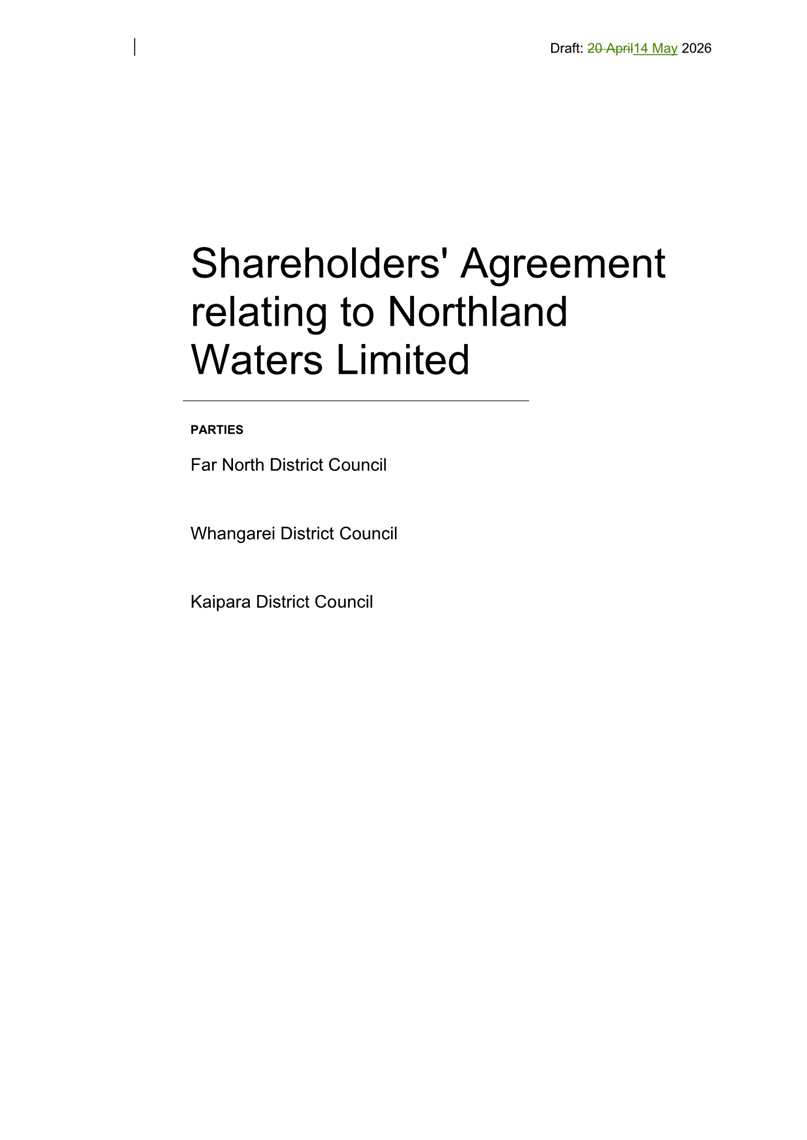
Āpitihanga / Attachments
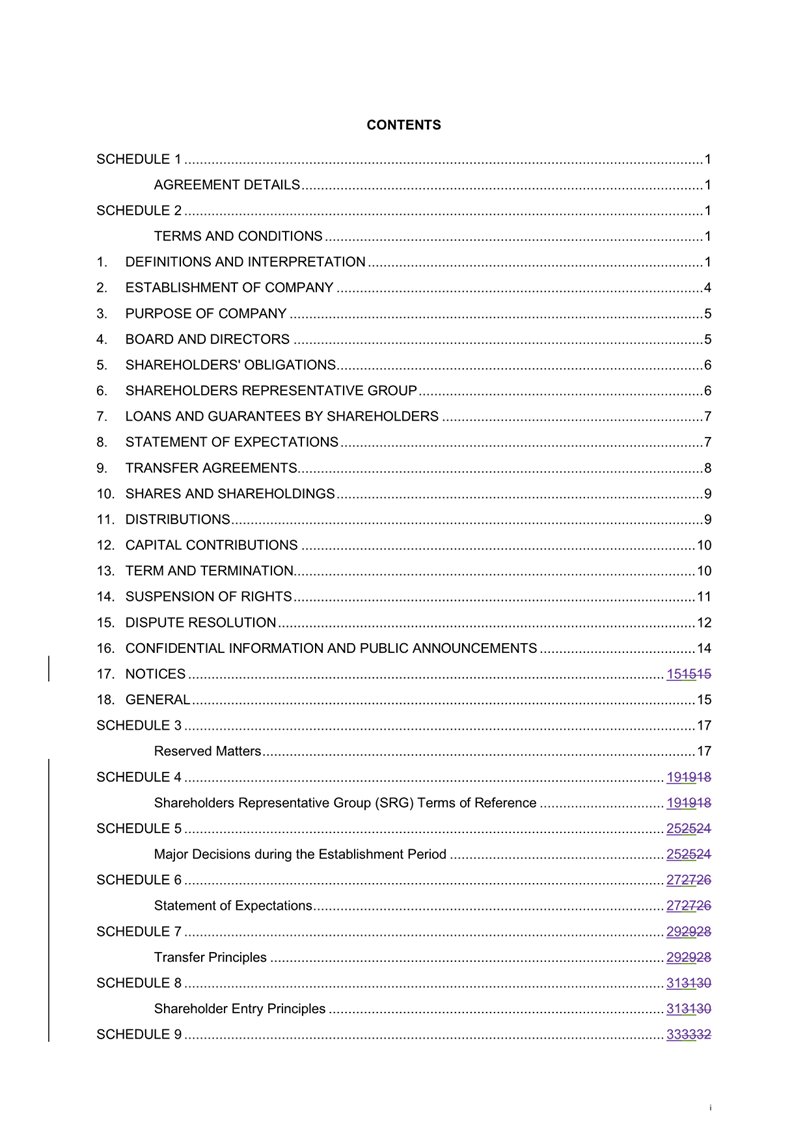
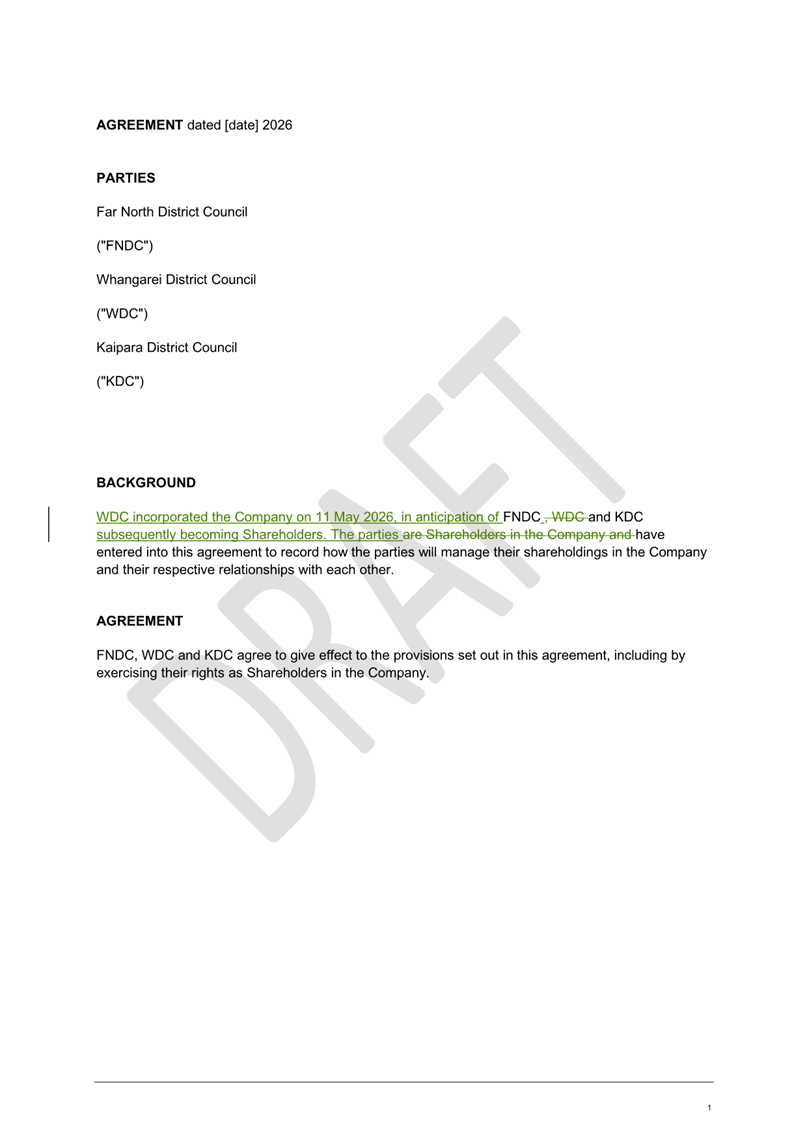
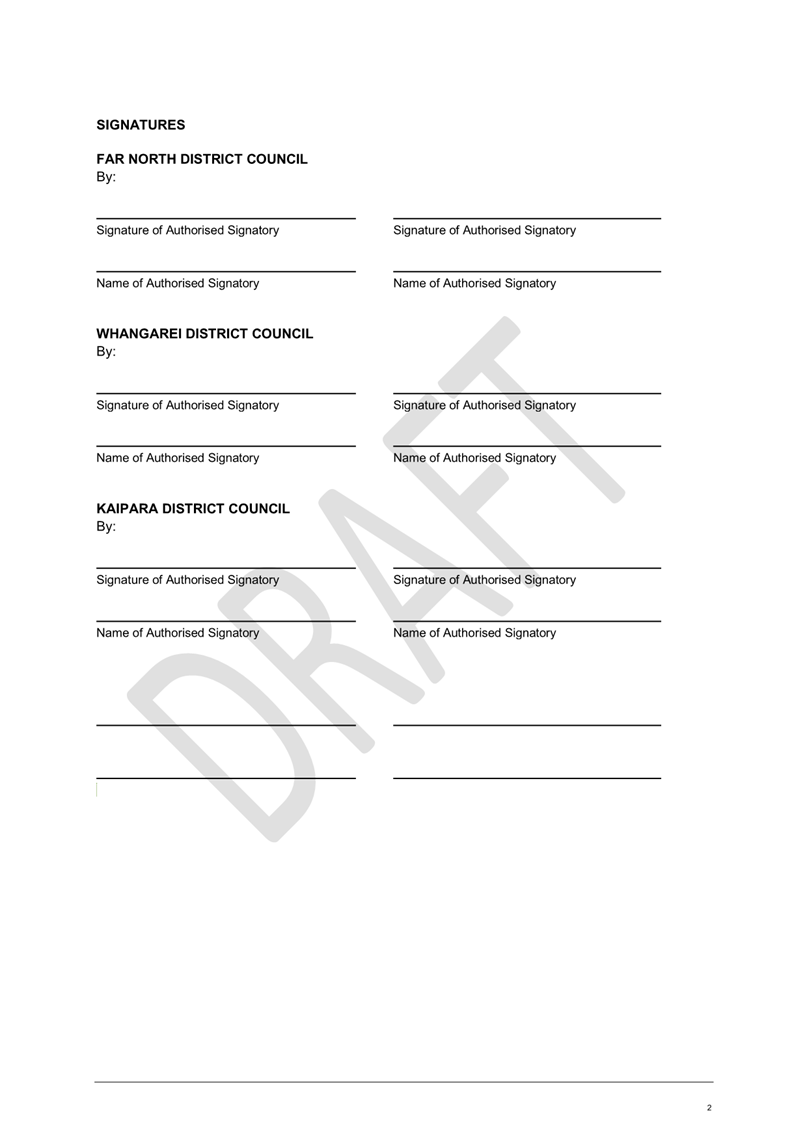
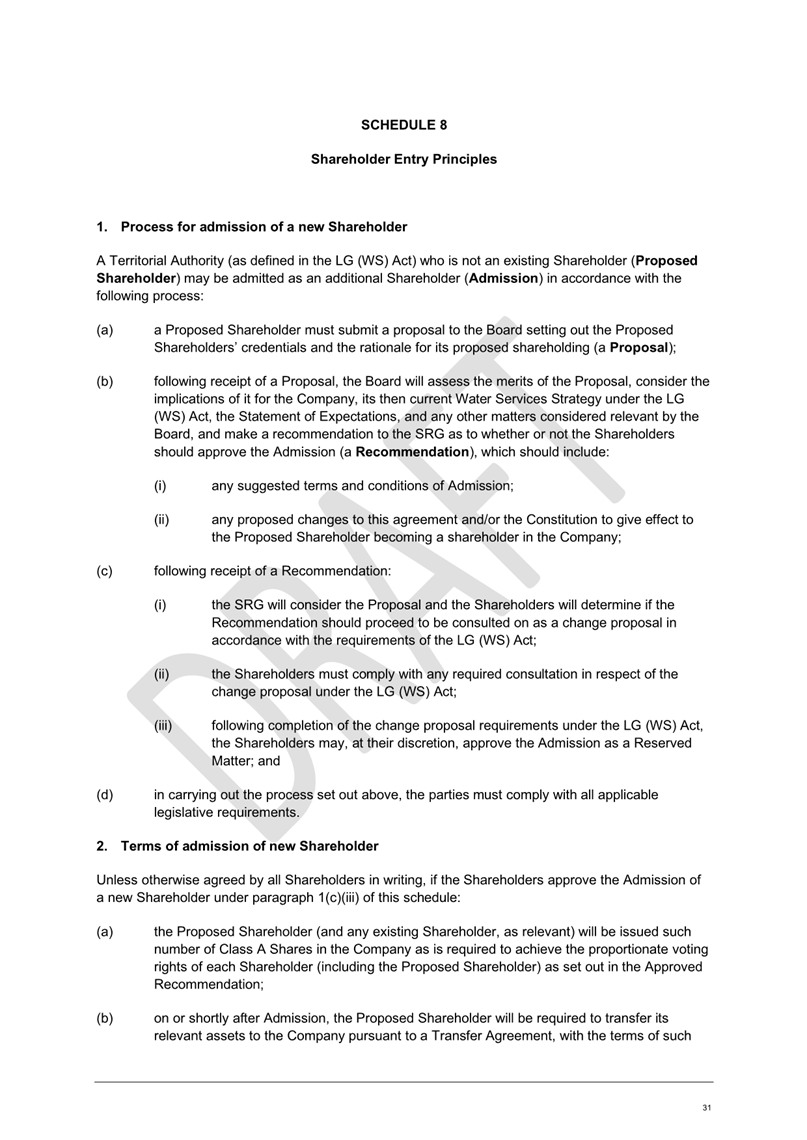
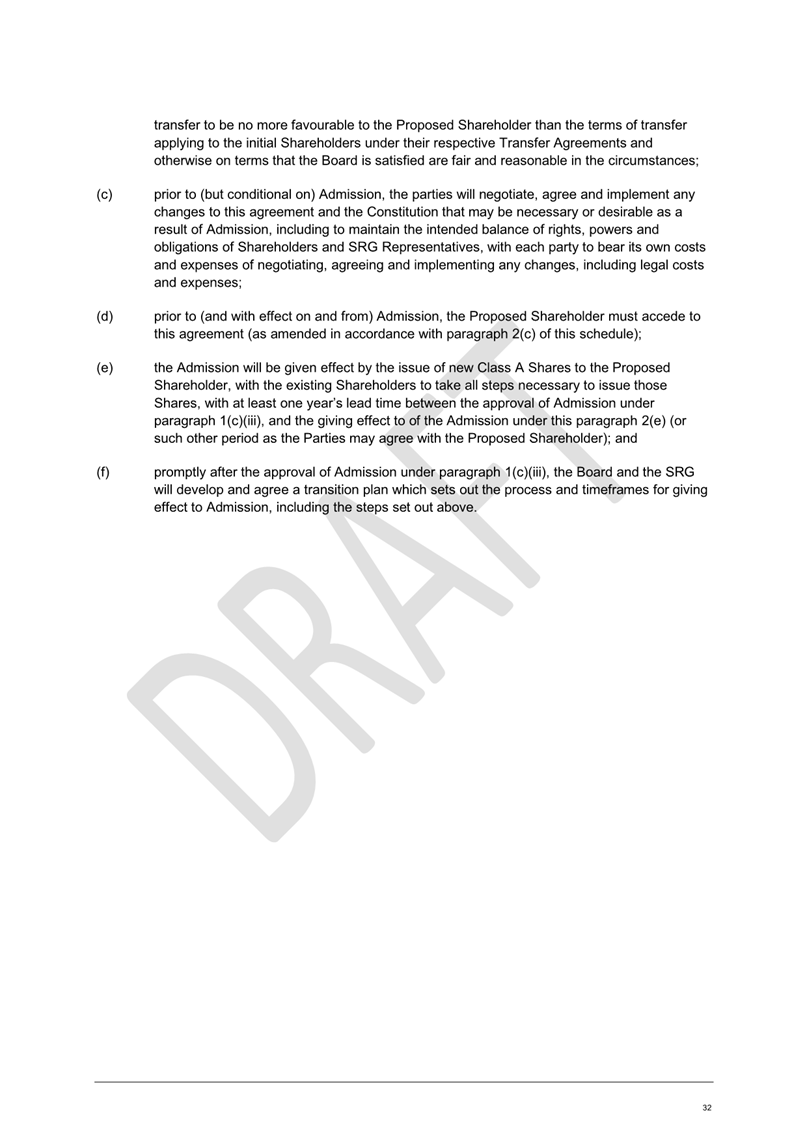
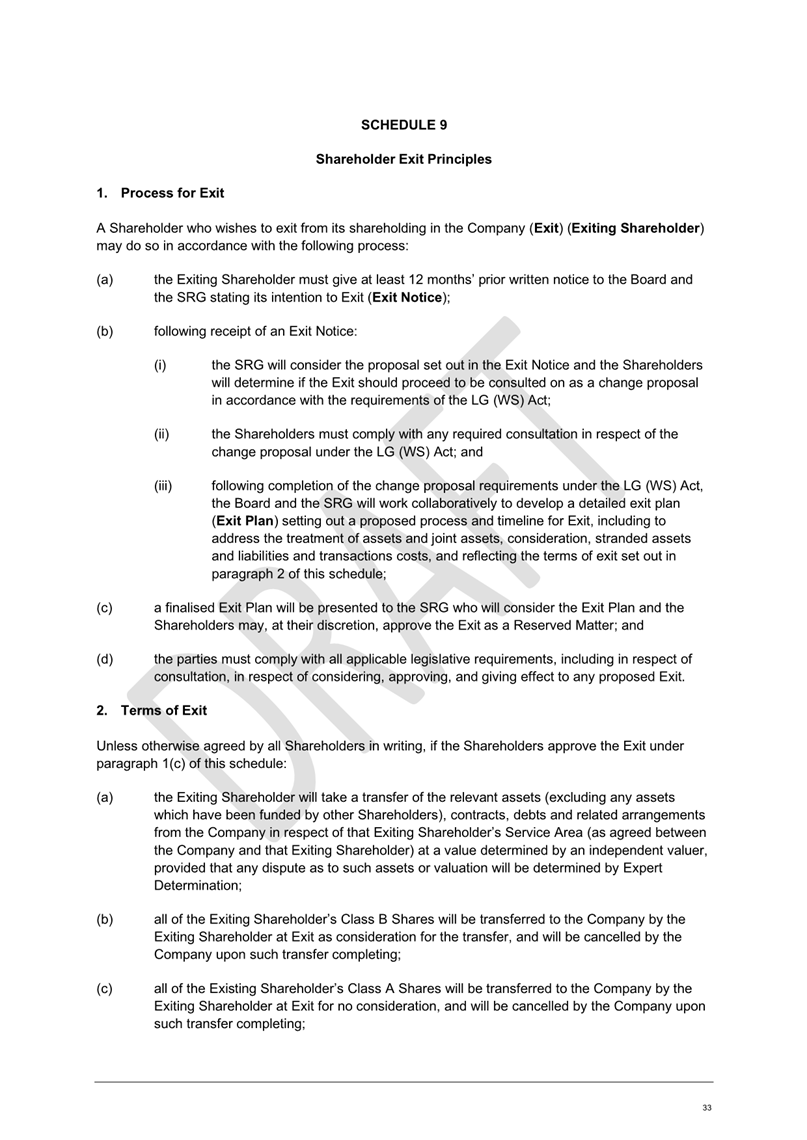
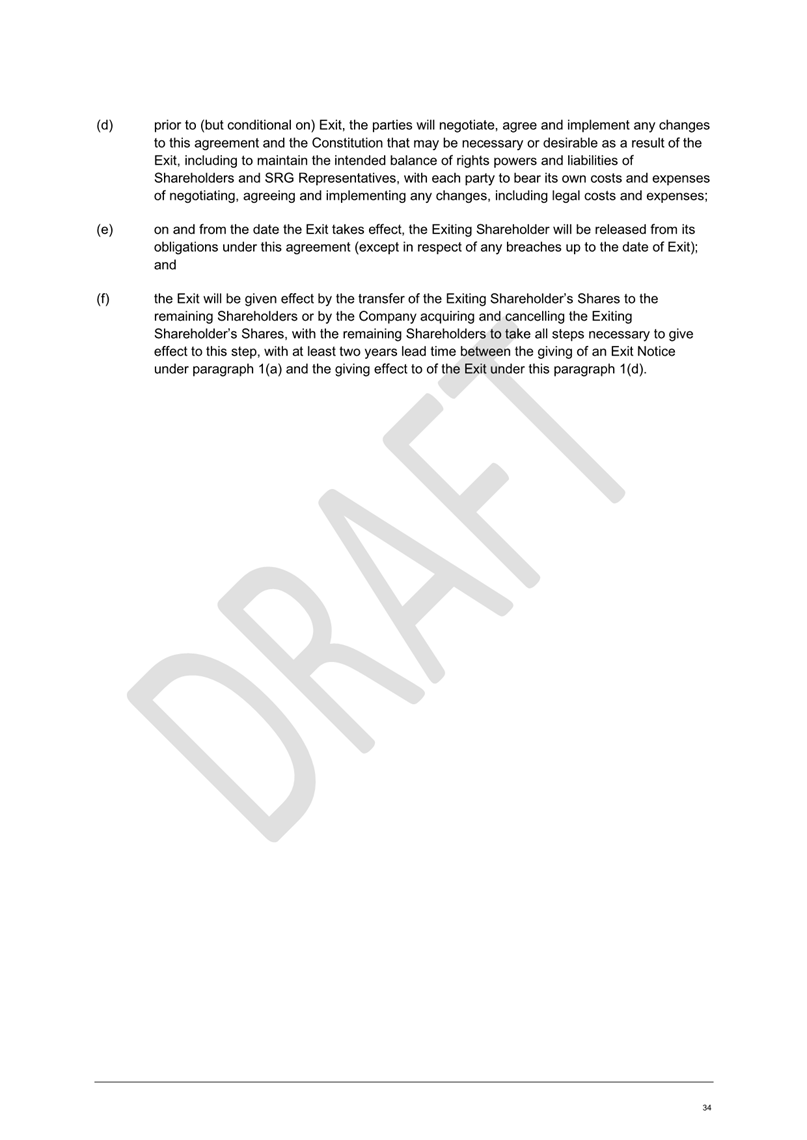
1. Northland
Waters - Shareholders Agreement - A5816916 ⇩
Hōtaka Take Ōkawa / Compliance Schedule:
Full consideration has been given to the provisions of the
Local Government Act 2002 S77 in relation to decision making, in particular:
1. A Local authority must,
in the course of the decision-making process,
a) Seek to identify all
reasonably practicable options for the achievement of the objective of a
decision; and
b) Assess the options in
terms of their advantages and disadvantages; and
c) If any of the
options identified under paragraph (a) involves a significant decision in
relation to land or a body of water, take into account the relationship of
Māori and their culture and traditions with their ancestral land, water
sites, waahi tapu, valued flora and fauna and other taonga.
2. This section is subject
to Section 79 - Compliance with procedures in relation to decisions.
|
He Take Ōkawa /
Compliance Requirement
|
Aromatawai Kaimahi /
Staff Assessment
|
|
State the level of significance (high or low) of the
issue or proposal as determined by the Council’s
Significance and Engagement Policy
|
Low. Assessed against the Significance and Engagement
Policy 2021, the matter is consistent with existing arrangements and has
limited financial impact.
|
|
State the relevant Council policies (external or
internal), legislation, and/or community outcomes (as stated in the LTP) that
relate to this decision.
|
· Local
Government Act 2002, Part 6;
· Local
Government (Water Services) Act 2025;
· Companies
Act 1993;
|
|
State whether this issue or proposal has a District wide
relevance and, if not, the ways in which the appropriate Community
Board’s views have been sought.
|
District-wide governance matter outside Community Board
delegations.
|
|
State the
possible implications for Māori and how Māori have been provided
with an opportunity to contribute to decision making if this decision is
significant and relates to land and/or any body of water.
State the
possible implications and how this report aligns with Te Tiriti o Waitangi /
The Treaty of Waitangi.
|
The SRG holds Northland Waters Limited to account for
water services delivery across Te Tai Tokerau, which is of significant
interest to iwi and hapū. Through the Statement of Expectations, the SRG
shapes how Council sets its shareholder expectations for engagement with mana
whenua, with Te Kuaka advising Council alongside Te Koekoeā.
|
|
Identify persons likely to be affected by or have an
interest in the matter, and how you have given consideration to their views
or preferences (for example – youth, the aged and those with
disabilities).
|
Elected members; potential future non-elected
representatives.
|
|
State the financial implications and where budgetary
provisions have been made to support this decision.
|
No direct financial implications arise from this report.
Costs are addressed in Section 3.
|
|
Chief Financial Officer review.
|
The CFO has not reviewed this paper.
|