

|
29 October 2025 |
Far North District Council
Ordinary Council Meeting
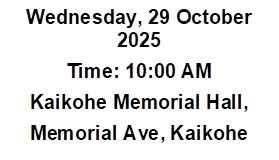
will be held in the Council Chamber, Memorial Ave, Kaikohe on:
Wednesday 29 October 2025 at 10:00 AM
Te Paeroa Mahi / Order of Business
2 Ngā Whakapāha Me Ngā Pānga Mema / Apologies and Declarations of Interest
3 Ngā Tono Kōrero / Deputations
4 Ngā Kōrero A Te Kahika / Mayoral Announcements
5.1 Making and Attesting of Declarations
5.2 Appointment of Deputy Mayor
5.3 Explanation of Laws Affecting Elected Members
5.5 Appointment of Ward Councillors to Community Boards
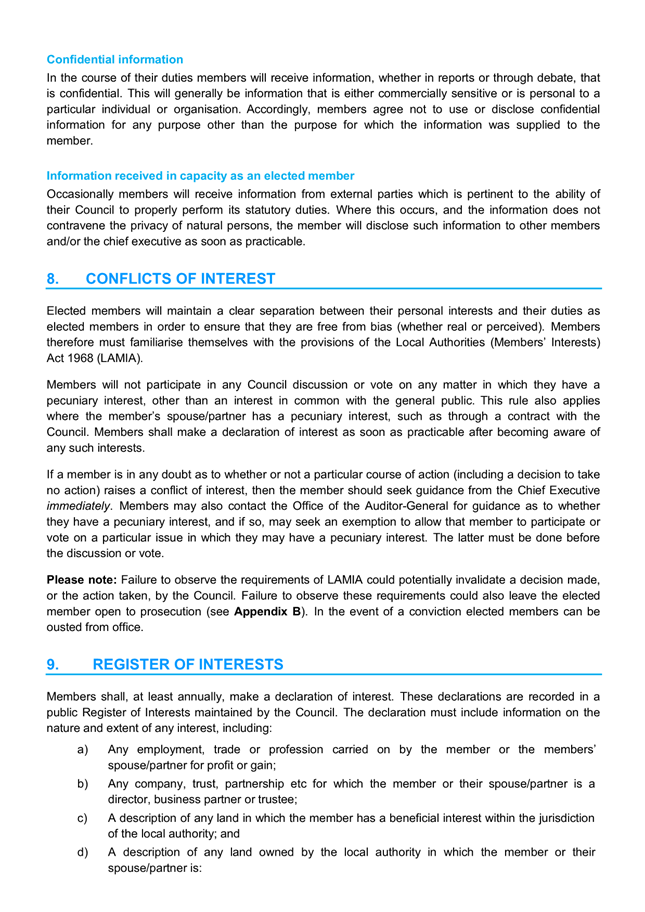
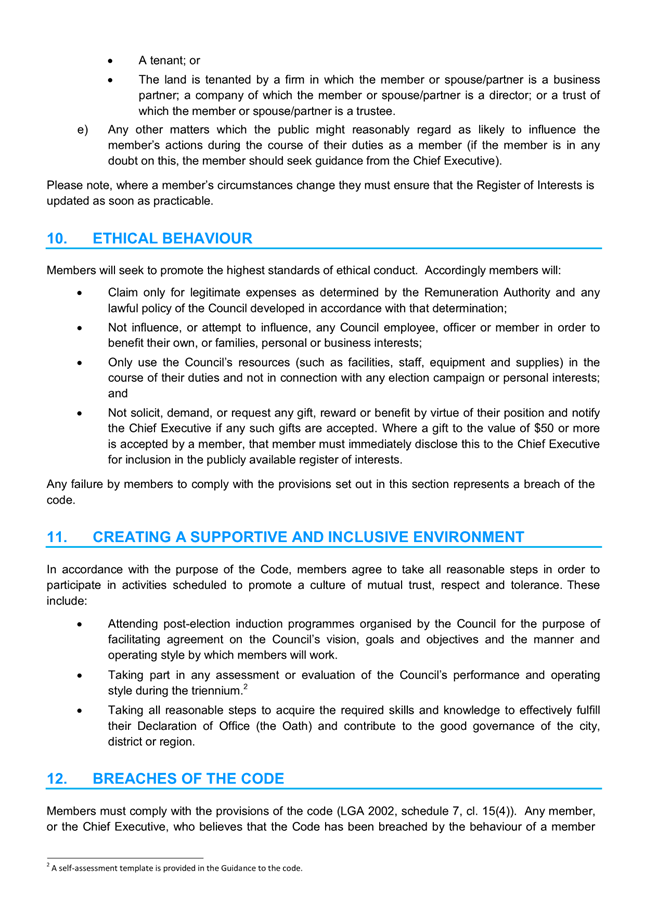
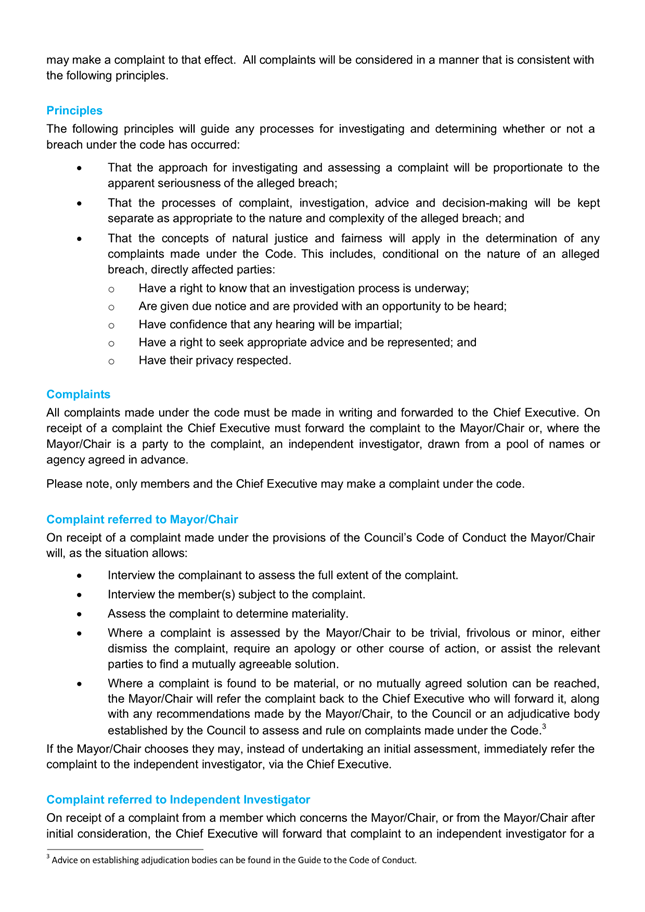
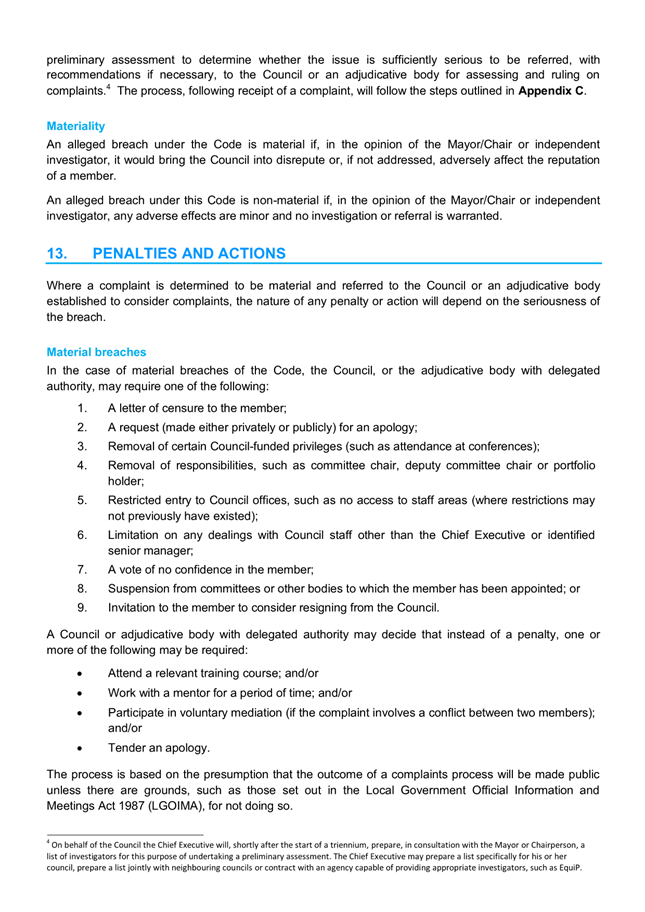
5.6 Elected Members Code of Conduct
5.7 2025 Far North District Council Governance Structure and External Appointments
5.8 Adoption of Far North District Council's Formal Meeting Schedule November to December 2025
6 Karakia Whakamutunga / Closing Prayer
7 Te Kapinga Hui / Meeting Close
1 Opening pōwhiri
2 Ngā Whakapāha Me Ngā Pānga Mema / Apologies and Declarations of Interest
Members need to stand aside from decision-making when a conflict arises between their role as a Member of the Council and any private or other external interest they might have. This note is provided as a reminder to Members to review the matters on the agenda and assess and identify where they may have a pecuniary or other conflict of interest, or where there may be a perception of a conflict of interest.
If a Member feels they do have a conflict of interest, they should publicly declare that at the start of the meeting or of the relevant item of business and refrain from participating in the discussion or voting on that item. If a Member thinks they may have a conflict of interest, they can seek advice from the Chief Executive Officer or the Manager - Democracy Services (preferably before the meeting).
It is noted that while members can seek advice the final decision as to whether a conflict exists rests with the member.
Elected Member - Register of Interests
3 Ngā Tono Kōrero / Deputations
No requests for deputations were received at the time of the Agenda going to print.
4 Ngā Kōrero A Te Kahika / Mayoral Announcements
|
29 October 2025 |
5 Ngā Pūrongo / Reports
5.1 Making and Attesting of Declarations
File Number: A5419465
Author: Natasha Rmandic, Democracy Advisor
Authoriser: Aisha Huriwai, Manager - Democracy Services
Take Pūrongo / Purpose of the Report
The purpose of this report is to set out the process for making and attesting of declarations.
|
There is no recommendation or decision required for this report. The minutes will record that the declarations of elected members were made and witnessed. |
1) TĀhuhu kŌrero / Background
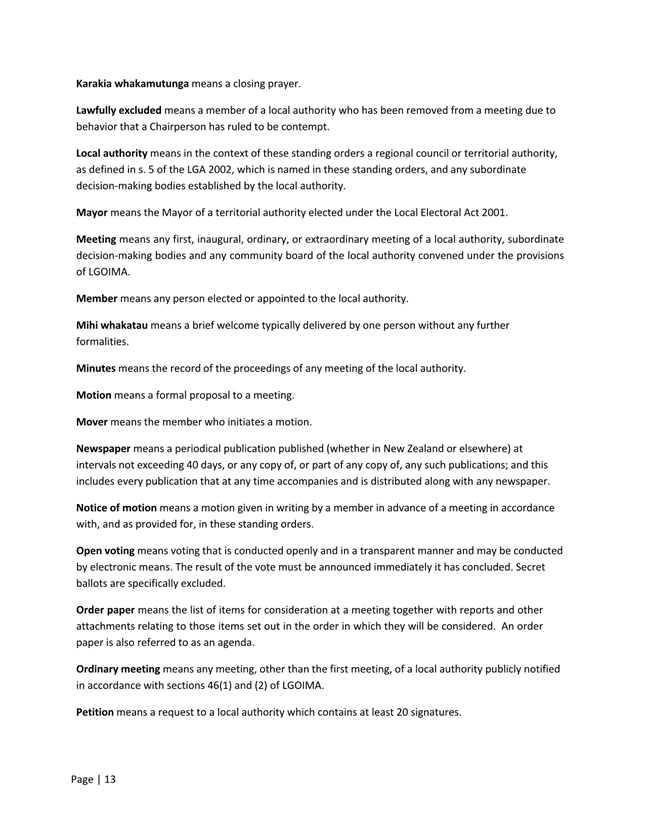
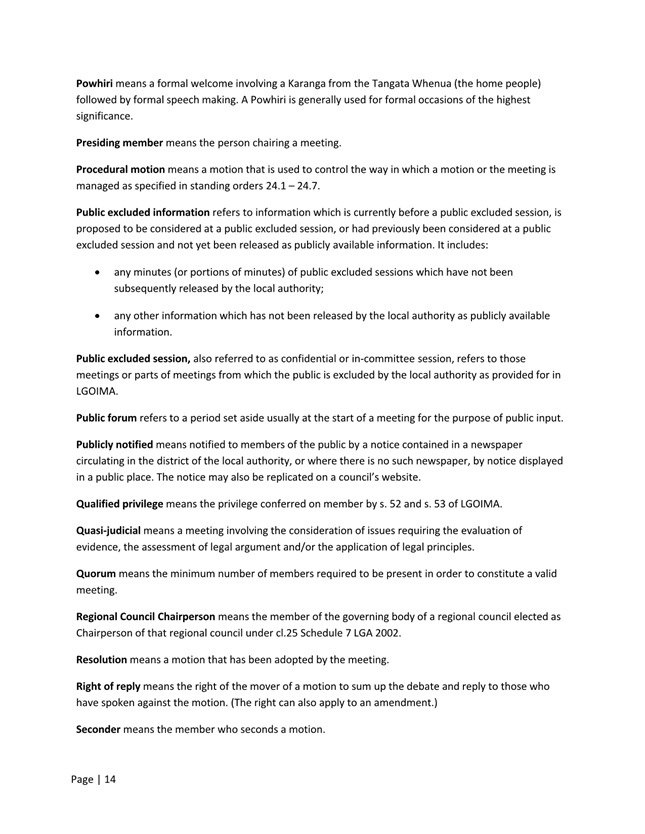
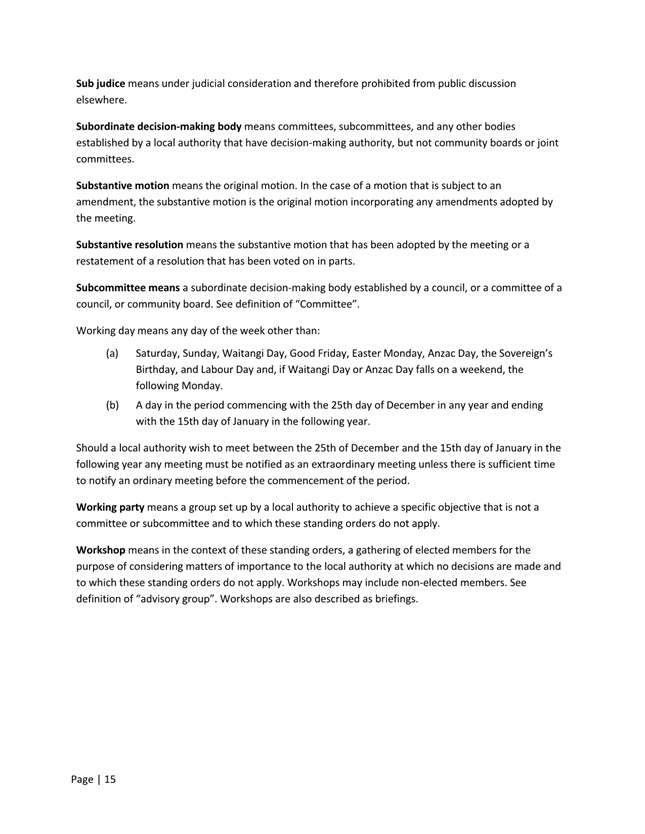
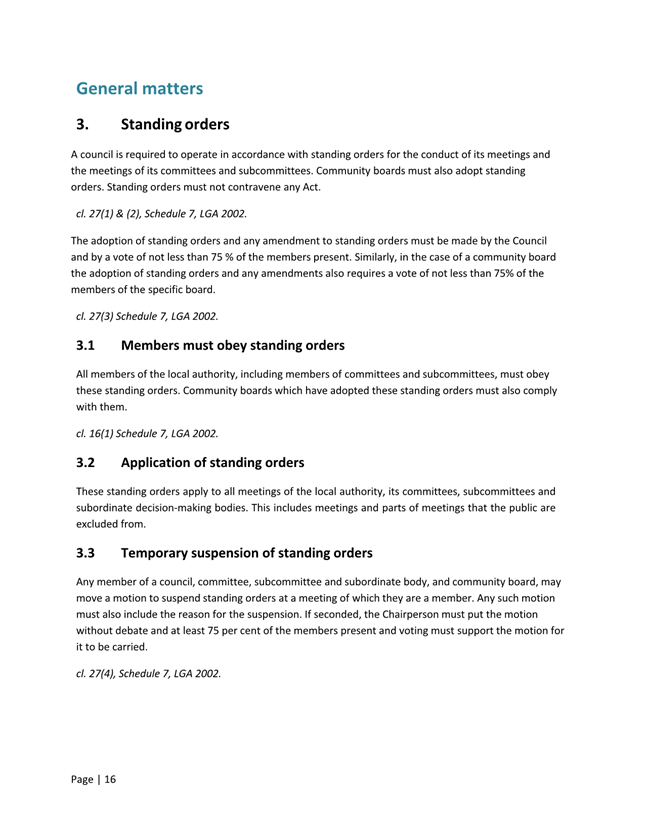
Clause 14(1) & (2) Schedule 7 of the Local Government Act 2002 states that no person shall be capable of acting as a member of any local authority until he or she has made an oral and written declaration as set out below.
2) matapaki me NgĀ KŌwhiringa / Discussion and Options
The declaration that each member is required to take is set out in Clause 14(3) Schedule 7 of the Act and reads as below. A translated version will also be made available for any members who would prefer to make their declaration in te reo Māori.
The declaration should be done with your legal name as this is a legal declaration.
DECLARATION BY MAYOR OR MEMBER – ENGLISH VERSION:
I, , declare that I will faithfully and impartially, and according to the best of my skill and judgement, execute and perform, in the best interests of the Far North District, the powers, authorities, and duties vested in, or imposed upon, me as a member of the Far North District Council by virtue of the Local Government Act 2002, the Local Government Official Information and Meetings Act 1987, or any other Act.
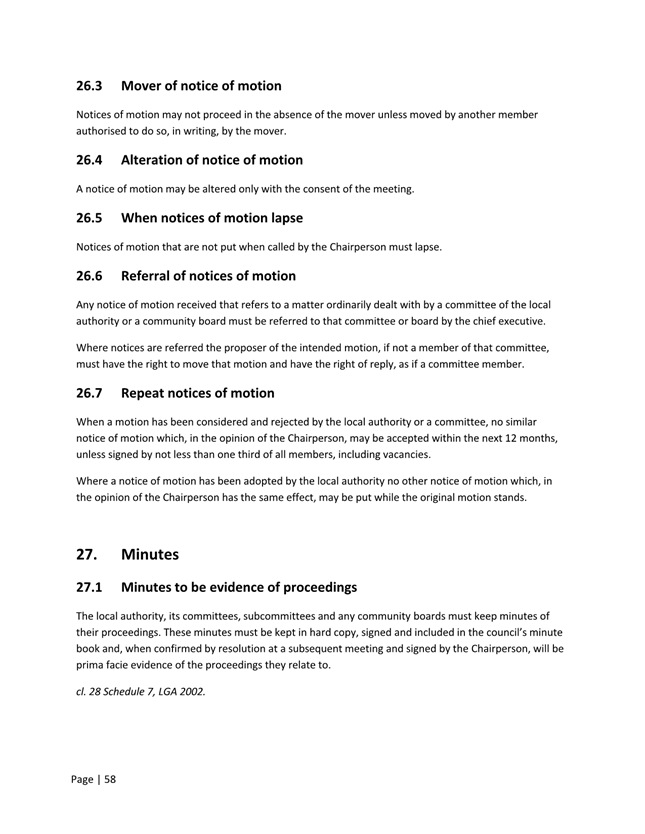
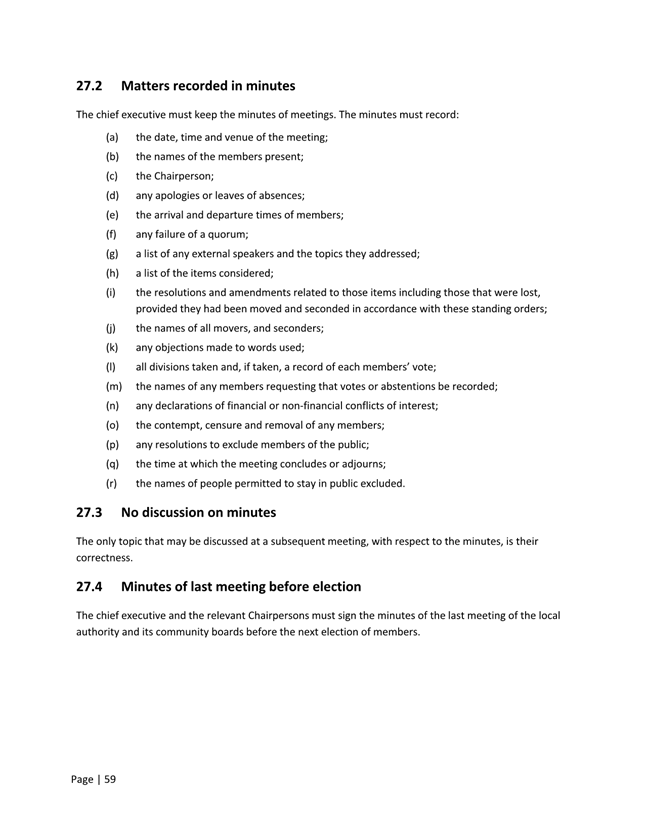
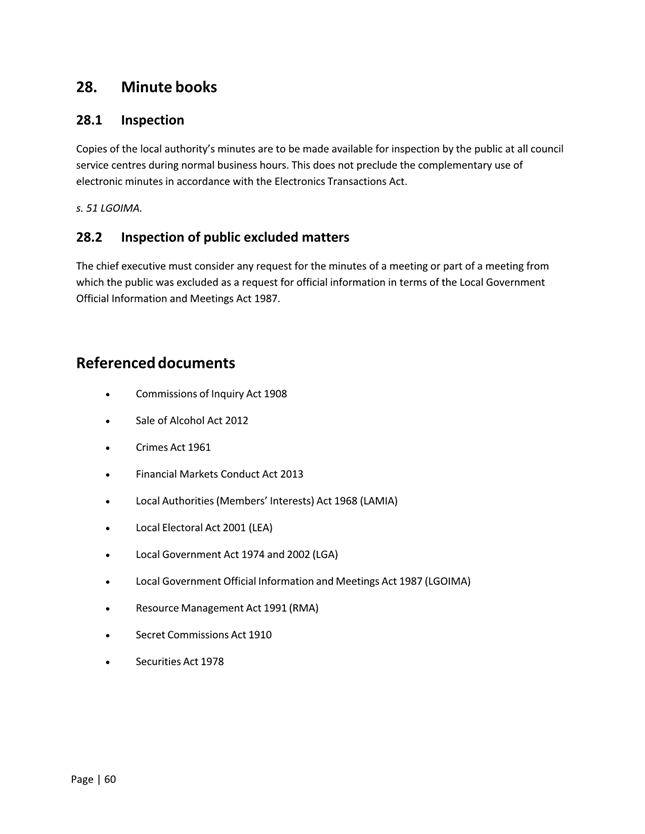
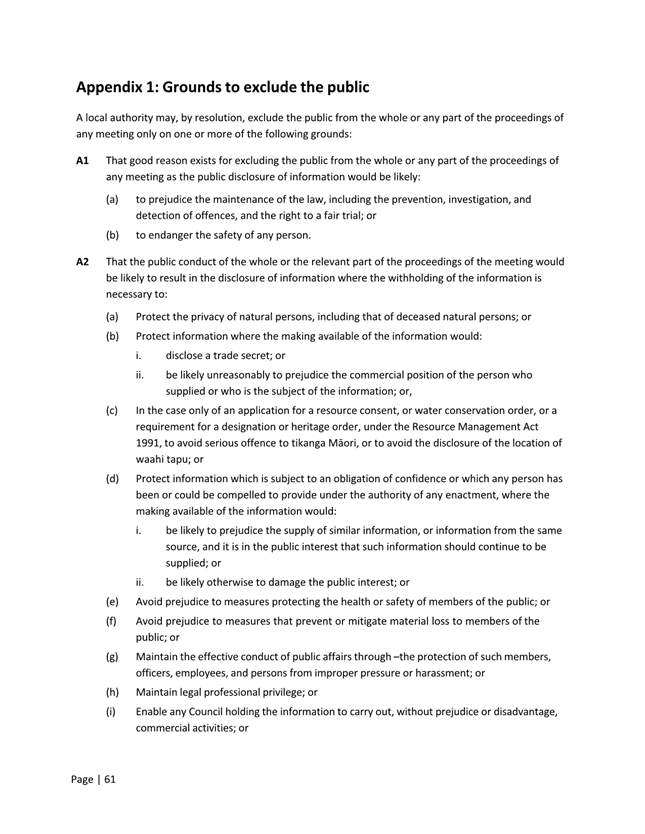
Dated at Memorial Hall – Kaikohe, this 29th day of October 2025.
Signed in the presence of
The Chief Executive:
Or
DECLARATION BY MAYOR OR MEMBER – TE REO MĀORI VERSION:
Ko ahau ko, , ka ōati ai ki runga i te pono me te tika ka mutu ki te taumata o tōku atamai me āku whakataunga. Ka mahi ai mō te painga o Te Hiku o te Ika, haere tonu ki ngā ihi me ngā herenga mahi, ka pā ki roto, ka uruhi ki runga i ahau hei mema o Te Kaunihera o Te Hiku o te Ika, e ai ki te Ture Kāwanatanga ā-Rohe 2002. Te Ture Kāwanatanga ā-Rohe mō ngā Kōrero Whakamōhio me ngā Huihuinga Kōrero 1987, me tāpiri atu ki ērā atu o ngā Ture raini.
He mea whakaū tēnei ki Memorial Hall – Kaikohe, i tēnei rā 29 o Whiringa-ā-nuku, 2025.
Ki mua i
Te Tumu Whakarae:
3) PĀnga PŪtea me ngĀ wĀhanga tahua / Financial Implications and Budgetary Provision
There are no financial implications or the need for budgetary provision as a result of this report.
Nil
|
29 October 2025 |
5.2 Appointment of Deputy Mayor
File Number: A5413532
Author: Natasha Rmandic, Democracy Advisor
Authoriser: Aisha Huriwai, Manager - Democracy Services
Take Pūrongo / Purpose of the Report
The purpose of the report is to explain the procedure for the appointment of the Deputy Mayor of the Far North District Council for the 2025-2028 triennium.
|
That Council note the Mayor’s appointment of Cr Chicky Rudkin as the Deputy Mayor. |
1) TĀhuhu kŌrero / Background
It is necessary to appoint the Deputy Mayor at the first meeting of the local authority under Clause 21(5) (e) of Schedule 7 of the Local Government Act 2002.
There are effectively two options to appoint a Deputy Mayor.
1. Mayoral Powers
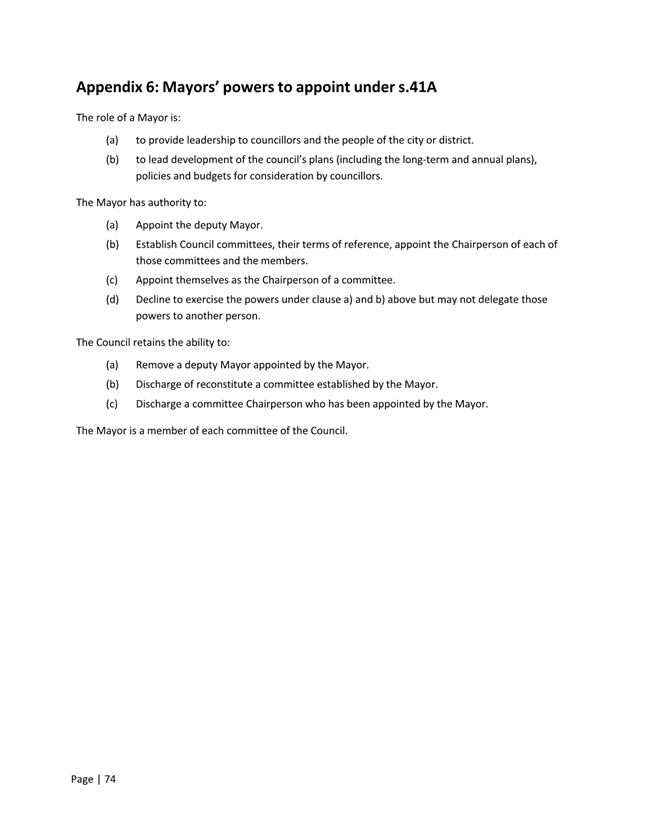
The Local Government Act (clause 41A) outlines the role and powers of mayors.
Subsection 3 states that the mayor has the power to appoint the deputy mayor (among other things).
The Kahika/Mayor Moko Tepania has advised he will appoint a Deputy Mayor and this report provides for him to formally share his appointment.
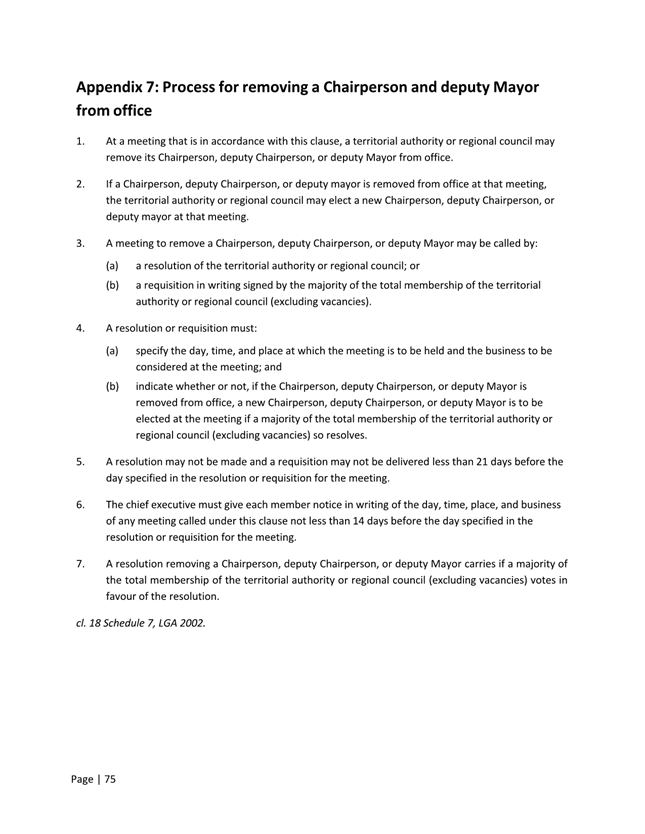
If a Mayor, declined to appoint a Deputy Mayor, Council can elect/appoint a Deputy Mayor.
2. Council resolution
The Council can appoint a deputy mayor by election.
The Local Government Act (Schedule 7, clause 25(3).
System A—
a) requires that a person is elected or appointed if he or she receives the votes of a majority of the members of the local authority or committee present and voting; and
b) has the following characteristics:
i. there is a first round of voting for all candidates; and
ii. if no candidate is successful in that round there is a second round of voting from which the candidate with the fewest votes in the first round is excluded; and
iii. if no candidate is successful in the second round there is a third, and if necessary subsequent, round of voting from which, each time, the candidate with the fewest votes in the previous round is excluded; and
iv. in any round of voting, if 2 or more candidates tie for the lowest number of votes, the person excluded from the next round is resolved by lot.
System B—
a) requires that a person is elected or appointed if he or she receives more votes than any other candidate; and
b) has the following characteristics:
i. there is only 1 round of voting; and
ii. if 2 or more candidates tie for the most votes, the tie is resolved by lot.
Far North District Council Standing Orders state that by default we operate under System B, however Council could first resolve to use System A if it preferred. System A is conducted by ballot during the meeting with the support of staff.
2) matapaki me NgĀ KŌwhiringa / Discussion and Options
This report recommends Council note the mayor’s appointment of deputy mayor.
If the Mayor decided not to use their Mayoral Powers under the Local Government Act this report would act as the mechanism for Council to appoint a Deputy Mayor.
Reason for the recommendation
To formally note the Mayor’s appointment of Deputy Mayor.
3) PĀnga PŪtea me ngĀ wĀhanga tahua / Financial Implications and Budgetary Provision
There are no financial implications or need for budgetary provisions as a result of this report.
Remuneration for the Deputy Mayor needs to be considered in conjunction with the Council’s Committee or Governance Structure at a later date. The Remuneration Authority determines the remuneration for Mayor, Community Board Members, and the minimum amount a Councillor will be remunerated, along with a pool, to allocate to those with additional responsibility(ies).
Āpitihanga / Attachments
Nil
|
29 October 2025 |
5.3 Explanation of Laws Affecting Elected Members
File Number: A5427138
Author: Natasha Rmandic, Democracy Advisor
Authoriser: Aisha Huriwai, Manager - Democracy Services
Take Pūrongo / Purpose of the Report
At the first meeting following a triennial local election, elected members are required to receive a general explanation of key laws that apply to elected members. This report provides a brief of the key legislation as required under, under Clause 21 (5)(c) of Schedule 7 of the Local Government Act 2002.
|
That Council note the report “Explanation of Laws Affecting Elected Members”, and the advice provided at this meeting. |
1) TĀhuhu kŌrero / Background
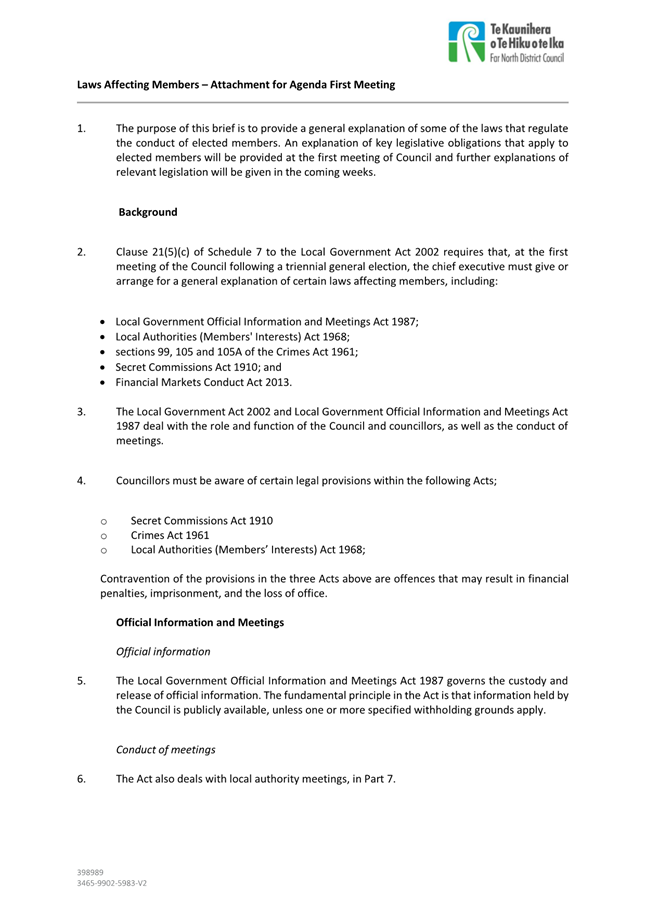
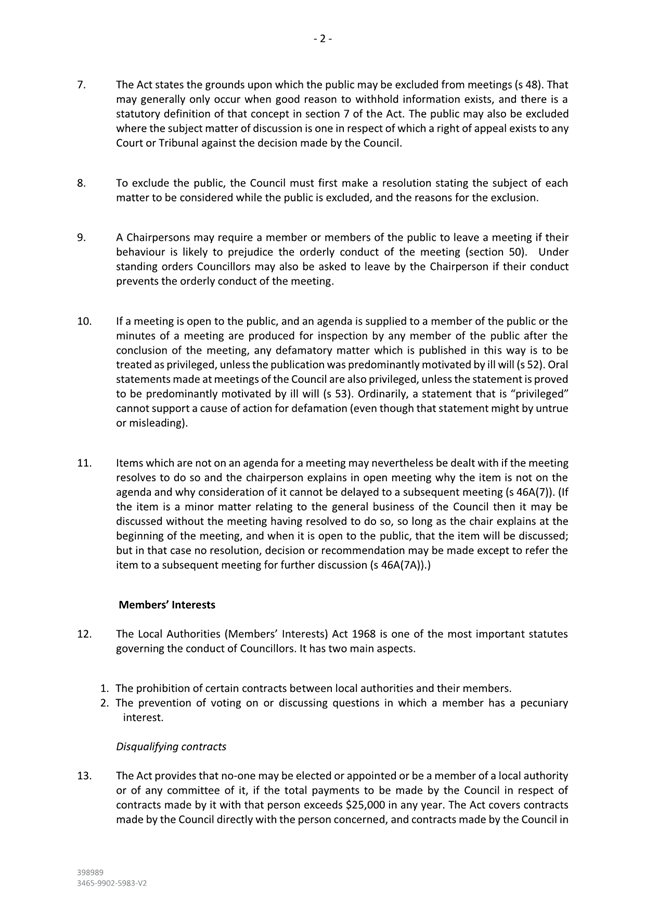
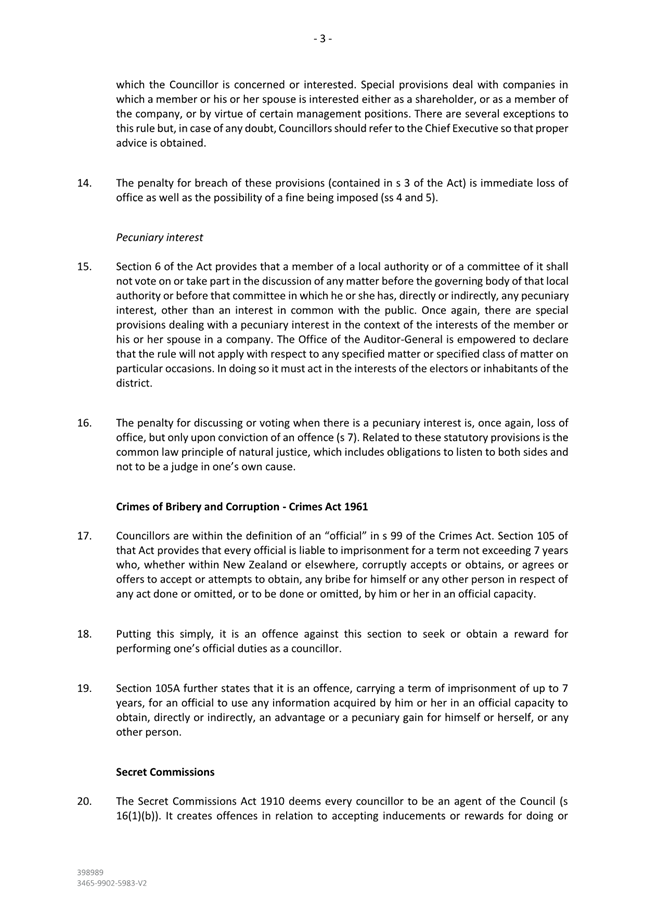
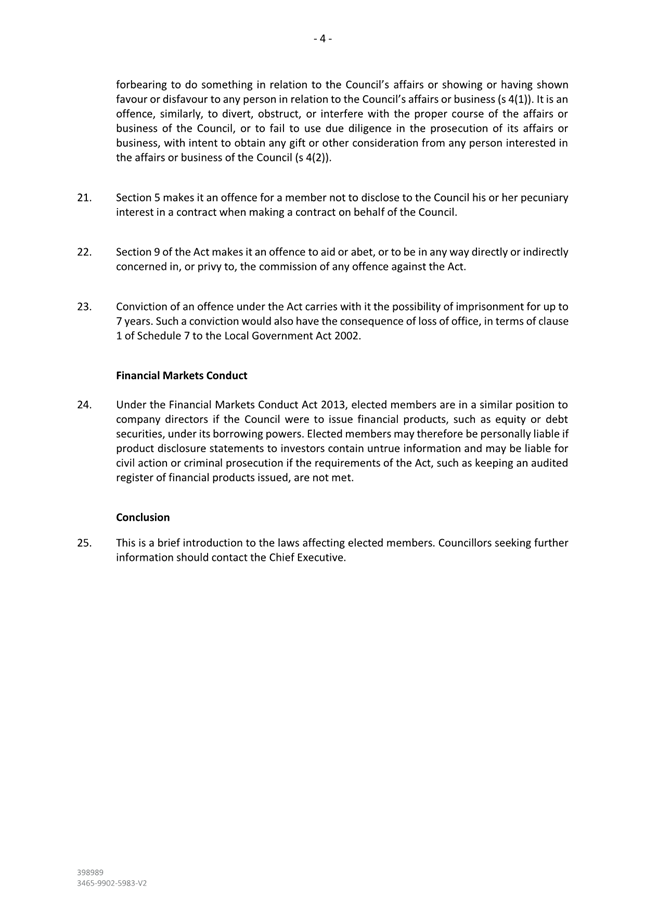
As part of your induction, the Chief Executive is required under the Local Government Act to arrange an explanation of key legislative obligations that apply to you as elected members. This ensures you understand your responsibilities and avoid any risk of prosecution or disqualification.
You may also be aware that the current Government has proposed significant changes to the legislation under which local government is conducted. This includes changes to the Local Government Act, which will be raised at the meeting, and changes to other legislation affecting resource management and the environment. Only some of the legislation you will become familiar with is required to be covered at this meeting, but you will soon become aware of the vast network of legislation applicable to local government.
2) matapaki me NgĀ KŌwhiringa / Discussion and Options
There are a number of core legal requirements that elected members should be aware of when making decisions. These include the:
· Local Government Act 2002
· Local Government Official Information and Meetings Act 1987
· Local Authorities (Members’ Interests) Act 1968
· Health and Safety at Work Act 2015
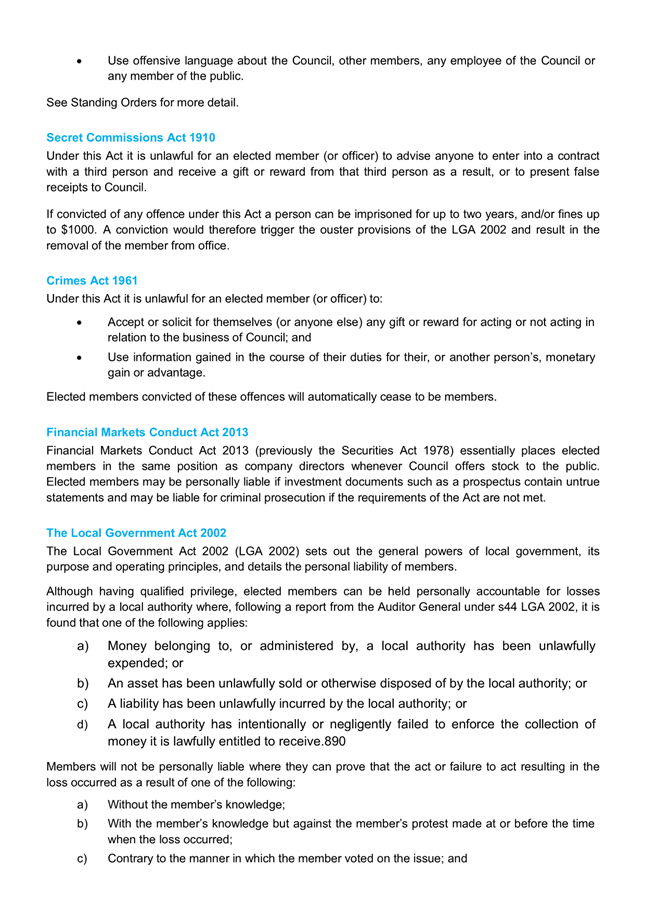
· Crimes Act 1961 – sections 99. 105 and 105A
· Secret Commissions Act 1910
· Financial Markets Conduct Act 2013
Local Government Act 2002 (LGA)
This Act defines the purpose of local government, including democratic decision-making and promoting the social, economic, environmental, and cultural well-being of communities, now and in the future. Under this Act local authorities have the power of general competence, which is tempered by formal planning and reporting requirements built into the Act. It sets principles for transparency, accountability, Māori participation, and prudent stewardship. Councils must follow formal decision-making processes, especially for significant matters. Some regulatory powers are also provided, including the power to make bylaws.
Councillors are required to comply with Council’s Code of Conduct, which sets expectations for behaviour, decision-making, and relationships, and promotes trust, respect, and accountability. The current Code of Conduct was adopted by Council in October 2022. However, the Government plans review of the relevant provisions of the Act, and a new national standard Code is under development.
Local Government Official Information and Meetings Act 1987 (LGOIMA)
The Act promotes openness and public participation. Parts 1 and 2 govern access to Council (official) information and Part 7 deals with meeting procedures.
Official information, which is widely defined under the Act, should be publicly available unless valid reasons exist to withhold it. This includes information that you hold as elected members in your capacity as such – including emails, notes, text messages, voicemails, regardless of whether on your personal or Council-owned devices. If it is information that relates to your capacity as an elected member it can be ‘called in’ and provided to the Ombudsman in the context of a complaint from a member of the public who is seeking that information. All information ‘held’ by Council is subject to the Act.
Certain types of information can be withheld, e.g., where required to protect the privacy of natural persons, or commercially sensitive. But these provisions are strictly interpreted by the Ombudsman in the event of a complaint.
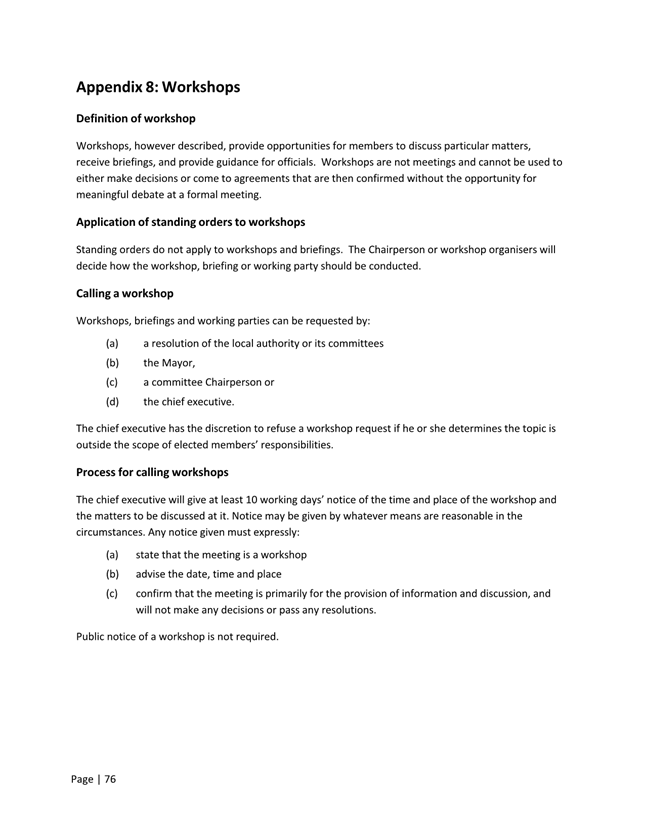
Meetings of Council and its committees must be publicly notified and open unless exclusion is justified. In 2024 the Ombudsman and the Auditor-General have expressed the view that non-official meetings such as workshops should also routinely be notified and open to the public unless good reason for confidentiality can be established.
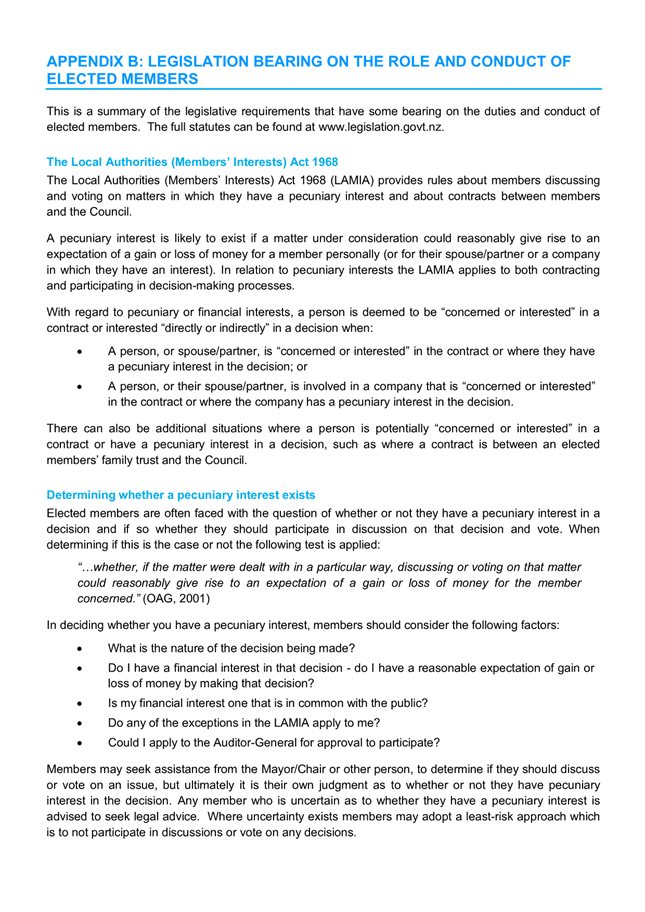
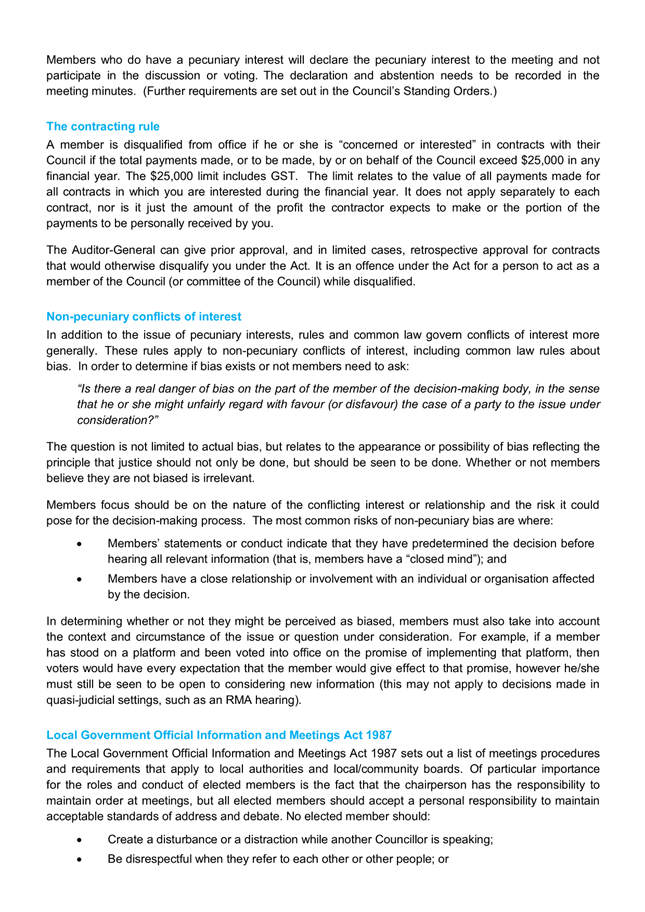
Local Authority (Members’ Interests) Act 1968
This Act is intended to prevent conflicts of interest. There are two main rules:
1. Members must not enter contracts with the Council that total over $25,000 in any one financial year without Auditor-General approval. Note this applies to contracts involving a member’s spouse, companies in which you or your spouse own more than 10% of the issued capital or in which either is the managing director or general manager.
Council may make an application to the Auditor-General for prior approval of any such contract in special cases.
2. Members must not vote or participate in decisions where they have a pecuniary (financial) interest unless that interest is held in common with the public. Note that a pecuniary interest exists where the matter would, if dealt with in a particular way, give rise to an expectation of a gain or loss of money.
As above, the rule extends to spouses and related companies.
A member must declare any pecuniary interest to the meeting and abstain. That declaration and abstention will be recorded in the minutes of the meeting.
A member can apply to the Auditor-General for a declaration that the rule shall not apply to a matter to be considered by Council on the grounds that it would impede the transaction of Council business, or that it would be in the interests of the community that the prohibition should not apply.
A breach of these rules carries automatic disqualification from office.
You should also be aware that participating in a decision where you have a non-pecuniary interest such as bias or pre-determination may not put you at risk but may put the decision at risk of an application for judicial review before the High Court.
Crimes Act 1961 – Sections 99, 105, and 105A
These provisions prohibit bribery and misuse of official information.
A bribe is money, valuable consideration, office, employment, or any benefit direct or indirect.
Members, who are defined as officials of Council, must not accept, obtain, agree or offer to accept, or attempt to obtain a bribe.
Members must not corruptly use or disclose Council information for pecuniary gain or advantage for yourself or any other person.
Both are offences carrying a penalty of up to 7 years imprisonment and disqualification from office.
Secret Commissions Act 1910
Prohibits using office for improper gain.
Offences include:
· accepting inducements for influencing decisions;
· failing to disclose any pecuniary interest in a contract made on behalf of Council, including family interests;
· falsifying an invoice or receipt to Council or failing to disclose any commission, discount, rebate etc. given or allowed;
· receiving a secret reward for procuring a contract.
Convictions may result in imprisonment for up to 7 years and disqualification from office.
Financial Markets Conduct Act 2013
Applies when Council offers financial products, e.g., debt or equity securities. Members are treated like company directors and may be personally liable for misleading disclosures. It is most likely to affect a Council should it choose to go directly to the market with an offer of its own debt securities, such as bonds. Accuracy and transparency are essential as substantial financial penalties can apply.
Protected Disclosures (Protection of Whistleblowers) Act 2022
The Act protects those who report serious wrongdoing. Members are shielded from retaliation and entitled to confidentiality. Council has procedures to support disclosures.
Health and Safety at Work Act 2015 (HSWA)
Members are deemed 'Officers' and must exercise due diligence in ensuring workplace safety. This includes staying informed, monitoring compliance, and ensuring safe systems are in place. Council has a Due Diligence programme to support this. Elected members have a measure of protection for failure to exercise due diligence under the Act but retain an oversight role.
Last words
In closing, this advice is procedural but essential. You have a fuller outline
of these matters by way of a handout attached to this report (see attachments).
Please take time to read them carefully. If you have any questions, I encourage
you to speak with the Mayor, or the Chief Executive.
TAKE TŪTOHUNGA / REASON FOR THE RECOMMENDATION
This report is for information purposes only.
3) PĀnga PŪtea me ngĀ wĀhanga tahua / Financial Implications and Budgetary Provision
There are no financial implications or budgetary provision needed as a result of this report and presentation.
1. Laws Affecting Members Cr Briefing initial meeting order paper 29 Ocr 2025
Hōtaka Take Ōkawa / Compliance Schedule:
Full consideration has been given to the provisions of the Local Government Act 2002 S77 in relation to decision making, in particular:
1. A Local authority must, in the course of the decision-making process,
a) Seek to identify all reasonably practicable options for the achievement of the objective of a decision; and
b) Assess the options in terms of their advantages and disadvantages; and
c) If any of the options identified under paragraph (a) involves a significant decision in relation to land or a body of water, take into account the relationship of Māori and their culture and traditions with their ancestral land, water sites, waahi tapu, valued flora and fauna and other taonga.
2. This section is subject to Section 79 - Compliance with procedures in relation to decisions.
|
He Take Ōkawa / Compliance Requirement |
Aromatawai Kaimahi / Staff Assessment |
|
State the level of significance (high or low) of the issue or proposal as determined by the Council’s Significance and Engagement Policy |
This matter is of low significance. |
|
State the relevant Council policies (external or internal), legislation, and/or community outcomes (as stated in the LTP) that relate to this decision. |
Legislation requires that this report be tabled at this Council meeting. |
|
State whether this issue or proposal has a District wide relevance and, if not, the ways in which the appropriate Community Board’s views have been sought. |
Community Boards will receive this report at their inaugural meeting. |
|
State the possible implications for Māori and how Māori have been provided with an opportunity to contribute to decision making if this decision is significant and relates to land and/or any body of water. State the possible implications and how this report aligns with Te Tiriti o Waitangi / The Treaty of Waitangi. |
There are no implications on Māori. |
|
Identify persons likely to be affected by or have an interest in the matter, and how you have given consideration to their views or preferences (for example – youth, the aged and those with disabilities). |
Not applicable. |
|
State the financial implications and where budgetary provisions have been made to support this decision. |
Not applicable. |
|
Chief Financial Officer review. |
Not applicable. |
|
29 October 2025 |
5.4 Standing Orders
File Number: A5413546
Author: Natasha Rmandic, Democracy Advisor
Authoriser: Aisha Huriwai, Manager - Democracy Services
Take Pūrongo / Purpose of the Report
The purpose of the report is to present Council with the current Standing Orders.
|
That Council note the Far North District Council Standing Orders.
|
1) TĀhuhu kŌrero / Background
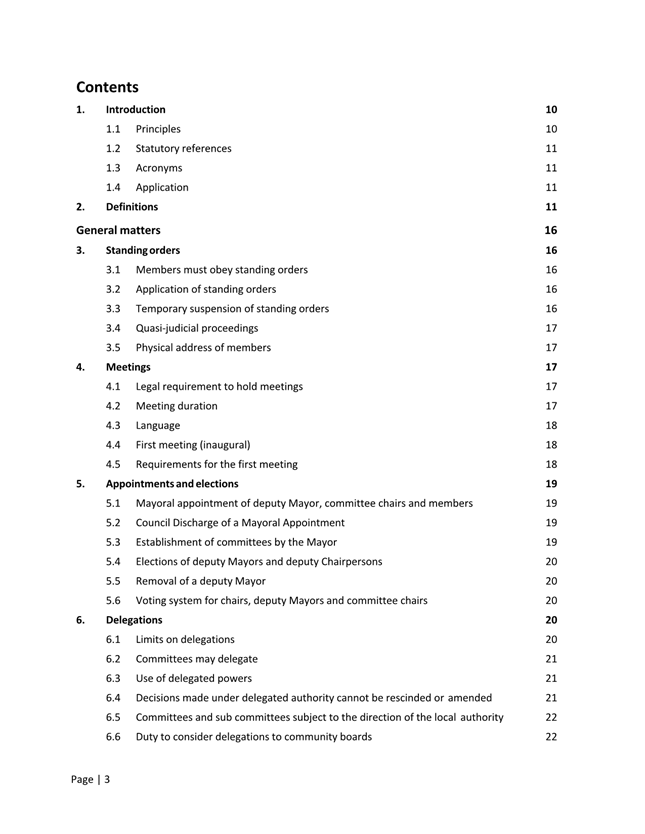
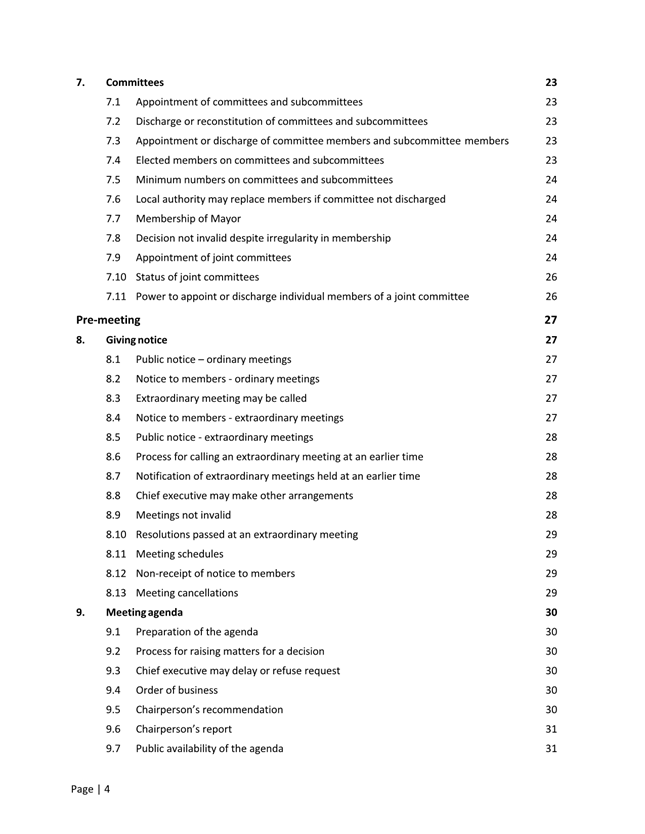
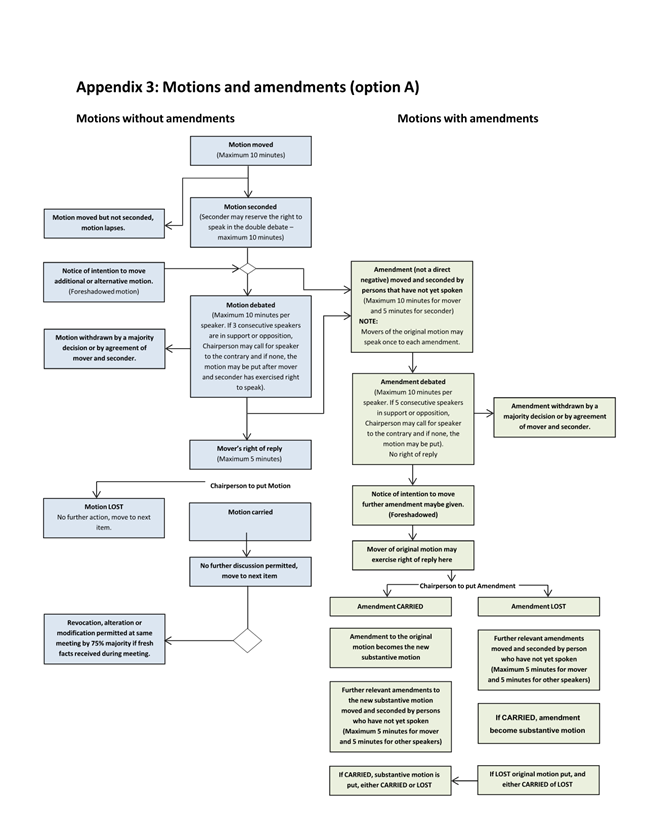
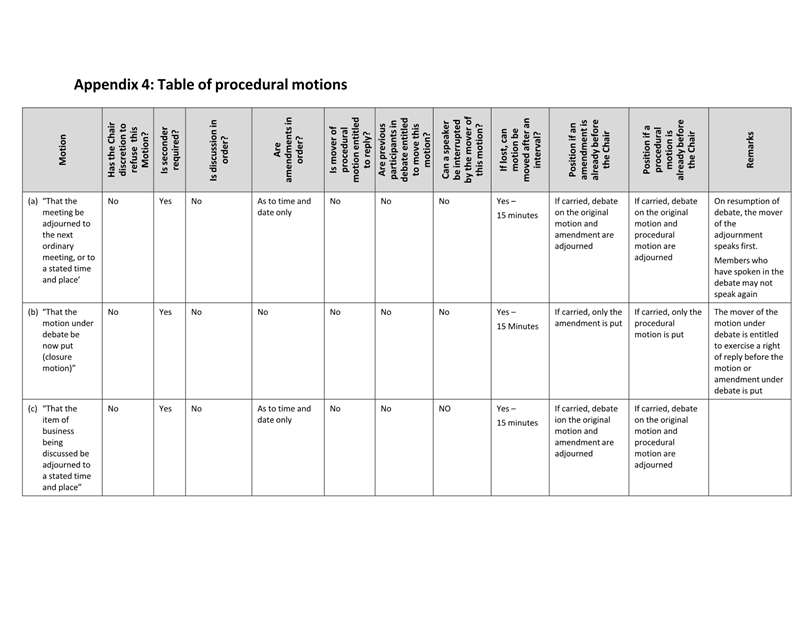
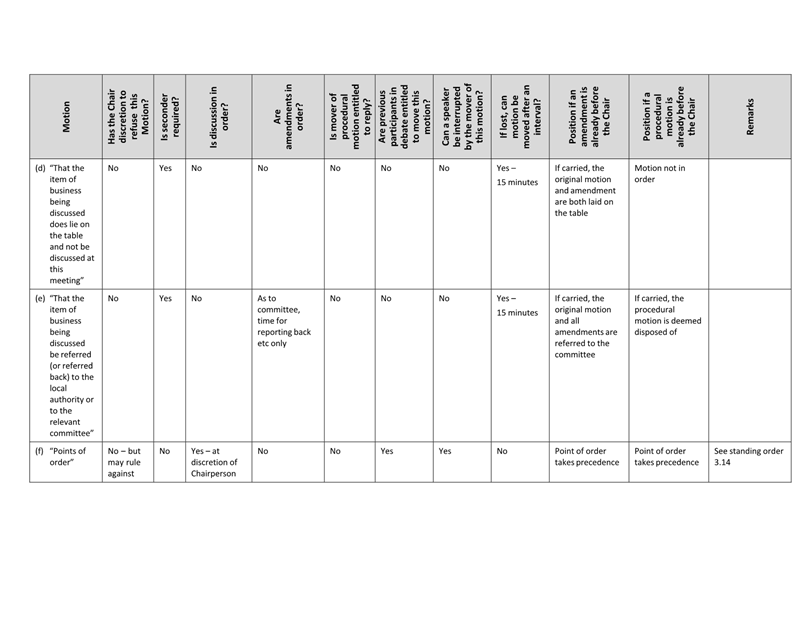
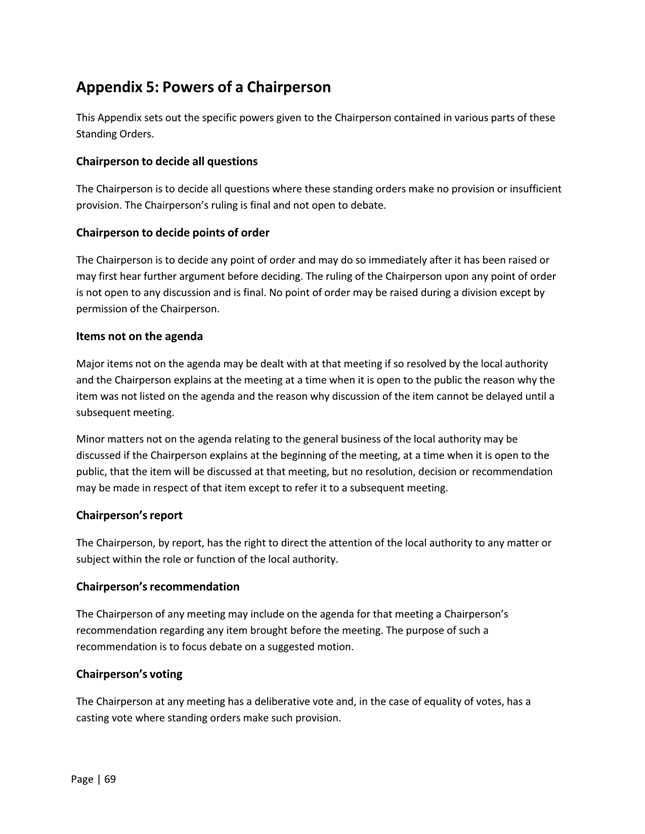
Standing Orders are a set of rules of debate that apply to all meetings of Council and its committees and subcommittees, including Community Boards. Furthermore, Standing Orders ensure the legal requirements of the Local Government Act 2002 and the Local Government Official Information and Meetings Act 1987 are met. They also provide clarity as to what is expected of the members within a meeting and generally cover procedures to enable meetings to be held in a fair and transparent manner.
New Zealand Standards issued a “Model Standing Orders for Meetings of Local Authorities and Community Boards”. In 2016 there was a shift and Council’s across New Zealand moved from using a New Zealand Standards version, to a template version developed by Local Government New Zealand. revision was necessitated by the enactment of the Local Government Act 2002 and included amendments to the Act in 2004. Since then, Local Government New Zealand (LGNZ) assumed responsibility for updating standing orders every three years, providing templates and guidance on their website with the most recent version being provided in late 2024 following work with Simpson Grierson which included templates for city and district councils, regional councils, and community boards.
As part of the Local Government (System Improvements) Amendment Bill government are seeking for all Council’s to operate under a standard set of Standing Orders, again issued by New Zealand Standards. While a draft document will be released for consultation in October 2025 the final publication won’t be available no later than April 2026.
2) matapaki me NgĀ KŌwhiringa / Discussion and Options
Standing Orders are regularly reviewed by a group of local government practitioners, facilitated by Local Government New Zealand (LGNZ). Following each review process LGNZ they release a recommended template version of Standing Orders for each Council to adopt, or tweak as their own. Each set of changes to Standing Orders generally keeps the same intent and principles, in alignment with legislation, but tweaks the wording to clarify each point.
The most recent review of LGNZ Standing Orders were made available to New Zealand Council’s in March 2025.
Look to operate under previous SO’s noting new SO’s imposed by Govt in approximately April 2026.
As part of the post-election onboarding programme the Democracy Services Team will facilitate a standing orders session date for which will be announced in New Year. We will discuss application of standing orders and potential amendments, but in the meantime, recommend the continued use of the standing orders.
Reason for the recommendation
To note Standing Orders for the Far North District Council.
3) PĀnga PŪtea me ngĀ wĀhanga tahua / Financial Implications and Budgetary Provision
There are no financial implications or need for budgetary provision as a result of this report.
Āpitihanga / Attachments
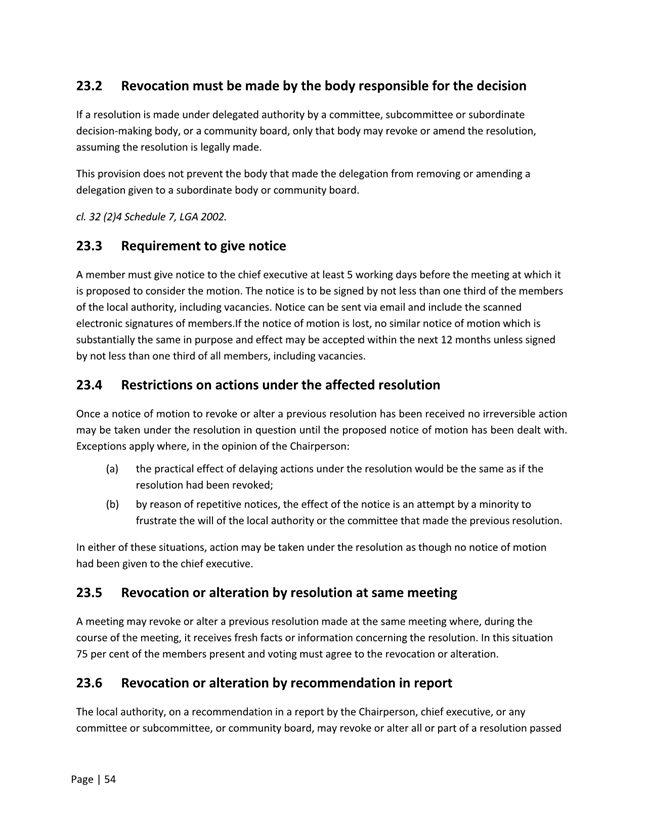
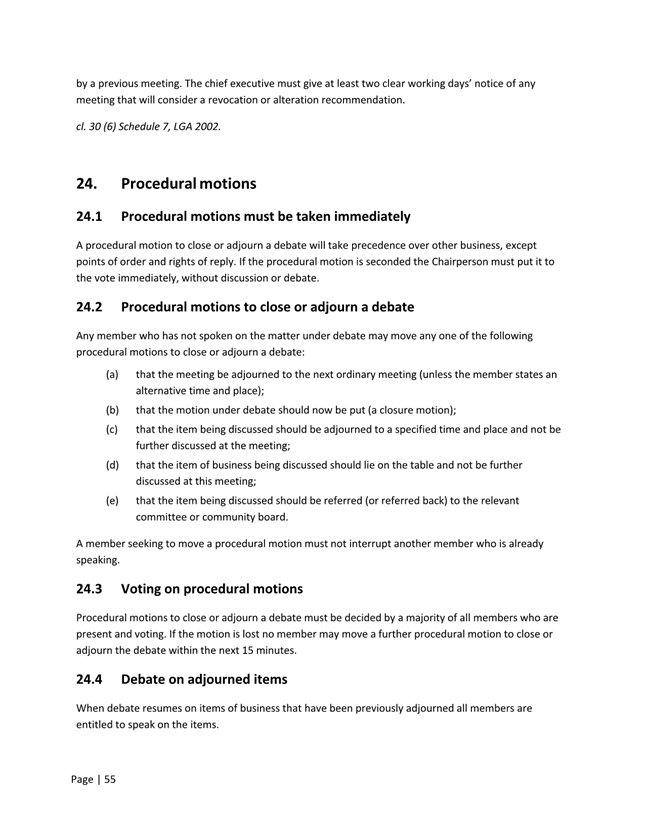
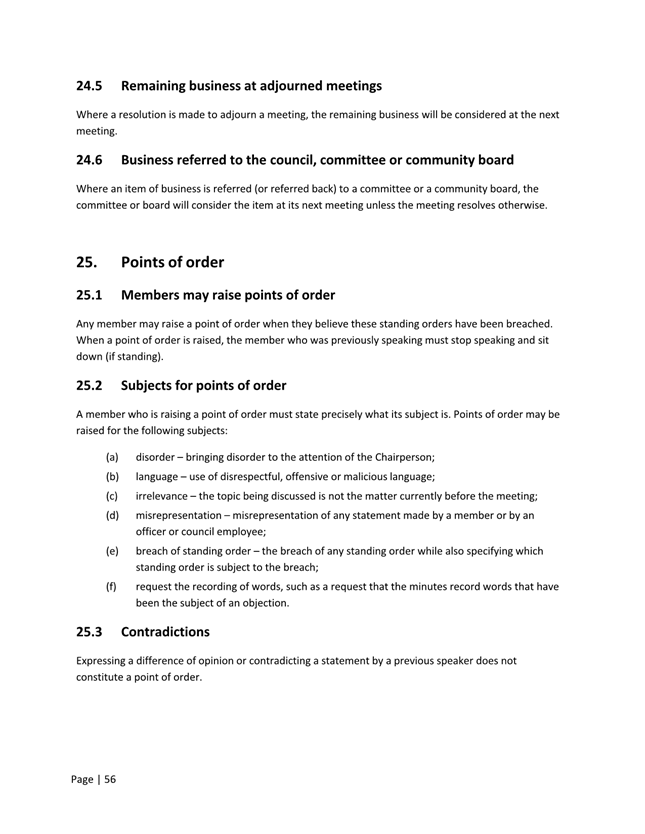
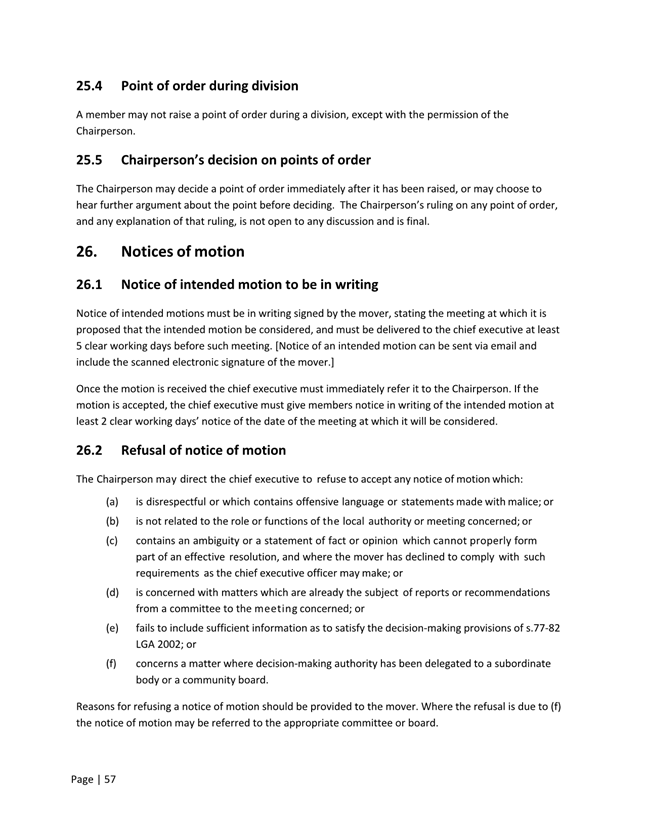
1. Standing Orders as at 21 September 2023
Hōtaka Take Ōkawa / Compliance Schedule:
Full consideration has been given to the provisions of the Local Government Act 2002 S77 in relation to decision making, in particular:
1. A Local authority must, in the course of the decision-making process,
a) Seek to identify all reasonably practicable options for the achievement of the objective of a decision; and
b) Assess the options in terms of their advantages and disadvantages; and
c) If any of the options identified under paragraph (a) involves a significant decision in relation to land or a body of water, take into account the relationship of Māori and their culture and traditions with their ancestral land, water sites, waahi tapu, valued flora and fauna and other taonga.
2. This section is subject to Section 79 - Compliance with procedures in relation to decisions.
|
He Take Ōkawa / Compliance Requirement |
Aromatawai Kaimahi / Staff Assessment |
|
State the level of significance (high or low) of the issue or proposal as determined by the Council’s Significance and Engagement Policy |
This is a matter of low significance. |
|
State the relevant Council policies (external or internal), legislation, and/or community outcomes (as stated in the LTP) that relate to this decision. |
Standing Orders is a legislative requirement. Staff do not propose any changes or review due to a National review and legislative change under development. |
|
State whether this issue or proposal has a District wide relevance and, if not, the ways in which the appropriate Community Board’s views have been sought. |
This report is for Council, each Community Board will set their own Standing Orders at their own meetings. |
|
State the possible implications for Māori and how Māori have been provided with an opportunity to contribute to decision making if this decision is significant and relates to land and/or any body of water. |
Not applicable |
|
Identify persons likely to be affected by or have an interest in the matter, and how you have given consideration to their views or preferences (for example – youth, the aged and those with disabilities. |
Not applicable |
|
State the financial implications and where budgetary provisions have been made to support this decision. |
There are no financial implications or budgetary provision as a result of this report |
|
Chief Financial Officer review. |
The Chief Financial Officer has not reviewed this report.
|
|
29 October 2025 |
5.5 Appointment of Ward Councillors to Community Boards
File Number: A5413537
Author: Natasha Rmandic, Democracy Advisor
Authoriser: Aisha Huriwai, Manager - Democracy Services
Take Pūrongo / Purpose of the Report
To ask for two Council representative to be appointed to each Community Board.
|
That the Council: a) Appoints _________________________ from the Bay of Islands-Whangaroa General Ward as a member the Bay of Islands-Whangaroa Community Board. b) Appoints Cr John Vujcich from the Kaikohe-Hokianga General Ward as a member of the Kaikohe-Hokianga Community Board. c) Appoints __________________________from the Te Hiku General Ward as a member of the Te Hiku Community Board. d) Appoints __________________________from Ngā Tai o Tokerau Māori Ward to Bay of Islands-Whangaroa Community Board. e) Appoints __________________________from Ngā Tai o Tokerau Māori Ward to Kaikohe-Hokianga Community Board. f) Appoints __________________________from Ngā Tai o Tokerau Māori Ward to Te Hiku Community Board.
|
1) TĀhuhu kŌrero / Background
The Local Government Act 2002 states that the membership of a Community Board will consist of elected officials, and (if any) appointed officials, and that any appointed officials must be elected from the area of Community Board representation, in accordance with the Local Electoral Act.
During the 2022-25 triennium, Council can make appointments to the following:
· Bay of Islands-Whangaroa Community Board
· Kaikohe-Hokianga Community Board, and
· Te Hiku Community Board
These Councillors are then sworn in at the next Community Board meetings as voting members of the Community Board.
As part of the 2024 Representation Review, Council amended it’s representation for not only a General Ward Councillor, but a Ngā Tai o Tokerau Māori Ward Councillor to be appointed to each Community Board.
This was consulted on and approved by the Local Government Commission.
2) matapaki me NgĀ KŌwhiringa / Discussion and Options
Having a Council representative at Board meetings provides a vehicle for communication between the Community Board and Council. It also provides an opportunity for the Council representative to learn not only the role of Council but understand the advocacy role of the Community Board.
A potential ethical conflict could arise as Councillors are obliged to act in the best interests of the Far North District as a whole, while Community Boards are concerned with the specific needs of their wards.
The Council has three options to consider for the 2025-28 triennium:
1. Appoint no councillors to Community Boards.
2. Appoint 1 Councillor to each of the 3 Community Boards.
3. Appoint 2 Councillors to each of the 3 Community Boards.
Members should consider being appointed to the Community Board as an additional responsibility as they would need to attend Community Board meetings, workshops, and events as any other Community Board member.
Previously appointments have been for the duration of the triennium, however the Council could consider rotating membership throughout the triennium, and it is recommended that this be reviewed annually, with any committee structure or governance reviews to ensure that workloads on individuals are fair.
3) PĀnga PŪtea me ngĀ wĀhanga tahua / Financial Implications and Budgetary Provision
There are no financial implications and budgetary provisions needed as a result of this report.
Nil
Hōtaka Take Ōkawa / Compliance Schedule:
Full consideration has been given to the provisions of the Local Government Act 2002 S77 in relation to decision making, in particular:
1. A Local authority must, in the course of the decision-making process,
a) Seek to identify all reasonably practicable options for the achievement of the objective of a decision; and
b) Assess the options in terms of their advantages and disadvantages; and
c) If any of the options identified under paragraph (a) involves a significant decision in relation to land or a body of water, take into account the relationship of Māori and their culture and traditions with their ancestral land, water sites, waahi tapu, valued flora and fauna and other taonga.
2. This section is subject to Section 79 - Compliance with procedures in relation to decisions.
|
He Take Ōkawa / Compliance Requirement |
Aromatawai Kaimahi / Staff Assessment |
|
State the level of significance (high or low) of the issue or proposal as determined by the Council’s Significance and Engagement Policy |
This matter is of low significance. |
|
State the relevant Council policies (external or internal), legislation, and/or community outcomes (as stated in the LTP) that relate to this decision. |
This report is consistent with provisions in the Local Government Act. Council need to ensure that any appointed members are elected from the relevant Community Board area to comply with legislation. |
|
State whether this issue or proposal has a District wide relevance and, if not, the ways in which the appropriate Community Board’s views have been sought. |
Community Board members may have a preference of who they would like to work with. Their feedback however has not been sought formally so that the appointed member can be sworn in at the relevant inaugural meeting. |
|
State the possible implications for Māori and how Māori have been provided with an opportunity to contribute to decision making if this decision is significant and relates to land and/or any body of water. |
There are no particular implications on Māori in making this decision. |
|
Identify persons likely to be affected by or have an interest in the matter, and how you have given consideration to their views or preferences (for example – youth, the aged and those with disabilities). |
While this does not directly impact any identified persons, Council should consider appointing members that enrich the diversity of each Community Board. |
|
State the financial implications and where budgetary provisions have been made to support this decision. |
There are no financial implications or the need for budgetary provision arising from this report. |
|
Chief Financial Officer review. |
The Chief Financial Officer has not reviewed this report. |
|
29 October 2025 |
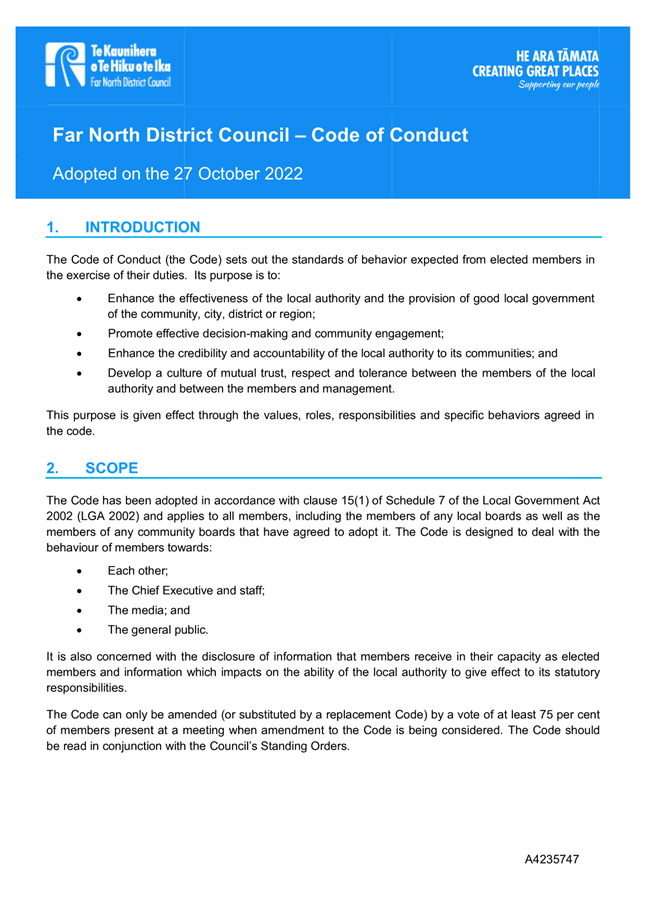
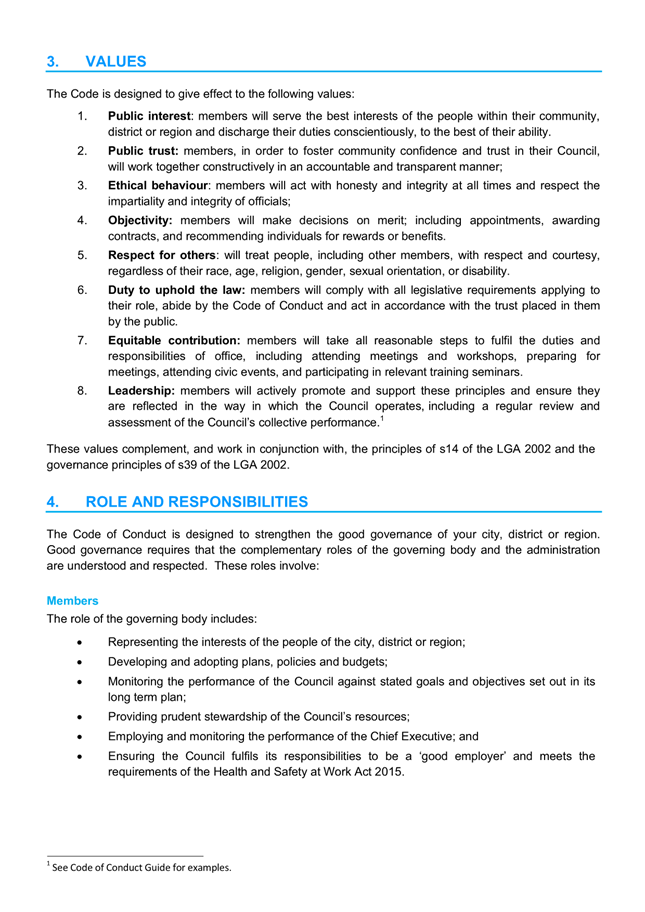
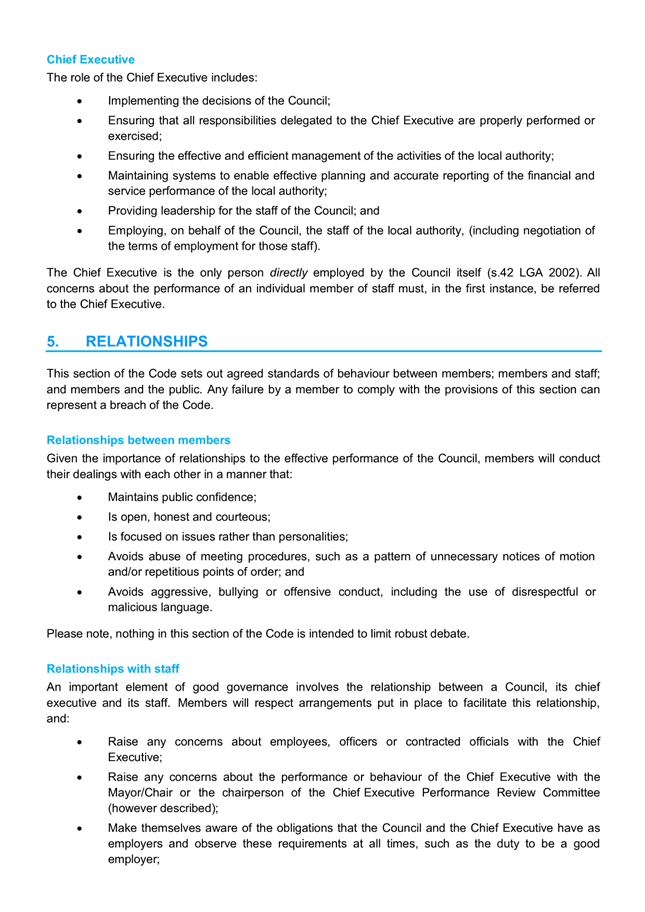
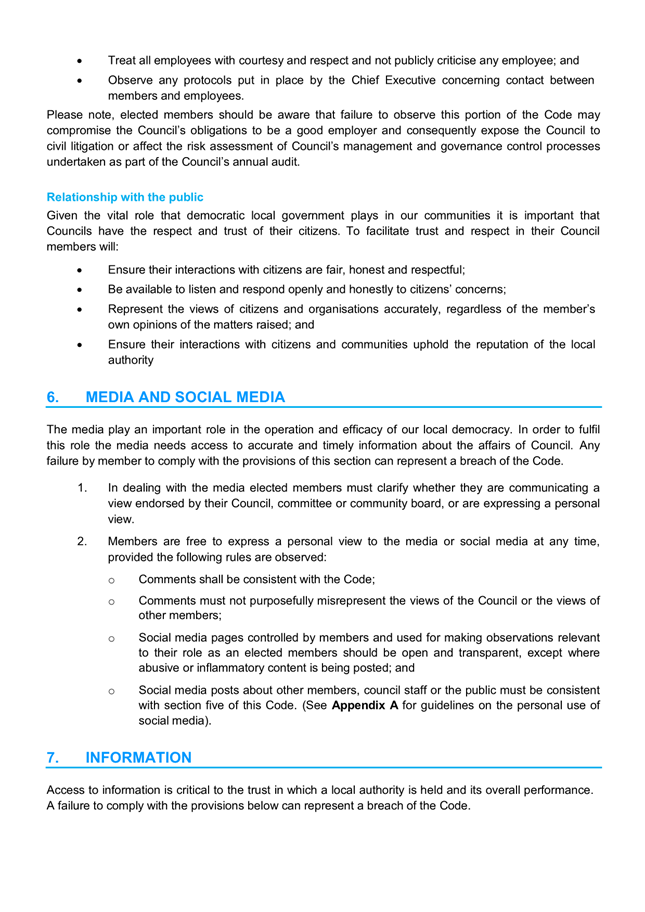
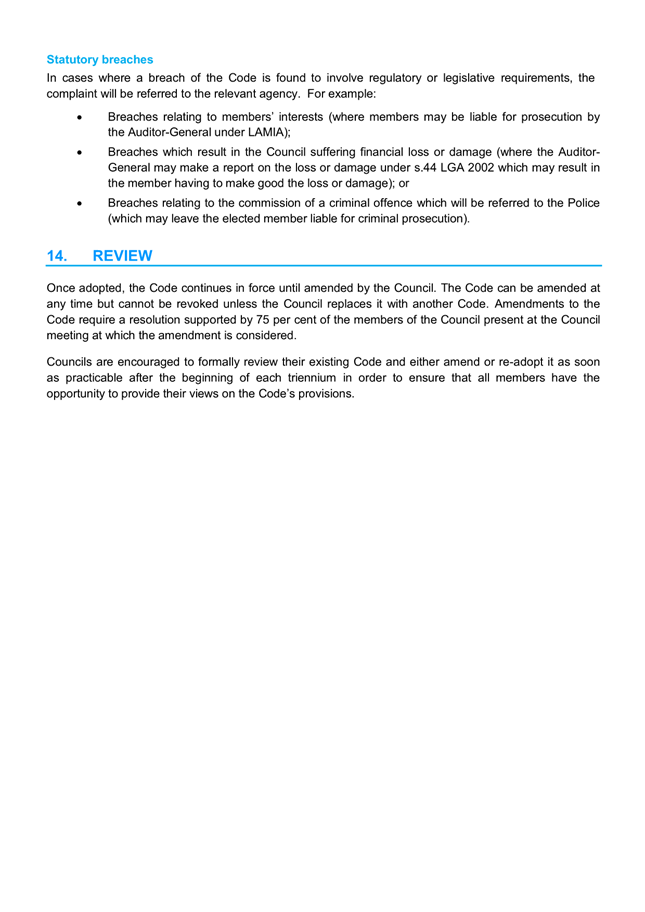
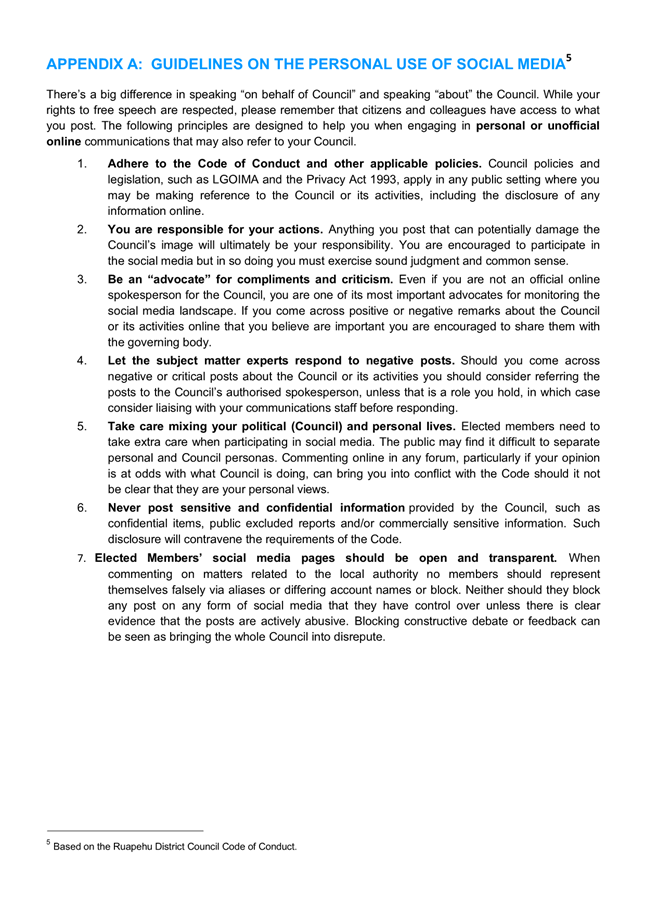
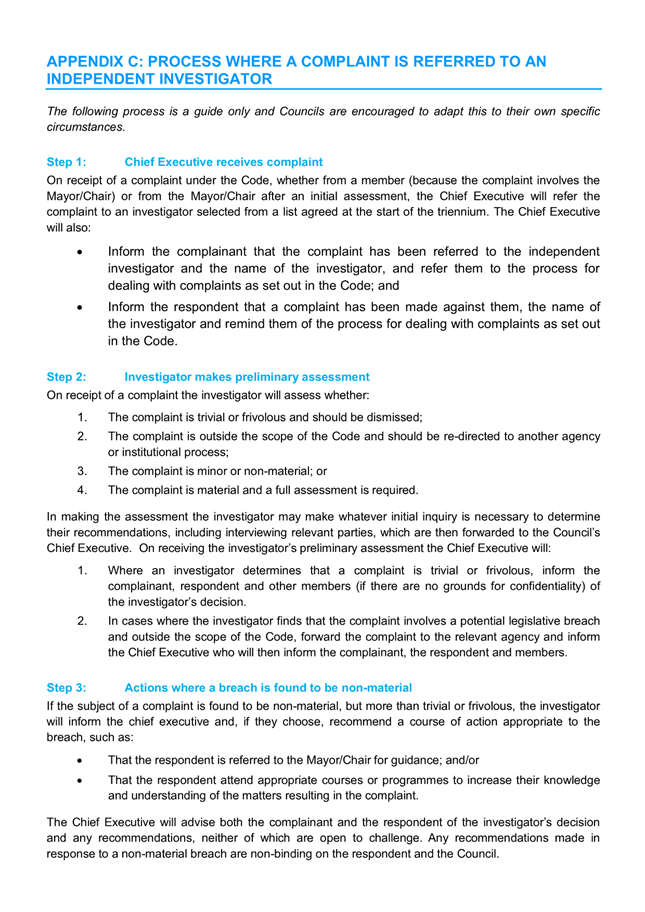
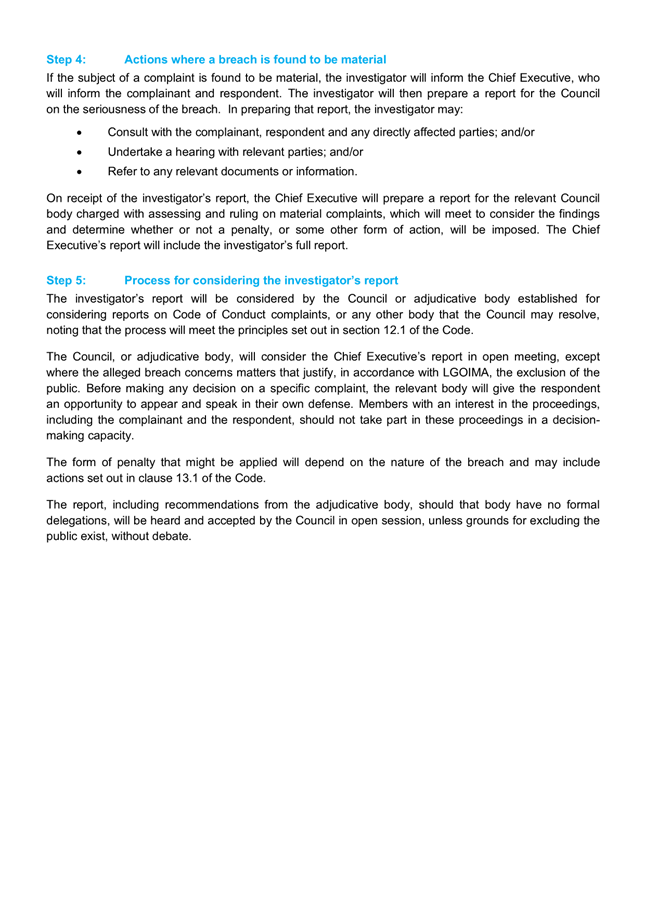
5.6 Elected Members Code of Conduct
File Number: A5413597
Author: Natasha Rmandic, Democracy Advisor
Authoriser: Aisha Huriwai, Manager - Democracy Services
Take Pūrongo / Purpose of the Report
The purpose of the report is to introduce the Far North District Council Code of Conduct for members’ information.
WHAKARĀPOPOTO MATUA / EXECUTIVE SUMMARY
The purpose of the report is to introduce the Far North District Council Code of Conduct for members’ information.
|
That Council note the Far North District Council’s current Elected Members’ Code of Conduct. |
1) TĀhuhu kŌrero / Background
The Local Government Act 2002 states that a Local Government Authority’s Code of Conduct must set out understandings and expectations adopted by the local authority about the manner in which members may conduct themselves while acting in their capacity as members, including:
1. behaviour toward one another, staff, and the public; and
2. disclosure of information, including (but not limited to) the provision of any document, to elected members that:
a. is received by, or is in the possession of, an elected member in his or her capacity as an elected member; and
b. relates to the ability of the local authority to give effect to any provision of this Act; and
3. a general explanation of:
a. the Local Government Official Information and Meetings Act 1987; and
any other enactment or rule of law applicable to members.
Local Government New Zealand has updated the 2016 Code of Conduct adopted by the Far North District Council. The main update to the Code of Conduct is the addition of a section on social media and has a new process for dealing with trivial, minor and frivolous complaints.
As Local Government leaders, Local Government New Zealand prepare a best practise code of conduct for elected members. The Far North District Council Elected Members Code of Conduct was reviewed to align with best practise but was previously adopted for the specific interests of the Far North.
2) matapaki me NgĀ KŌwhiringa / Discussion and Options
Council is required by the Local Government Act 2002 to have a code of conduct and, if a new code of conduct is not adopted, the current one will stand.
The Act does not allow for an authority to revoke a Code of Conduct but it does allow for amendments or replacements to be made by resolution with not less than 75% of members present and in support. A member of a local authority must comply with the code of conduct of that local authority.
This report recommends the previous code of conduct be noted.
Reason for the recommendation
This report is for information purposes only.
3) PĀnga PŪtea me ngĀ wĀhanga tahua / Financial Implications and Budgetary Provision
There are no financial implications or budgetary provisions needed as a result of this report.
Āpitihanga / Attachments
1. Code of Conduct as at 27 October 2022
Hōtaka Take Ōkawa / Compliance Schedule:
Full consideration has been given to the provisions of the Local Government Act 2002 S77 in relation to decision making, in particular:
1. A Local authority must, in the course of the decision-making process,
a) Seek to identify all reasonably practicable options for the achievement of the objective of a decision; and
b) Assess the options in terms of their advantages and disadvantages; and
c) If any of the options identified under paragraph (a) involves a significant decision in relation to land or a body of water, take into account the relationship of Māori and their culture and traditions with their ancestral land, water sites, waahi tapu, valued flora and fauna and other taonga.
2. This section is subject to Section 79 - Compliance with procedures in relation to decisions.
|
He Take Ōkawa / Compliance Requirement |
Aromatawai Kaimahi / Staff Assessment |
|
State the level of significance (high or low) of the issue or proposal as determined by the Council’s Significance and Engagement Policy |
This matter is of low significance. |
|
State the relevant Council policies (external or internal), legislation, and/or community outcomes (as stated in the LTP) that relate to this decision. |
The legislation relevant to an elected member code of conduct is the Local Government Act and Local Government Official Information and Meetings Act 1987. |
|
State whether this issue or proposal has a District wide relevance and, if not, the ways in which the appropriate Community Board’s views have been sought. |
While Community Boards are not required to comply with an Elected Members Code of Conduct it is recommended that this code applies to those members as well in the interests of good practise. |
|
State the possible implications for Māori and how Māori have been provided with an opportunity to contribute to decision making if this decision is significant and relates to land and/or any body of water. |
There are no implications on Māori |
|
Identify persons likely to be affected by or have an interest in the matter, and how you have given consideration to their views or preferences (for example – youth, the aged and those with disabilities. |
This report does not have any particular impact any identified persons. |
|
State the financial implications and where budgetary provisions have been made to support this decision. |
There are no financial implications or need for budgetary provision. |
|
Chief Financial Officer review. |
The Chief Financial Officer has not reviewed this report. |
|
29 October 2025 |
5.7 2025 Far North District Council Governance Structure and External Appointments
File Number: A5418271
Author: Natasha Rmandic, Democracy Advisor
Authoriser: Aisha Huriwai, Manager - Democracy Services
Take Pūrongo / Purpose of the Report
The purpose of this report is to explain the procedure for the establishment of Committees and seek Council’s approval of various external appointments.
WhakarĀpopoto matua / Executive Summary
· This report provides opportunity for the Mayor to communicate his Committee structure for the term.
· Council holds a range of seats at various external agencies and organisations.
· Various appointments are listed in the recommendation for Council to confirm allocations.
|
a) That the following members be appointed to external organisations, as follows:
|
1) TĀhuhu kŌrero / Background
Under section 41A(3) of the Local Government Act 2002, the Mayor has the power to establish committees and appoint membership including the chairperson of each committee.
The Mayor has, established the following Committees:
1. Te Kuaka – Māori Strategic Relationships Committee
2. Te Miromiro – Assurance, Risk and Finance Committee
3. Te Koekoeā – Council Controlled Organisation Committee
4. Te Koukou – Transport Delivery and Operations Committee
5. Te Kūkupa – Strategy, Policy and Regulation Committee
6. Te Huia – Executive Review Committee
7. Te Pīpīwharauroa – External Appointments Committee
The Far North District Council recognises that Committees are not the only method of enabling good governance. Far North District Council encourages governance oversight by the following means:
Committees
A local authority or Mayor, may establish a Committee and provide that Committee with delegations to make decisions on its behalf. Terms of Reference should be adopted for each Committee to clarify its role, responsibilities and membership.
While the Local Government Act gives the Mayor powers to establish a Committee structure and its membership, Council are responsible for confirming the terms of reference for those Committees. – Staff intend to bring this to Council’s November meeting for adoption.
Portfolios
Portfolios are a method that provides a mechanism for an elected member to be a governance champion of an activity of regional or national significance. The portfolio holder will champion a subject and report to other members through their members report.
A Portfolio Holder will:
· Raise awareness of matters of National/Regional importance that requires advocacy at the governance level.
· Act as the Council’s spokesperson for matters relating to the portfolio with the support of officers.
· Provide strategic guidance in respect of issues relating to the portfolio.
· Maintain a “no surprises” approach for elected members and staff.
· Collaborate with other Portfolio holders where objectives are shared.
· Lead community engagement processes relating to the portfolio including attending external appointments.
· Each Portfolio Holder shall be responsible for keeping their colleagues informed through member’s reports.
· Each Committee will also provide regular reporting through a dedicated Committee.
External Appointments/ Steering Groups or Working Parties
Those appointed to bodies outside of Council act as the spokesperson on matters of local, district, regional or national significance. Some appointments are legislatively required, some are part of a regional agreement, MOU or by invitation.
2) matapaki me NgĀ KŌwhiringa / Discussion and Options
External Appointments/ Steering Groups or Working Parties
The following list of appointments is based on appointments held during the previous triennium.
|
Regional Transport Committee |
Statutory Committee with Northland Regional Council. |
Bi-monthly |
|
Te Oneroa a Tōhē Beach Board |
Statutory Committee with Northland Regional Council and iwi of Te Hiku. |
Bi-monthly |
|
Joint Climate Change Adaptation Committee |
Joint Committee with Northland Regional Council.- Oversight of climate change adaptation activities. |
Bi-monthly |
|
Joint Regional Economic Development |
Joint Committee with Northland Regional Council Oversees matters relating to the delivery of economic development services across Northland. |
Bi-monthly |
|
Civil Defence Emergency Management |
Statutory Committee with Northland Regional Council and iwi of Te Hiku. |
Bi-monthly |
|
Mayoral Taskforce for Jobs |
A Mayoral Initiative to get youth into employment. |
|
|
LGNZ Rural and Provincial Sector Meeting |
An LGNZ Committee to connect rural and provincial Council’s.
|
Bi-monthly |
|
Creative Communities Funding Assessment Committee |
A Council Committee created to allocate funding received from Creative New Zealand |
Quarterly |
|
Turner Centre Board |
A facility where Council has a financial and social interest. Appointment under agreement with the Centre. |
Monthly |
|
Cycle Trail Trust |
This trust manage a cycle/walking track over public land, leased by Council. |
Monthly |
|
Road Controlling Authority Forum |
A National Forum for Local Government representatives to work with New Zealand Transport Agency and Department of Conservation on common issues. |
Unknown |
|
North Chamber |
A key relationship with a regional body. Council be a part to the Business Leaders’ Forum. |
As required. |
|
NRC Kaeo-Whangaroa River Liaison Working Group |
A catchment working group with NRC to have oversight of activities for flood mitigation in the Kaeo-Whangaroa catchment. |
Unknown |
|
NRC Awanui River Working Group |
A catchment working group with NRC to have oversight of activities for flood mitigation in the Awanui catchment. |
Unknown |
|
Te Hiku Sports Hub |
Under agreement, over a district asset managed by a Hub Board. |
Monthly |
|
Te Ahu Charitable Trust |
Under agreement, over a district asset managed by a Hub Board. |
Monthly |
|
Rural Roading / North Hokianga |
A working group with community stakeholders to share information around roading activities and functions. |
Bi-monthly |
|
Kaitāia Airport |
A working group with key partners to look after a key asset. |
As required. |
|
Kerikeri Urban Transport |
This is new one appointment to address a key issue. |
To be confirmed. |
|
Kaikohe Civic Hub |
Governance group to oversee the delivery of Kaikohe Library Project. |
As required. |
|
Business Leaders’ Forum |
A relationship and information sharing with business associations across the district. |
3 monthly |
|
Youth Forum / Council |
Currently inactive but looking to be re-established. |
To be determined. |
|
Water / Wastewater |
This was a portfolio in the previous term to work with staff on a key issue. |
Monthly |
|
Te Puāwaitanga BOI Sports Hub |
To appoint board members to the Te Puawaitanga Governance Group with Sport Northland |
As required. |
Take Tūtohunga / Reason for the recommendation
To enable effective political decision making at the Far North District Council.
3) PĀnga PŪtea me ngĀ wĀhanga tahua / Financial Implications and Budgetary Provision
There is a financial burden on ratepayers in supporting formal meetings such as staff resourcing in the preparation of papers, travel reimbursement for elected members, printing of agendas, staff time in attending meetings, consumables such as stationery and catering at meetings.
Staff resourcing will be covered more in the adoption of the 2026 formal meeting calendar as frequency has a greater impact on resourcing than structure.
If external appointments are made to committees, Council adopted a policy in 2022 that any external appointments would be remunerated at a rate of $240 per meeting (the position of Chair is set at $300 per meeting) plus travel expenses. It should be noted that any Appointed Member whose participation on a Committee, Subcommittee, Working Party or External Body who is already remunerated by a government agency, another local authority or private/public interest group is not eligible to receive remuneration under our policy.
Nil
Hōtaka Take Ōkawa / Compliance Schedule:
Full consideration has been given to the provisions of the Local Government Act 2002 S77 in relation to decision making, in particular:
1. A Local authority must, in the course of the decision-making process,
a) Seek to identify all reasonably practicable options for the achievement of the objective of a decision; and
b) Assess the options in terms of their advantages and disadvantages; and
c) If any of the options identified under paragraph (a) involves a significant decision in relation to land or a body of water, take into account the relationship of Māori and their culture and traditions with their ancestral land, water sites, waahi tapu, valued flora and fauna and other taonga.
2. This section is subject to Section 79 - Compliance with procedures in relation to decisions.
|
He Take Ōkawa / Compliance Requirement |
Aromatawai Kaimahi / Staff Assessment |
|
State the level of significance (high or low) of the issue or proposal as determined by the Council’s Significance and Engagement Policy |
This report is of low significance. |
|
State the relevant Council policies (external or internal), legislation, and/or community outcomes (as stated in the LTP) that relate to this decision. |
The Local Government Act is the relevant legislation regarding provision for committees. |
|
State whether this issue or proposal has a District wide relevance and, if not, the ways in which the appropriate Community Board’s views have been sought. |
Community Board views have not been sought as this is a matter for Councillors to discuss how they would like to conduct meetings. |
|
State the possible implications for Māori and how Māori have been provided with an opportunity to contribute to decision making if this decision is significant and relates to land and/or any body of water. State the possible implications and how this report aligns with Te Tiriti o Waitangi / The Treaty of Waitangi. |
Establishment of a Komiti Māori, along with our Māori ward Councillors, ensures the voice of mana whenua is taken into consideration in Council or Committee decisions. |
|
Identify persons likely to be affected by or have an interest in the matter, and how you have given consideration to their views or preferences (for example – youth, the aged and those with disabilities). |
There are no particular implications on any group or identified persons. |
|
State the financial implications and where budgetary provisions have been made to support this decision. |
There are no particular budgetary requirements as a result of this report. |
|
Chief Financial Officer review. |
The CFO has reviewed this report
|
|
29 October 2025 |
5.8 Adoption of Far North District Council's Formal Meeting Schedule November to December 2025
File Number: A5413632
Author: Natasha Rmandic, Democracy Advisor
Authoriser: Aisha Huriwai, Manager - Democracy Services
Take Pūrongo / Purpose of the Report
To note the schedule of Council meetings for the remainder of the 2025 calendar year.
|
That Council note the formal Council meetings calendar for the remainder of the 2025 calendar year: · Ordinary Council Meeting 26 November 2025 10.00 am · Ordinary Council Meeting 11 December 2025 10.00 am |
1) TĀhuhu kŌrero / Background
This report asks the Council to note the Council meeting dates for the remainder of the 2025 year.
The Community Boards are responsible for setting their own schedule of meetings. Staff recommend that Community Boards also follow the four-weekly frequency for ease and cohesion in the decision-making process from one meeting to the next.
2) matapaki me NgĀ KŌwhiringa / Discussion and Options
The proposed November and December dates are suggested based on staff current demand for decisions. The start time is set as 10 am, as a continuation of the 2025 meeting start times, to provide members who travel long-distance sufficient time to get to Kaikohe.
Similar reports have been prepared for the Community Boards. Staff will prepare reports for the November meetings of Council and Community Boards to adopt a meeting schedule for future dates.
Previously, Council meetings have taken place on a Thursday, Te Hiku Community Board meetings have been held on a Tuesday and Kaikohe-Hokianga Community Board meetings on Fridays. The Bay of Islands-Whangaroa Community Board meetings are also held on Thursdays; however staff ensure there are no clashes when drafting the meeting schedules and where possible, will make every effort to align these dates with Maramataka Māori phases to support high energy and productivity for all meetings.
Reason for the recommendation
To present a schedule for Council’s formal meeting schedule for the remainder of the 2025 calendar year.
3) PĀnga PŪtea me ngĀ wĀhanga tahua / Financial Implications and Budgetary Provision
There are no financial implications or the need to budgetary provision as a result of this report.
Āpitihanga / Attachments
Nil
Hōtaka Take Ōkawa / Compliance Schedule:
Full consideration has been given to the provisions of the Local Government Act 2002 S77 in relation to decision making, in particular:
1. A Local authority must, in the course of the decision-making process,
a) Seek to identify all reasonably practicable options for the achievement of the objective of a decision; and
b) Assess the options in terms of their advantages and disadvantages; and
c) If any of the options identified under paragraph (a) involves a significant decision in relation to land or a body of water, take into account the relationship of Māori and their culture and traditions with their ancestral land, water sites, waahi tapu, valued flora and fauna and other taonga.
2. This section is subject to Section 79 - Compliance with procedures in relation to decisions.
|
He Take Ōkawa / Compliance Requirement |
Aromatawai Kaimahi / Staff Assessment |
|
State the level of significance (high or low) of the issue or proposal as determined by the Council’s Significance and Engagement Policy |
This report is of low significance. |
|
State the relevant Council policies (external or internal), legislation, and/or community outcomes (as stated in the LTP) that relate to this decision. |
The Local Government Act 2002 and Local Government Official Information and Meetings Act provides rules for the notification of meeting dates as a minimum requirement. |
|
State whether this issue or proposal has a District wide relevance and, if not, the ways in which the appropriate Community Board’s views have been sought. |
The Community Boards are responsible for setting their own meeting calendar. |
|
State the possible implications for Māori and how Māori have been provided with an opportunity to contribute to decision making if this decision is significant and relates to land and/or any body of water. |
Not applicable. |
|
Identify persons likely to be affected by or have an interest in the matter, and how you have given consideration to their views or preferences (for example – youth, the aged and those with disabilities. |
Not applicable. |
|
State the financial implications and where budgetary provisions have been made to support this decision. |
There are no financial implications or the need for budgetary provision arising from this report. |
|
Chief Financial Officer review. |
The Chief Financial Officer has not reviewed this report. |
|
29 October 2025 |
6 Karakia Whakamutunga / Closing Prayer